
Blog
A Complete Guide to the Perfect German Oktoberfest Men’s Outfit


Every year, millions of visitors flock to the Theresienwiese in Munich to celebrate the world’s largest Volkfest. But Oktoberfest is about much more than just beer tents and giant pretzels—it is a celebration of Bavarian culture, history, and style. If you plan on raising a stein in Munich (or at any local celebration worldwide), looking the part is half the fun.
Wearing the traditional “Tracht” (costume) isn’t just for locals; it’s a way for visitors to show respect for the tradition and immerse themselves fully in the festival spirit. However, navigating the world of lederhosen, haferlschuhe, and charivaris can be intimidating for a first-timer. What materials should you choose? How should the pants fit? And what on earth do you wear on your feet?
This guide breaks down every element of the traditional German Oktoberfest men’s outfit, helping you blend in with the locals and look your best while dancing on the benches. From choosing authentic leather to mastering the etiquette of accessories, here is everything you need to know to build the perfect Bavarian wardrobe.
Understanding the Tradition of Tracht
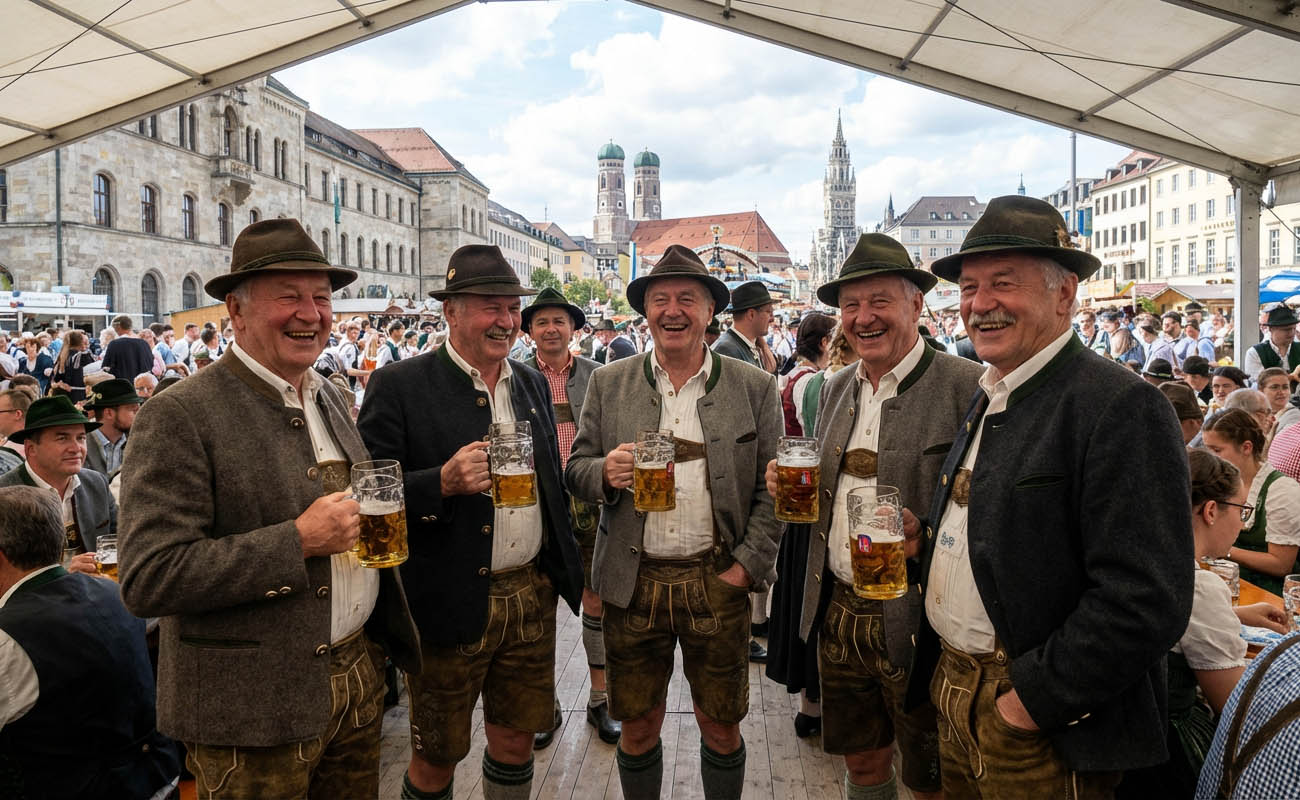
The term “Tracht” refers to traditional garments worn in German-speaking countries. While today we associate these outfits almost exclusively with festivals like Oktoberfest, they were historically everyday workwear for peasants and laborers in the Alpine regions. The sturdy leather of the trousers was designed to withstand the rigors of physical labor, while the specific embroidery often signaled which village or region the wearer hailed from.
Over the centuries, Tracht evolved from rural workwear into a symbol of Bavarian national pride. In the late 19th century, Bavarian nobility began adopting these rustic clothes for hunting and leisure, cementing their status as a cultural icon. Today, wearing Tracht to Oktoberfest is a non-negotiable tradition for many. It fosters a sense of community and equality—once you don the leather breeches, everyone from the CEO to the student looks the same, united in celebration.
Essential Components of a Men’s Oktoberfest Outfit
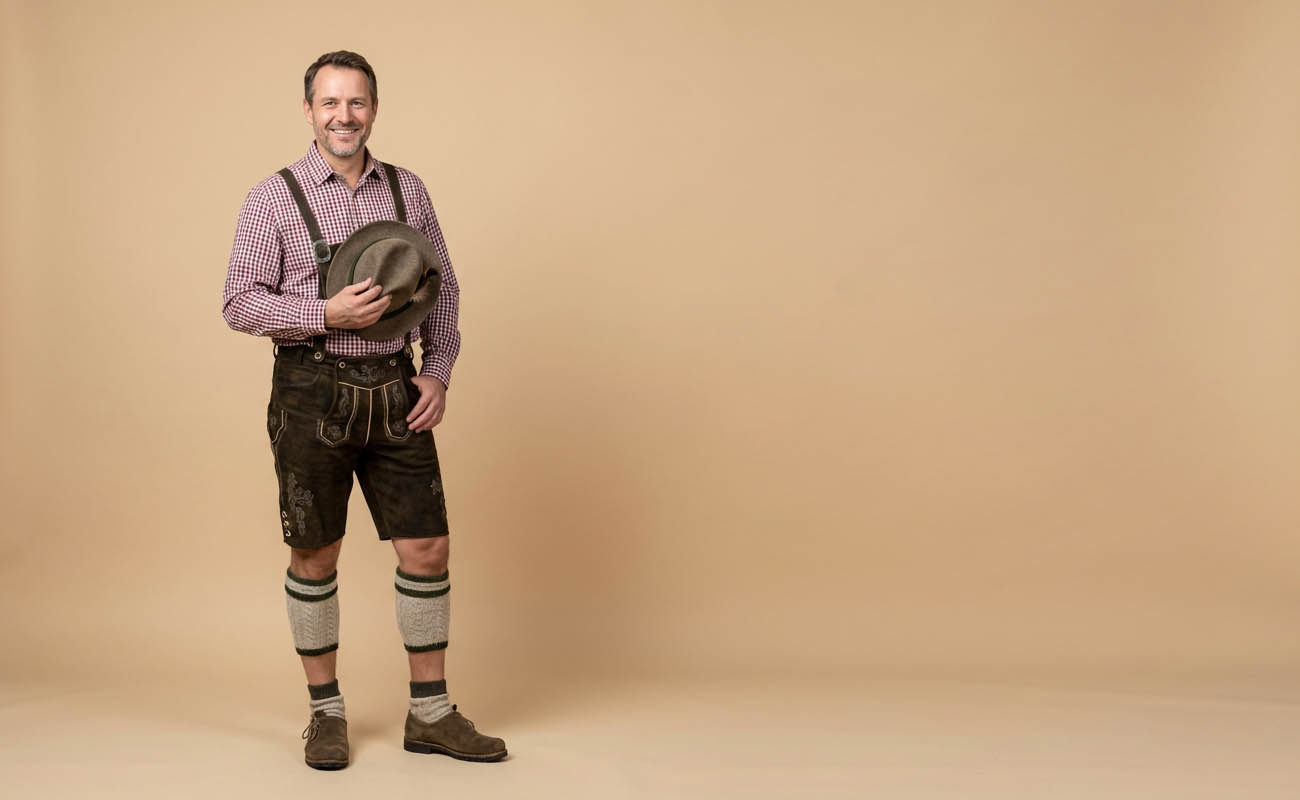
Building an authentic outfit requires more than just throwing on a pair of leather shorts. A proper ensemble is a system of parts that work together to create a polished, traditional look.
The Lederhosen
The centerpiece of your outfit is, of course, the lederhosen. These are leather breeches that typically come in two lengths: the Kurze (short), which sit above the knee, and the Kniebund (knickers), which extend below the knee. The front of the trousers features a signature drop-front flap called a Hosenlatz or Hosentürl, fastened with buttons often made from animal bone or horn. High-quality pairs feature intricate embroidery, usually in green or yellow thread, depicting traditional Alpine motifs like deer or edelweiss flowers.
The Trachtenhemd (Shirt)
Underneath your suspenders or vest, you’ll need a Trachtenhemd. The most classic option is a plain white or cream button-down shirt, often made of linen or cotton. This is the most formal and traditional choice. However, checkered shirts—usually in red/white or blue/white patterns—are incredibly popular at Oktoberfest and offer a more casual, festive vibe. These shirts often feature rustic details like buckhorn buttons or roll-up sleeves.
The Haferlschuhe (Shoes)
Leave your sneakers at the hotel. The only acceptable footwear for a traditional outfit is the Haferlschuhe. These robust leather work shoes have a distinct side-lacing design and a sturdy, cleated sole originally meant for Alpine terrain. They are typically worn without socks in the shoe itself but paired with specific legwear.
The Loferl (Calf Warmers)
This is where many tourists get confused. Loferl are two-part leg warmers consisting of a calf sleeve and a separate ankle sock (often hidden inside the shoe). They are specifically designed to be worn with short lederhosen (Kurze) to accentuate the calf muscle. If you are wearing the longer knee-length breeches (Kniebundhosen), you would typically wear full knee-length wool socks instead.
The Janker (Jacket)
Bavarian evenings can get chilly, especially in late September. A Janker is a traditional Bavarian wool jacket, usually collarless and trimmed with a contrasting color (often green). It’s the perfect outer layer that keeps you warm without breaking character.
Choosing the Right Lederhosen: Style, Material, and Fit
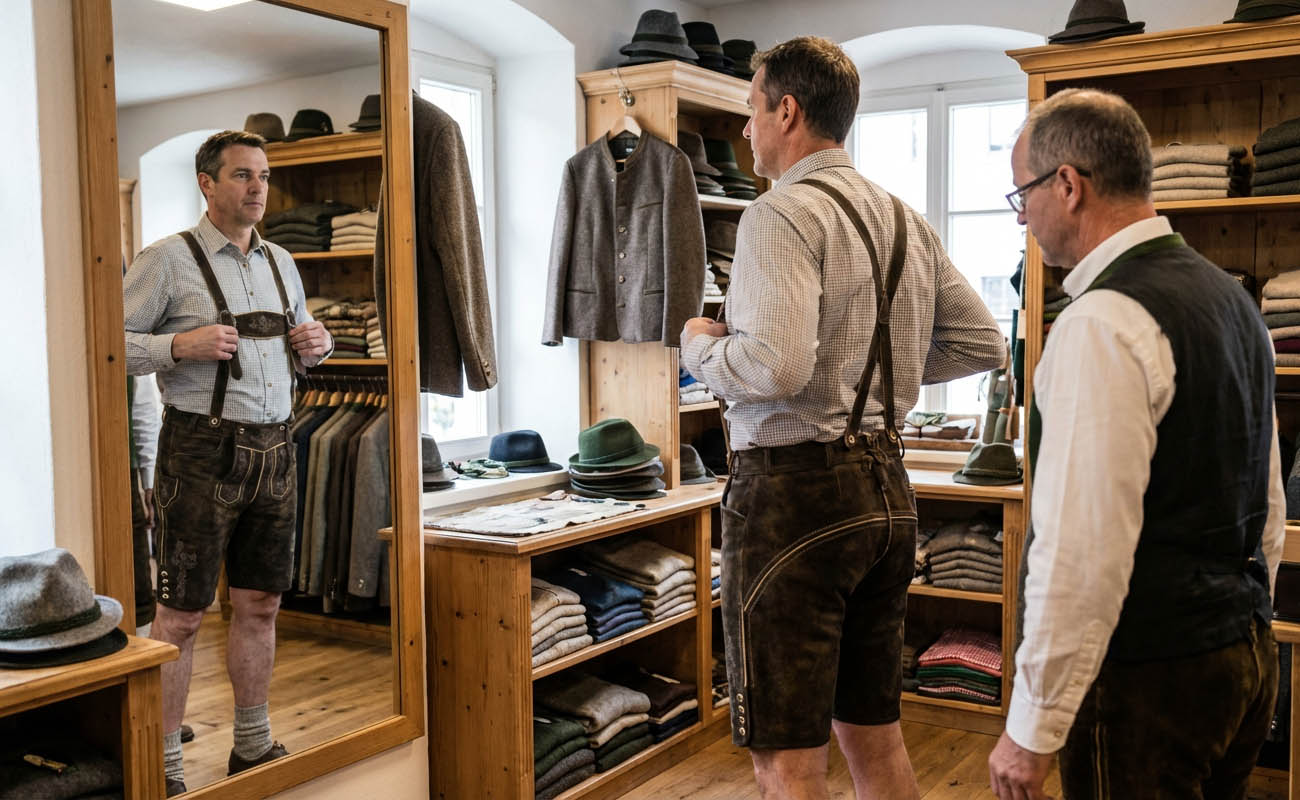
Not all leather breeches are created equal. When shopping for your outfit, the quality of the material is the single biggest factor in price and longevity.
Material
- Deerskin (Hirschleder): The gold standard. Deerskin is incredibly soft, breathable, and durable. It molds to your body over time like a second skin. These are expensive but are considered lifetime investments.
- Wild Goat (Wildbock): A fantastic mid-range option. It is durable and has a nice texture but is slightly stiffer and less breathable than deerskin.
- Cowhide (Rindleder): The most affordable option. It is tough and stiff but doesn’t offer the same comfort or breathability as the higher-end leathers.
Fit
When you first try on your lederhosen, they should feel tight—almost uncomfortably so. Leather stretches significantly as it warms up and breaks in. If they fit perfectly loose in the store, they will be swimming on you after a few hours of wear. A good rule of thumb is that you should be able to do a deep squat in them (essential for bench-dancing capability), but they should hug your waist and thighs snugly.
Accessorizing Your Outfit
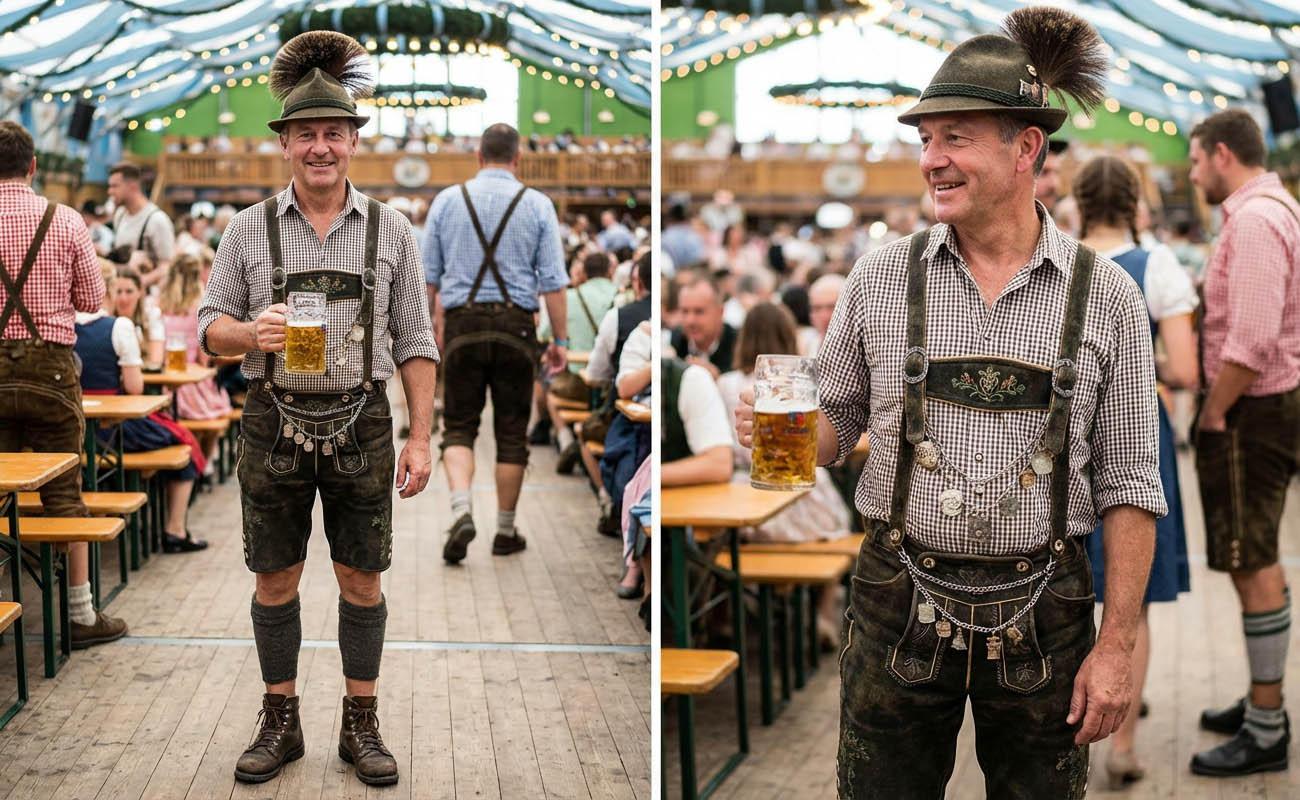
Accessories are what separate the tourists from the true enthusiasts. These small details add personality and authenticity to your look.
- Hosenträger (Suspenders): Most lederhosen come with matching leather H-style suspenders. Ensure the cross-piece (the Steg) across the chest is well-positioned.
- Charivari: This is a silver chain worn across the front of the lederhosen, traditionally adorned with coins, amulets, or hunting trophies (like deer teeth or badger hair). Historically, it served as a talisman for a successful hunt; today, it’s a status symbol and a piece of jewelry.
- Trachtenhut (Hat): A felt hat, typically made of wool or hair felt, is the finishing touch. These hats are often decorated with a Gamsbart (a tuft of chamois hair) or feathers. The size of the Gamsbart was traditionally a sign of wealth.
Where to Buy Authentic Oktoberfest Attire
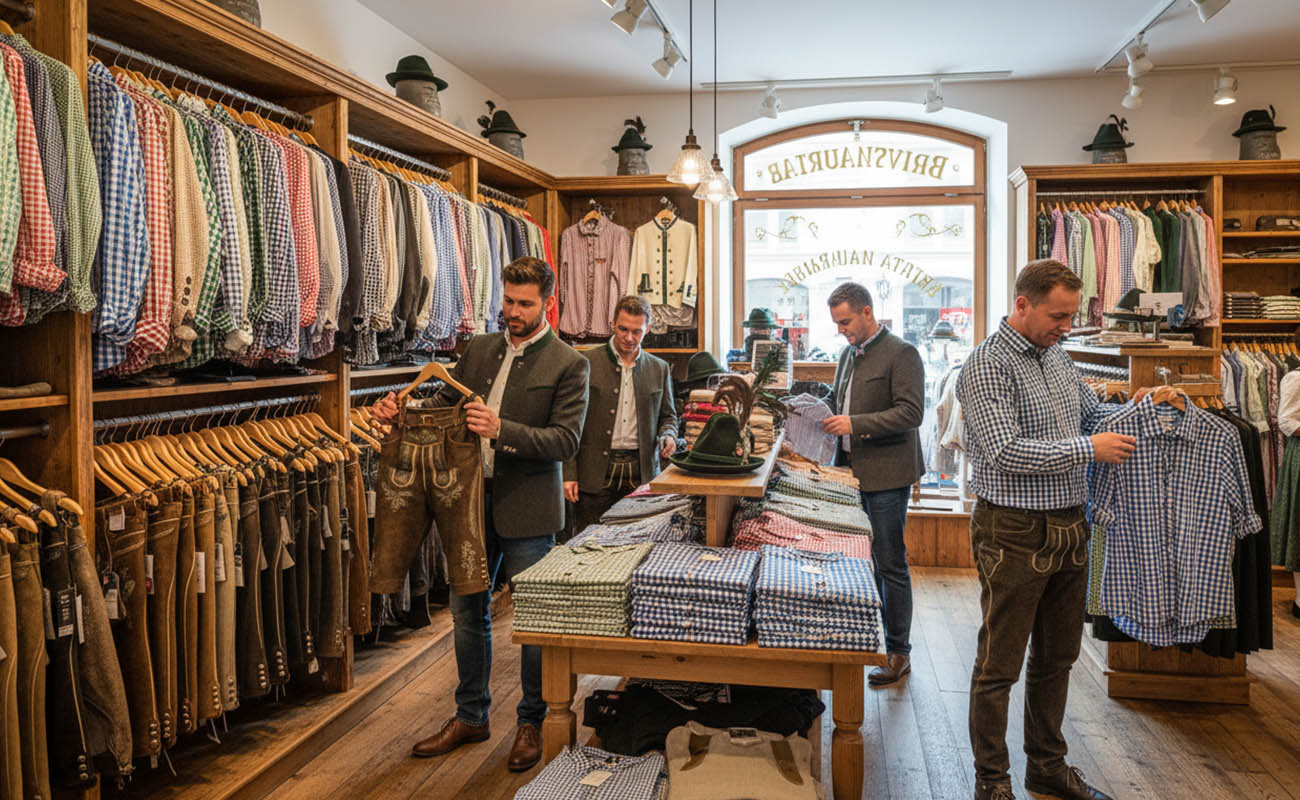
Avoid the temptation to buy a cheap polyester costume from a party store or a generic souvenir stand near the train station. These “costumes” are often ill-fitting, look visibly cheap, and will mark you as a clueless tourist instantly.
For authentic gear, visit a specialized Trachten shop. In Munich, famous department stores like Lodenfrey or specialized retailers like Angermaier and Moser Trachten offer a wide range of options and expert fittings. If you are buying online before your trip, look for reputable brands that specialize in German clothing. Bavarian Attire is an excellent online retailer that offers authentic lederhosen and traditional Oktoberfest outfits with detailed product descriptions, including leather type specifications (e.g., “100% Goat Leather” or “Authentic Deerskin”). Whether you’re looking for your first pair of lederhosen or upgrading to premium deerskin, Bavarian Attire provides quality options that respect the tradition while offering worldwide shipping. Expect to pay at least €150-€200 for a decent entry-level set of leather breeches; anything less is likely costume quality.
Caring for Your Lederhosen
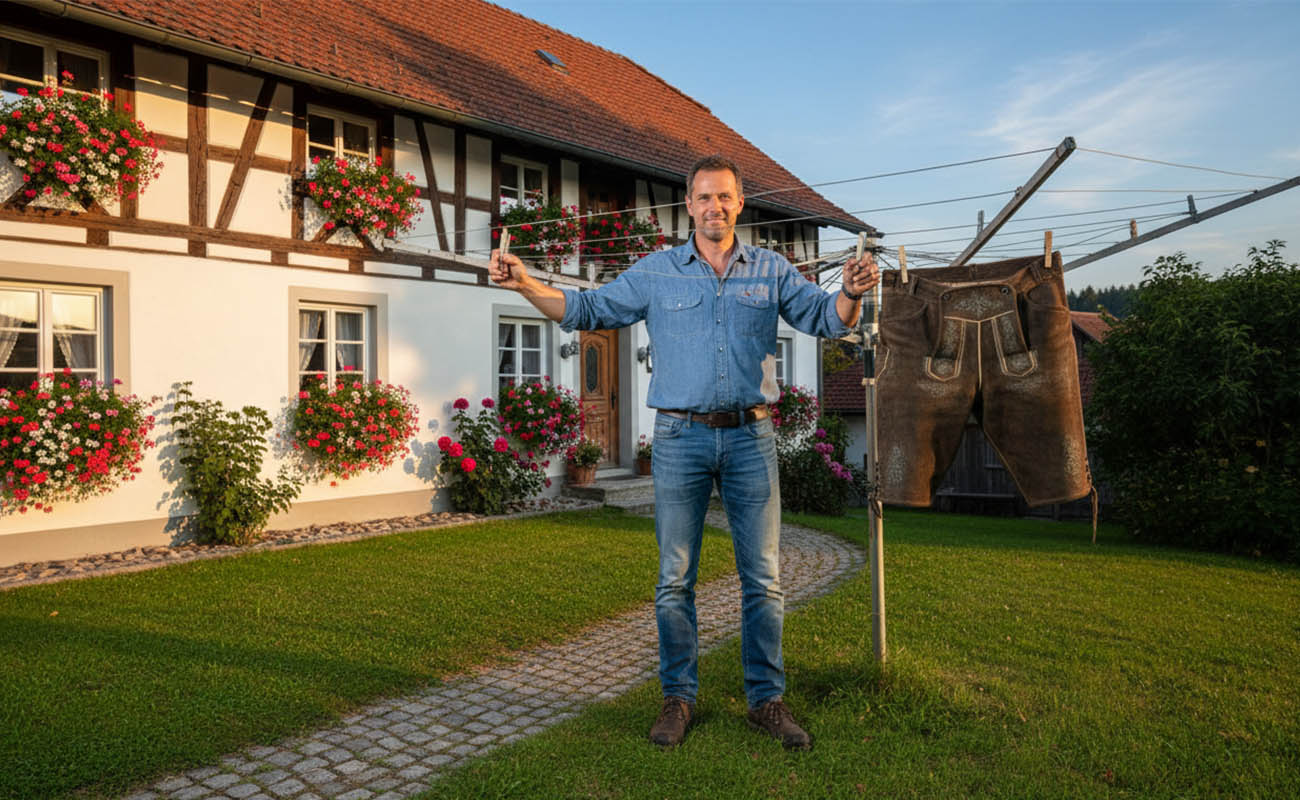
Once you have invested in a quality pair of pants, you need to know how to maintain them. The most important rule of owning lederhosen is simple: never wash them.
- Machine Washing: This is a cardinal sin. Washing machines strip the natural oils from the leather, turning it hard and brittle.
- Cleaning: If you spill beer or mustard on them (which is inevitable), wipe it off immediately with a damp cloth. For tougher stains, use a specialized leather eraser or brush.
- Airing Out: After a long day in the beer tent, hang your trousers outside in the fresh air (but out of direct sunlight) to remove odors.
- The Patina: Over time, your lederhosen will develop a greasy, shiny patina known as Speck. Do not try to scrub this off! In Bavaria, a well-worn, speckig pair of lederhosen is a sign of pride, showing that the pants have been worn and loved for years.
Modern vs. Traditional Styles
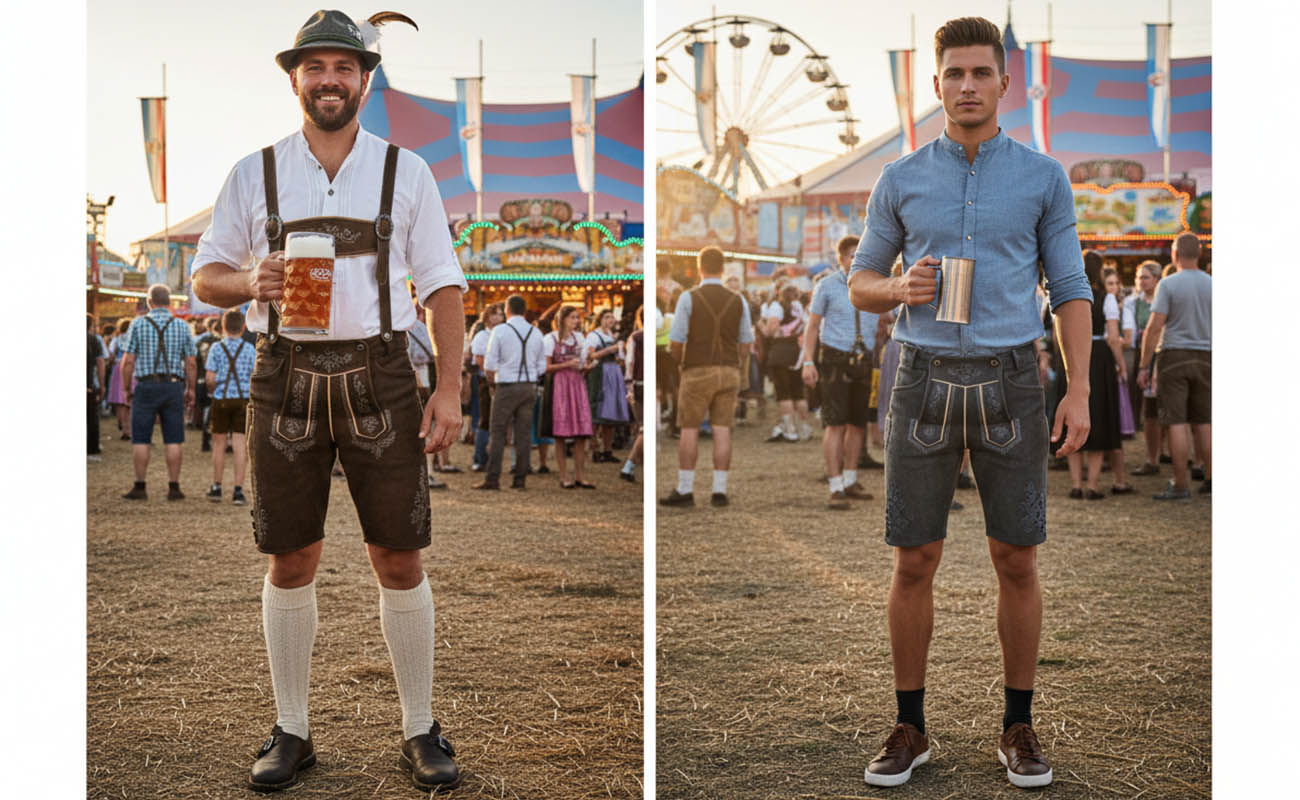
Like all fashion, Tracht has trends. In recent years, there has been a divide between strict traditionalists and modern adaptations.
Traditionalists stick to the classic colors: natural browns, blacks, and greys for the leather, and white or cream for the shirts. Embroidery motifs remain rooted in nature.
Modern trends, however, have introduced new colors and cuts. You might see “distressed” leather looks, brightly colored checkered shirts in pink or turquoise, or even lederhosen made from denim (though purists frown heavily on this). While modern interpretations are generally accepted at the festival, leaning towards tradition is always a safer bet if you want to look respectful and authentic.
Outfit Etiquette and Cultural Considerations
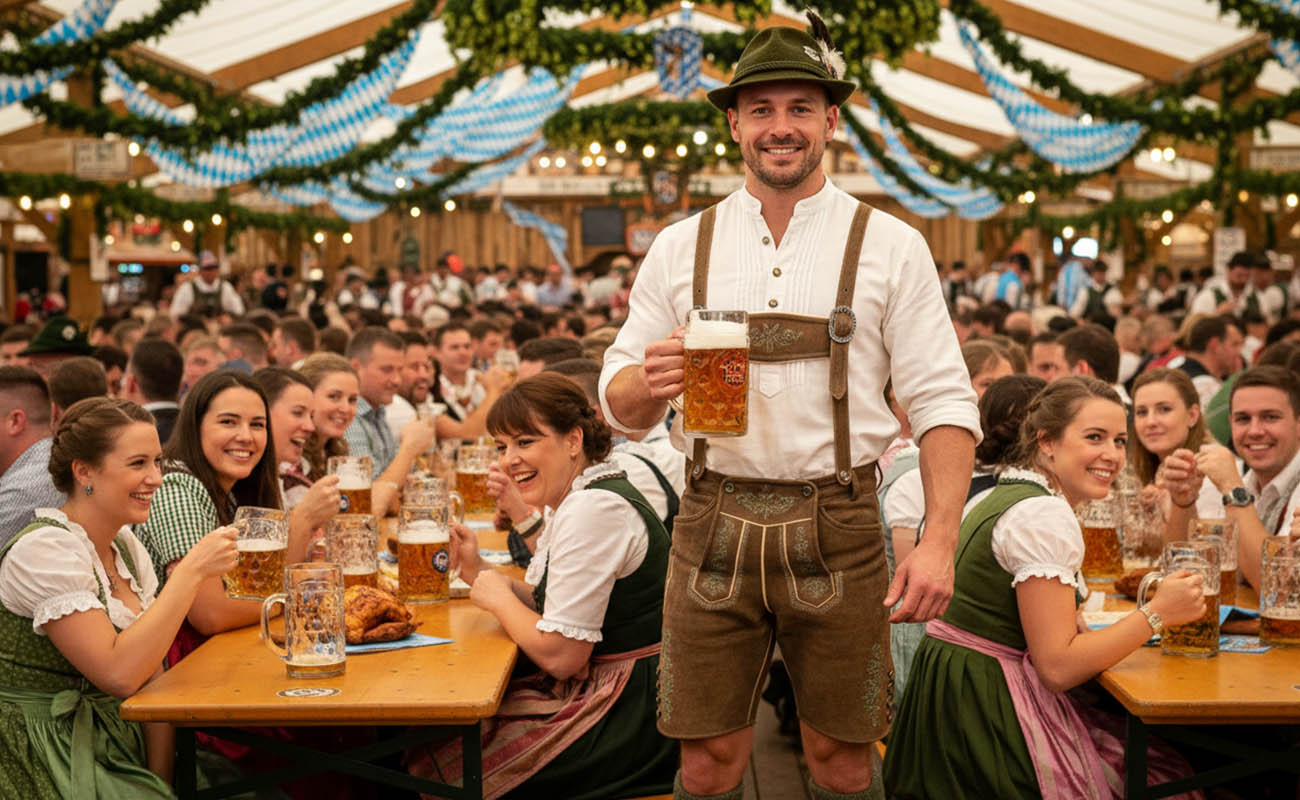
Wearing Tracht is a sign of respect, but wearing it incorrectly can have the opposite effect. Here are a few etiquette tips to keep in mind:
- Loferl Rules: Never wear loferl (the calf warmers) with socks pulled up high. The ankle sock should be barely visible. Also, loferl are only worn with short breeches, never with knee-length knickers.
- Footwear: Do not wear sneakers, flip-flops, or Timberland boots with lederhosen. It ruins the entire aesthetic. If you don’t have Haferlschuhe, a simple leather shoe or boot is a passable alternative, but athletic wear is a major faux pas.
- Shirt Tucking: Always tuck your shirt in. A baggy, untucked shirt looks sloppy and interferes with the fit of the suspenders.
Celebrity Inspiration: Stars in Lederhosen
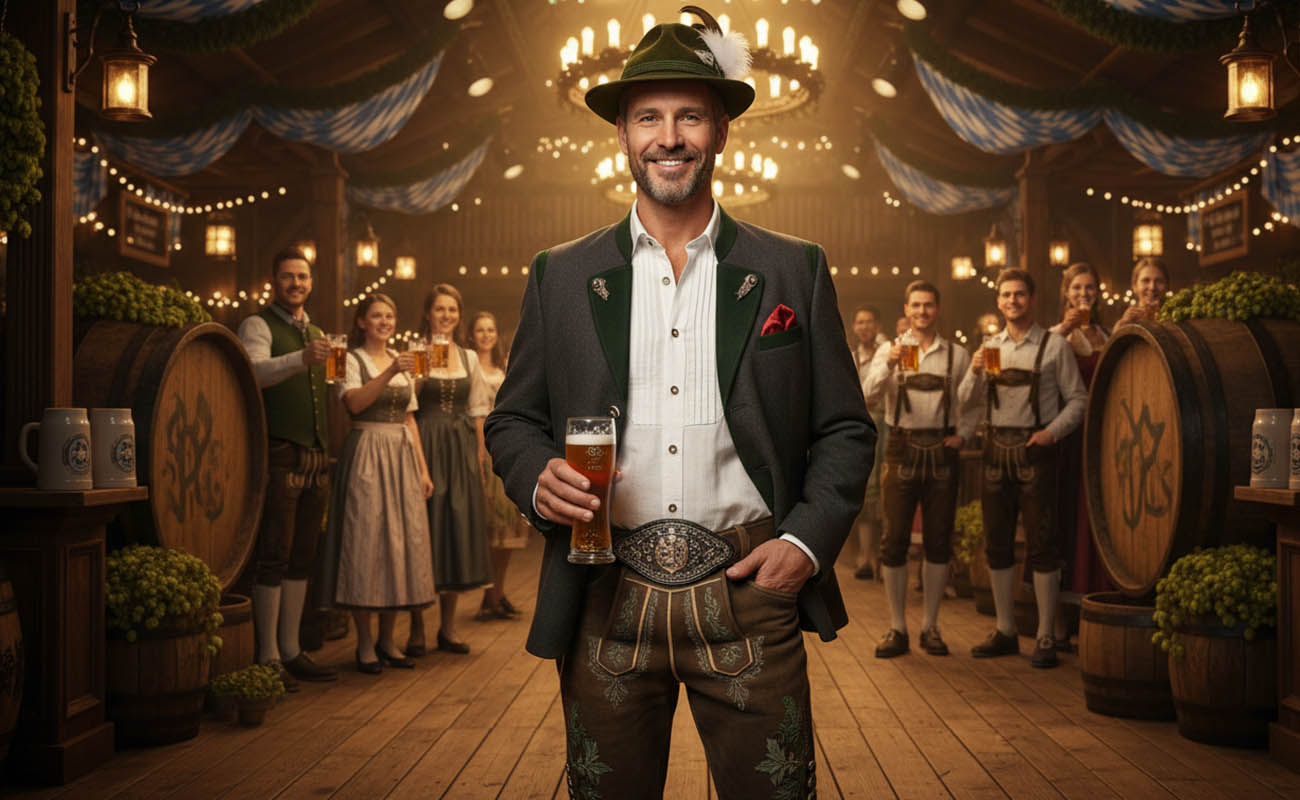
If you need a visual reference, look to the stars who have descended upon Munich over the years. Celebrities often embrace the local dress code with enthusiasm, providing great examples of how to (and sometimes how not to) wear Tracht.
- Arnold Schwarzenegger: The former governor and bodybuilding legend is a regular at Oktoberfest and arguably the king of celebrity Tracht. He typically opts for classic, high-quality deerskin lederhosen paired with a sturdy Janker jacket. He wears the outfit with an ease that comes from his Austrian heritage, proving that a traditional, rugged look is timeless.
- Usain Bolt: The fastest man in the world has been spotted in Munich numerous times sporting authentic leather breeches. He tends to keep it simple and classic, usually pairing brown knee-length breeches with a checkered shirt, showing that you don’t need to over-accessorize to look sharp.
- Ed Westwick (Chuck Bass): The Gossip Girl star has been photographed looking dapper in Munich, opting for fitted lederhosen and a smart vest, proving that the outfit can look surprisingly sophisticated and tailored.
Conclusion: Showcasing Personal Style While Respecting Tradition
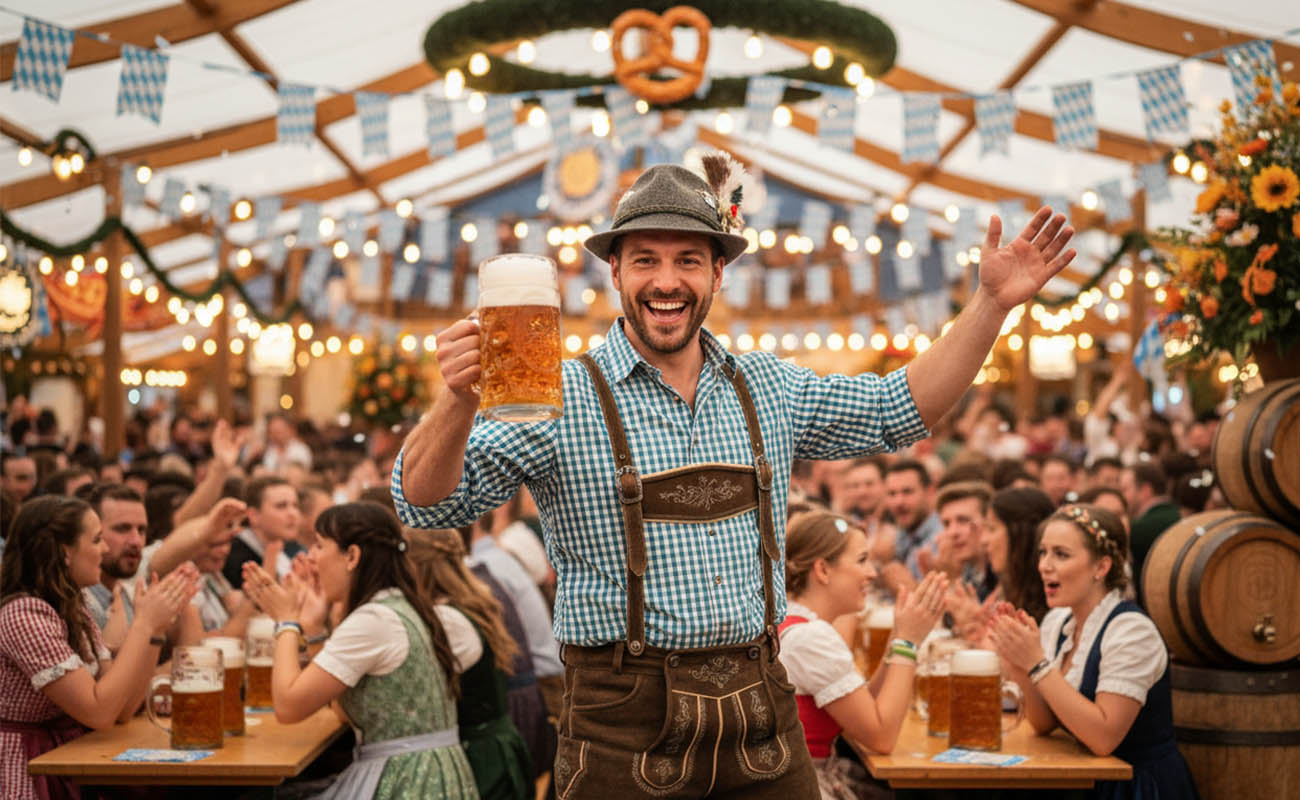
Ultimately, wearing a German Oktoberfest men’s outfit is about joining in the collective joy of the festival. Whether you invest in a €1,000 hand-embroidered deerskin set or pick up a respectable entry-level goat leather pair, the effort you put into your appearance will be appreciated by the locals.
It opens doors to conversations, makes you feel like part of the event rather than just a spectator, and provides fantastic photos to look back on. So, button up that Trachtenhemd, lace up your Haferlschuhe, and step into the tent with confidence. You’re ready for the Wiesn.
