

Did Jews Wear Lederhosen? A Forgotten Chapter of Jewish and Central European History

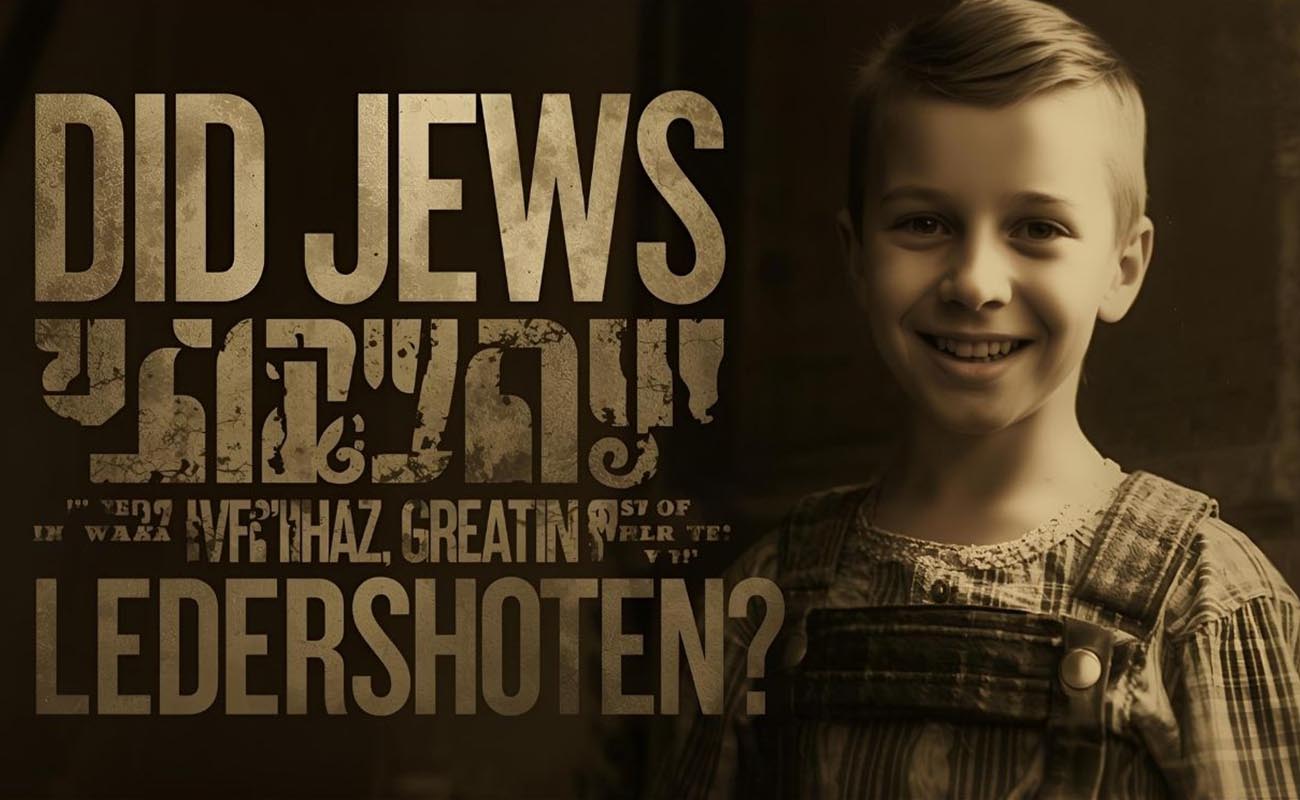
When you picture the iconic Lederhosen—those short, tough, leather breeches with suspenders—you probably think of Bavarian farmers, Alpine villagers, or the rowdy festivities of Oktoberfest. You likely do not picture Jewish boys or men proudly donning this symbol of Germanic and Austrian rural culture. Yet, the question “Did Jews wear Lederhosen?” opens a fascinating window into the complexities of European Jewish identity, assimilation, exclusion, and cultural pride. This seemingly simple question touches on deep issues of belonging, national identity, and the struggle to be both Jewish and fully European in a time of rising nationalism.
Uncovering this story reveals much about how clothes can be more than mere garments—they can represent inclusion, defiance, heritage, and the politics of belonging. This comprehensive exploration dives deep into the history, social context, and lived experiences behind the simple but loaded question: Did Jews wear Lederhosen? We will explore rare photographs, real-life accounts, historical documents, and the evolving meaning of traditional dress among Jewish communities in Austria, Germany, and Central Europe. Through these stories, we discover how ordinary clothing became extraordinary symbols in the struggle for acceptance and survival.
What Are Lederhosen? Origin and Symbolism
Lederhosen (literally “leather pants” in German) are traditional knee-length or short breeches made from leather, associated with Alpine regions—primarily Bavaria (southern Germany), Austria, and parts of Switzerland. Originally, these trousers were worn by peasants, herders, and workers due to their durability and suitability for physical labor in rugged terrains. The leather was often sourced from local animals, making it both practical and economically accessible for rural communities.
Over time, Lederhosen evolved from functional workwear to a potent symbol of regional pride and rustic masculinity. By the late 19th and early 20th centuries, Lederhosen, along with the women’s dress Dirndl, had become emblems of “authentic” Bavarian and Austrian culture. This transformation reflected broader European trends of romanticizing rural life and folk traditions during the industrial age.
The adoption and celebration of Tracht—the German word for traditional regional dress—were not just about fashion. They were about defining who belonged, who was “local,” and who could claim heritage and community. To wear Lederhosen was, in many contexts, to visually declare your place in the national and ethnic tapestry of the Alpine lands. In a rapidly modernizing Europe, traditional dress became a way to assert continuity with the past and claim authentic rootedness in the land.
- Made from durable leather (typically deer, goat, or cow)
- Short or knee-length design with suspenders (Hosenträger)
- Decorated with embroidery and traditional Alpine motifs
- Originally workwear, later became ceremonial and festive attire
- Associated with masculinity, outdoor life, and regional identity
Jews in Central Europe: Between Integration and Distinctiveness
For centuries, Jews in Austria, Germany, and Hungary lived both at the margins and the heart of European society. Sometimes forced to dress differently, sometimes seeking to blend in, Jews navigated complicated and shifting expectations about identity, belonging, and visibility. This balancing act defined Jewish life in Europe for generations, as communities sought to maintain their religious identity while participating in the broader society around them.
In the medieval period, Jews were often required by law to wear distinctive clothing or badges to mark them as different from Christians. Yellow badges, pointed hats, and specific colors were mandated in various regions to ensure Jews remained visibly “other.” However, by the 19th century, as Enlightenment ideas spread and legal restrictions eased in many places, Jews gained more freedom in how they presented themselves. The emancipation of Jews across Central Europe brought new opportunities—and new questions about how to navigate their dual identities.
In the 19th and early 20th centuries, as restrictions eased in many places, many Jews embraced aspects of the local majority culture while also preserving unique traditions. This process, known as assimilation or acculturation, often played out through clothing. Urban Jews, particularly the emerging middle class, adopted contemporary European fashion. But in Alpine regions and smaller towns, this also meant participating in local folk traditions—including wearing Tracht. The debate over how much to assimilate versus how much to maintain distinctiveness was constant and deeply personal for every Jewish family.
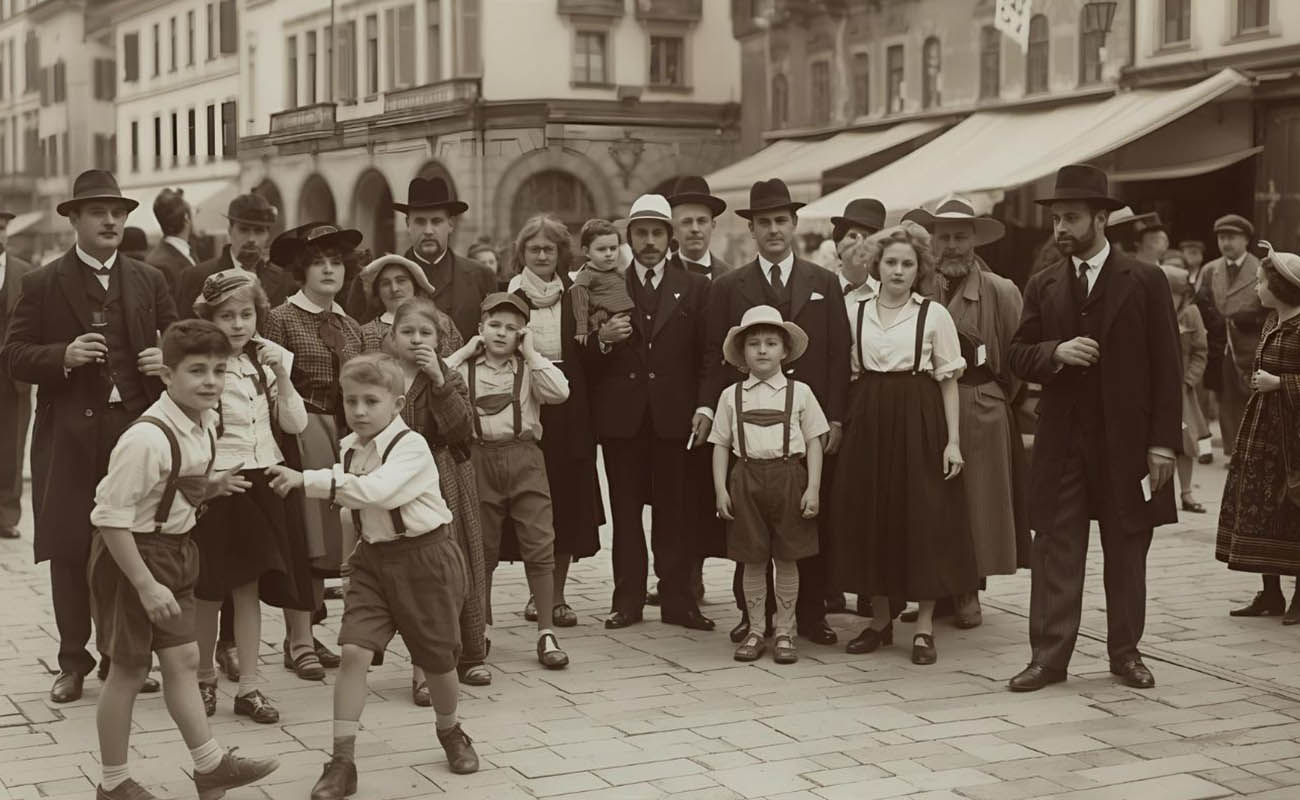
For some Jews, adopting local clothing like the Lederhosen was an act of integration—of belonging to the society they lived in. For others, it was simply practical: why wouldn’t a Jewish boy in Vienna, Salzburg, or Munich wear what all his classmates wore? But tensions simmered beneath the surface. How far could Jews go in adopting majority customs before their difference was erased—or before they were reminded they were not fully accepted? This tension would ultimately come to a tragic head in the Nazi era, when no amount of cultural assimilation could protect Jews from persecution.
Did Jews Really Wear Lederhosen? Evidence from Photographs and Testimony
Did Jews wear Lederhosen? Yes—absolutely, and there is ample photographic, documentary, and anecdotal evidence. In early 20th-century Austria and southern Germany, it was not at all uncommon to see Jewish boys and young men in Lederhosen, especially in urban and semi-urban settings where Jews mixed with the non-Jewish population. This practice was so normalized that many contemporary observers didn’t even think to comment on it—it was simply part of everyday life in multicultural Austrian and German cities.
Photographic Evidence
Several archival photographs, now held by institutions such as the United States Holocaust Memorial Museum (USHMM), the Leo Baeck Institute, and Jewish museums in Vienna and Munich, show Jewish children and teenagers in Lederhosen. These images are crucial—they refute any simple story of separation and show how Jews lived as part of the wider society. Each photograph tells a story not just of clothing, but of childhood friendships, family outings, and the ordinary moments that made up Jewish life before the Holocaust.
One famous image from Vienna in the 1930s shows a Jewish boy, smiling with friends, unmistakably dressed in Lederhosen—utterly indistinguishable in clothing from his non-Jewish peers. Another photograph depicts Alfred Rahn, a Jewish man in Germany, wearing Lederhosen during a hiking excursion. These photographs were often taken at summer camps, school outings, family gatherings, and hiking trips in the Austrian and Bavarian Alps. The joy and normalcy captured in these images stands in stark contrast to the tragedy that would soon follow, making them all the more poignant for modern viewers.
Personal Accounts
Memoirs and family stories also attest to the normalcy of Jews wearing Lederhosen. Konrad Mautner, a Jewish folklorist and collector of Austrian folk songs, was a passionate advocate for Tracht, researching and wearing Lederhosen as both an ethnographer and participant in local culture. He believed that folk traditions belonged to all Austrians, regardless of religion. His work helped preserve Alpine folk culture even as he maintained his Jewish identity, demonstrating that these identities need not be in conflict.
Children of Jewish families in Vienna, Salzburg, and the Tyrol region remember going to school or summer camp in Lederhosen, sometimes alongside cousins or friends who later perished in the Holocaust. These memories, preserved in oral histories and memoirs, paint a picture of everyday life where Jewish and non-Jewish children played, hiked, and celebrated together—all wearing the same traditional dress. For many survivors, these memories of shared childhood experiences remain bittersweet reminders of a world that was violently destroyed.
Reasons for Wearing Lederhosen
Social Integration: Many Jews, especially those who were upwardly mobile or keen to “fit in,” wanted their children to have the same experiences as other local kids. Wearing Lederhosen was part of participating in school, sports clubs, and youth organizations.
Patriotism and Belonging: Some Jewish families felt a deep loyalty to their Austrian or German homelands and expressed this through national or regional dress. They saw themselves as Germans or Austrians first, who happened to be Jewish.
Practicality: Lederhosen were simply the most sensible clothing for outdoor play and hikes in Alpine terrain. They were durable, comfortable, and designed for the activities children and young adults enjoyed.
Cultural Participation: Involvement in local clubs, scouting groups, and festivals often meant wearing Tracht, regardless of religion. Organizations like the Wandervogel movement and various hiking clubs encouraged traditional dress for all members.
Family Tradition: Some Jewish families had lived in Alpine regions for generations and considered Tracht part of their own heritage, passed down through families just as it was in non-Jewish households.
The Meaning of Tracht: Belonging, Exclusion, and Jewish Identity
For Jewish families, wearing Lederhosen could mean inclusion—but it could also underscore the limits of that inclusion. In some contexts, Jewish children and adults were welcomed as full participants in local life; in others, subtle and overt forms of anti-Semitism reminded them that no matter how they dressed, they were outsiders. This dual experience—of belonging and exclusion—characterized much of Jewish life in interwar Central Europe, where progress toward equality coexisted with persistent prejudice.

The Dual Meaning of Lederhosen
Assimilation: For the children of assimilated Jewish families, Lederhosen were simply what one wore. In interwar Vienna, Jewish parents who saw themselves as “Austrians of the Mosaic Faith” dressed their children as the other Austrians did. This helped break down social barriers, at least on the surface. Jewish boys joined hiking clubs, attended folk festivals, and sang traditional Alpine songs—all while wearing Lederhosen. For these families, cultural integration seemed like the path to acceptance and a secure future in their homeland.
Resistance: Ironically, after the Nazis came to power, the relationship between Jews and Lederhosen took on a new, more defiant meaning. When the regime banned Jews from wearing Tracht—including Lederhosen and Dirndl—it transformed these garments into symbols of exclusion and, for some, resistance. What had once been a symbol of belonging became a marker of everything Jews were being denied—their citizenship, their culture, their very right to exist in the lands of their birth.
As survivor Miguel Herz-Kestranek later said: “Tracht is not a uniform but an expression of extreme individualism.” For some, wearing Lederhosen became a quiet act of protest, a way to claim a place from which they were being violently excluded. These small acts of defiance, though dangerous, represented a refusal to accept the Nazi definition of who could be truly Austrian or German.
Clubs, Festivals, and Jewish Involvement
It’s important to remember that Jewish participation in regional culture was not limited to clothing. Many Jews in Vienna and elsewhere joined local sports clubs, hiked in the mountains, and participated in folk festivals. Jewish youth movements—such as Hashomer Hatzair and Blau-Weiss—sometimes encouraged wearing Lederhosen or similar hiking attire during outings, blending Zionist ideals with local custom. These movements saw no contradiction between preparing for a future in Palestine and enjoying the mountains and traditions of their Austrian or German homeland in the present.
Jewish families vacationed in Alpine resorts, attended Oktoberfest celebrations, and participated in harvest festivals. In these settings, Lederhosen and Dirndl were the expected attire, and Jews wore them as naturally as their neighbors. The boundaries between Jewish and non-Jewish cultural life were often blurred in these everyday interactions, revealing a more complex reality than simple narratives of separation would suggest.
Should a Jewish Girl Wear a Dirndl? Jewish Women and the Dirndl Tradition
This question—”Should a Jewish girl wear a Dirndl?”—captures the same tensions and complexities that surrounded Jewish men and boys wearing Lederhosen. The answer, both historically and today, is deeply personal and tied to questions of identity, belonging, and cultural expression. It reflects ongoing debates within Jewish communities about how to navigate majority cultures while maintaining distinct Jewish identity.
While Lederhosen were typically worn by boys and men, the Dirndl—the colorful, patterned dress with apron and fitted bodice—became popular among women and girls. Jewish women, especially in urban centers and holiday resorts, wore Dirndls at summer retreats, community picnics, and family gatherings. The Dirndl offered a way for Jewish women to participate in local fashion trends while also expressing regional pride and cultural connection.
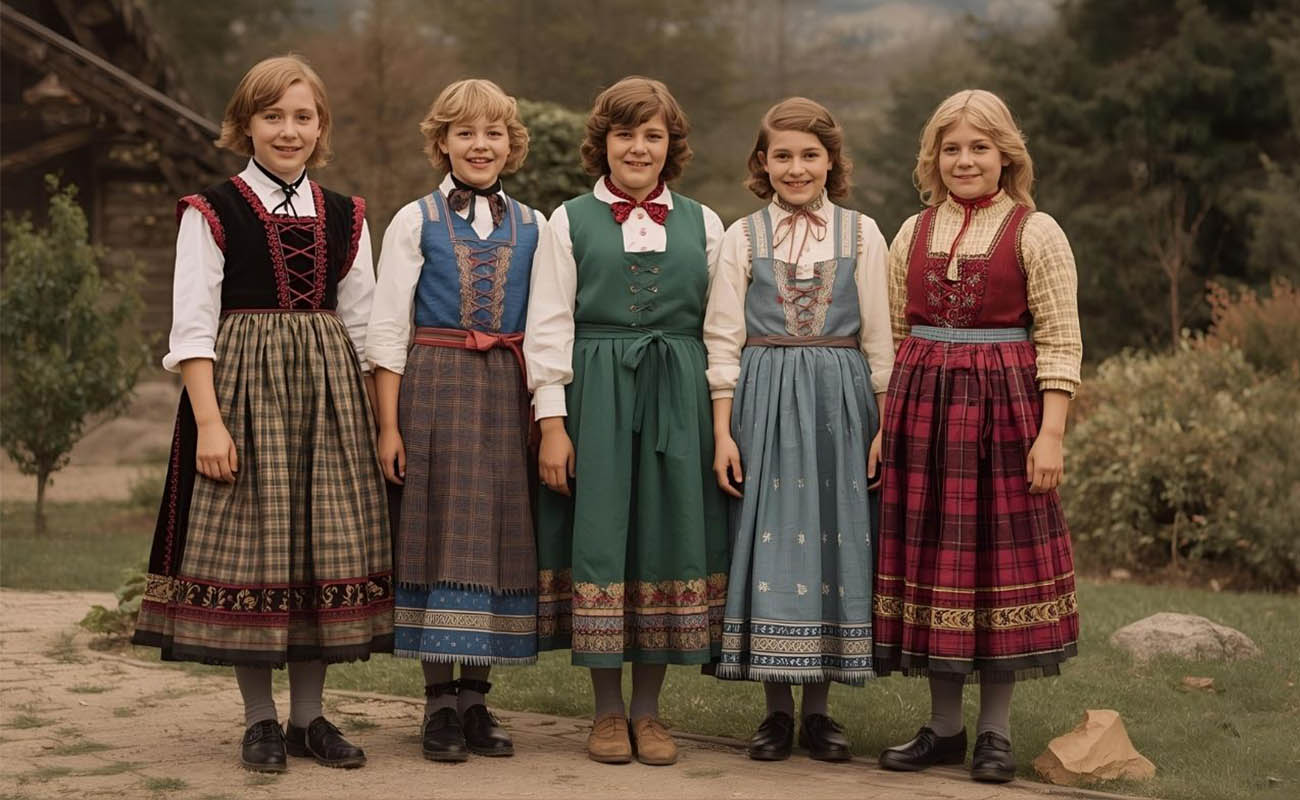
Photos from the 1920s and 1930s show Jewish girls at summer camps or in Alpine spas wearing Dirndls just like their non-Jewish counterparts. For many, this was simply a way to join in the fun, embrace local fashion, or assert their place in Austrian or German society. Young Jewish women wore Dirndls to dances, church festivals (even as observers), and community celebrations. These photographs, preserved in family albums and archives, capture moments of joy and normalcy that would soon become impossible.
Historical Context: Jewish Girls in Dirndls
Jewish girls wore Dirndls for the same reasons Jewish boys wore Lederhosen—integration, practicality, and participation in local culture. In pre-war Vienna, Salzburg, and Munich, it was common to see Jewish girls dressed in traditional Alpine attire at school events, hiking trips, and community celebrations. The Dirndl was comfortable, fashionable, and allowed Jewish girls to participate fully in the social life of their communities.
For some families, allowing daughters to wear Dirndls was a statement of belonging: “We are Austrian,” “We are German,” “We are part of this society.” For others, it was simply what everyone wore, and religious identity didn’t dictate fashion choices in everyday life. The decision to wear or not wear traditional dress was rarely simple, involving considerations of family tradition, peer pressure, personal preference, and complex feelings about national identity.
Jewish women also wore Dirndls as fashion statements. In the 1920s and 1930s, the Dirndl experienced a revival as a chic, countryside alternative to urban fashion. Department stores in Vienna and Munich sold stylized versions of traditional Dirndls, and Jewish women were among their customers. Fashion magazines featured Dirndl designs, and Jewish women participated fully in these trends, seeing no conflict between their religious identity and their participation in contemporary Austrian or German fashion.
Modern Considerations: Should Jewish Girls Wear Dirndls Today?
Today, the question takes on new meaning. Some Jewish families in Austria and Germany embrace Dirndls as part of their cultural heritage—a way to honor the memory of ancestors who wore them proudly before the Holocaust. Others view traditional German and Austrian dress with ambivalance or choose not to wear it due to the painful history. The trauma of the Holocaust continues to shape how many Jews relate to German and Austrian culture, even generations later.
There is no single “right” answer. Each Jewish girl and woman must decide for herself, based on her own connection to history, culture, and identity. What matters is that the choice is hers to make—a freedom that was violently denied to previous generations. This freedom of choice itself represents a victory over the forces that once tried to dictate who could and couldn’t participate in European culture.
The Rise of Nationalism and Exclusion: When Clothes Became a Political Statement
The seemingly simple act of wearing Lederhosen became highly charged as Europe’s political climate shifted in the 1930s. The rise of nationalist, fascist, and ultimately Nazi ideologies turned symbols of regional identity into markers of exclusion and racism. What had once been innocent expressions of local pride became weaponized as tools of ethnic and racial categorization.
In Austria and Germany, organizations like the Bund der Deutschen Trachtenfreunde (League of German Tracht Friends) sometimes explicitly excluded Jews and other minorities, claiming authentic Tracht was only for “Aryans.” These groups promoted the idea that traditional dress represented racial purity and blood connection to the land—concepts that had no room for Jewish participation. The pseudoscientific racial theories of the Nazi era transformed cultural symbols into biological markers, with devastating consequences.
In 1938, after the Nazi annexation of Austria (the Anschluss), Jews were officially banned from joining most clubs and from wearing Tracht in public. Suddenly, Lederhosen—once a garment of integration—became a forbidden symbol. Jewish children were expelled from youth groups, hiking clubs, and folk dance ensembles. Their Lederhosen and Dirndls, once symbols of belonging, now marked them as intruders. The speed and completeness of this reversal shocked many Jewish families who had believed their cultural assimilation would protect them.
How the Ban Was Enforced:
- Jews were expelled from traditional costume clubs and cultural organizations
- Public humiliation and violence against Jews wearing Tracht
- Confiscation of traditional clothing from Jewish households
- Propaganda campaigns depicting Jews as foreign to German/Austrian culture
- Legal restrictions preventing Jews from purchasing or wearing regional dress
Some Jewish families gave up these clothes in sorrow or fear. Others, however, clung to them as tokens of a lost world, or even wore them in defiance in private settings or emigration photos—a final assertion of their right to the culture they had helped build.
The Nazi Era: Bans, Exclusion, and Trauma
The question “Did Jews wear Lederhosen?” cannot be answered fully without facing the horror of what came next. After the Nazis came to power, Jewish participation in German and Austrian cultural life was systematically erased. The Nuremberg Laws of 1935 stripped Jews of citizenship, and subsequent regulations touched every aspect of life—including clothing.
Laws forbade Jews from wearing Tracht or participating in “Aryan” clubs, and many Jews—especially children—were bullied or attacked if they wore such clothing in public. Children remember being beaten up on the way to school, having their Lederhosen torn off, or being spat upon for daring to wear “German” clothing.
Testimonies from Survivors
In memoirs and interviews, Holocaust survivors recall the pain of having to stop wearing Lederhosen or Dirndls. Some kept their beloved garments in hiding, as relics of happier times. Others destroyed them in fear, worried that possessing such clothing could be used as evidence of “racial defilement” or “impersonating Aryans.”
For some, the memory of being forced out of clubs, schools, or social groups, despite all efforts to “belong,” was one of the most painful premonitions of what was to come. As one survivor recalled: “We thought if we dressed like them, spoke like them, loved the same mountains and songs—we would be safe. We were so wrong.”
Lederhosen as Protest
A few defiant individuals continued to wear Lederhosen or Dirndl even after the bans, sometimes as a silent protest, sometimes simply as a refusal to let the Nazis define who they were. For these Jews, clothing became a battleground of identity—a way to assert that they were as Austrian or German as anyone, no matter what the regime said.
Some Jews wore their Lederhosen in emigration photographs, a final statement before fleeing to America, Palestine, or other safe havens. These photographs, now preserved in archives, speak to the pain of forced exile and the determination to remember a home that rejected them.
After the War: Memory, Loss, and the Search for Belonging
The legacy of Jewish Lederhosen did not end with World War II. In the decades that followed, as survivors rebuilt their lives in Austria, Germany, the United States, and Israel, memories of pre-war life—including the clothes they wore—became powerful symbols of both loss and resilience.

Postwar Austria and Germany
In postwar Austria and Germany, Jewish communities shrank dramatically, but a handful of families remained or returned. For many, Lederhosen and Dirndl were reminders of a shattered world. Some Jewish survivors and their children reclaimed these clothes, wearing them on special occasions or in memory of loved ones lost. Others avoided them entirely, associating Tracht with the culture that had rejected and murdered their families.
The relationship between Jews and traditional German/Austrian culture remained complicated. Some survivors wanted nothing to do with German language or customs. Others insisted on reclaiming their rightful place in the culture they had always considered their own.
Revival and Reinterpretation
In recent years, a new generation of Jews in Austria and Germany has begun to rethink the meaning of traditional dress. Some Jewish museums feature Lederhosen and Dirndl as part of their exhibitions, highlighting the complex and sometimes contradictory history of Jewish participation in national culture.
Young Jewish designers—such as the Munich-based Noh Nee—have even begun reinterpreting Tracht for the 21st century, blending old forms with new meanings. These modern interpretations acknowledge the painful history while asserting a right to cultural participation and creative expression.
Jewish cultural festivals in Vienna and Berlin sometimes include Tracht fashion shows, folk dance performances, and discussions about the meaning of regional identity in a multicultural Europe. These events challenge simplistic narratives and celebrate the diversity of Jewish experience.
Today: Lederhosen, Identity, and Shared Heritage
So, do Jews wear Lederhosen today? The answer is: some do, and for a variety of reasons. At festivals like Oktoberfest, it’s not uncommon to see Jews and non-Jews alike enjoying Tracht as part of their shared culture.
For some Jewish families in Austria and Germany, Lederhosen is simply festive attire, stripped of its older, darker meanings. For others, wearing Lederhosen or Dirndl is a way to honor ancestors, reclaim a heritage that was nearly destroyed, or assert a right to belong in the countries their families helped build.
- To honor family heritage and pre-Holocaust ancestors
- As participants in local Austrian/German culture
- To reclaim traditions stolen by Nazi ideology
- Simply because they like the style and feel connected to Alpine culture
- To challenge stereotypes about what Jewish identity looks like
Lederhosen in Jewish Museums and Memory
Jewish museums in Vienna, Munich, and elsewhere now feature Lederhosen and Dirndl in their collections. These clothes serve as both a reminder of integration and a symbol of exclusion. They help visitors understand that Jewish life in Austria and Germany was never as separate—or as simple—as stereotypes suggest.
Exhibitions explore how clothing choices reflected complex negotiations of identity, how fashion became politicized, and how memory is preserved through material objects. These garments, displayed behind glass, tell stories of childhood joy, teenage rebellion, romantic love, and ultimately, tragic loss.
Jewish Voices on Lederhosen
Modern Jewish writers, artists, and thinkers continue to debate the meaning of Tracht. Is it a symbol of assimilation? Of lost innocence? Of a complicated but enduring connection to homeland? For some, putting on Lederhosen is an act of memory or solidarity. For others, it is simply about comfort, style, or fun.
What is clear is that there is no single answer—just as there was never a single way to be Jewish in Central Europe. The diversity of responses reflects the diversity of Jewish experience itself.
Frequently Asked Questions
Did Jews really wear Lederhosen in Austria and Germany?
Yes. Many Jewish children, men, and even women (via Dirndl) wore traditional Alpine dress in Austria, Germany, and Hungary—especially before World War II. Photographic evidence and survivor testimonies confirm this was common practice.
Why did Jewish families dress in Lederhosen?
For reasons of integration, patriotism, practicality, and participation in local cultural life. Sometimes, wearing Lederhosen was also an act of pride and defiance. Jewish families wanted their children to participate fully in society.
Were Jews banned from wearing Lederhosen?
Yes. After 1938, the Nazi regime banned Jews from wearing Tracht, including Lederhosen and Dirndl, as part of a wider effort to erase Jewish participation in “Aryan” culture. This ban was enforced through violence, humiliation, and legal restrictions.
Do Jews still wear Lederhosen today?
Some do, particularly in Austria and Germany, at cultural events and festivals. The meaning today is complex—ranging from family tradition to cultural revival. Each individual makes their own choice based on personal history and identity.
Is Lederhosen still a symbol of exclusion for Jews?
For some, yes; for others, it is a reclaimed tradition or simply part of local culture. The meaning varies by individual and context. Younger generations often view Tracht differently than Holocaust survivors.
Should a Jewish girl wear a Dirndl?
This is a personal decision based on individual connection to culture, history, and identity. There is no universal answer. Some embrace it as heritage; others avoid it due to painful associations. What matters is freedom of choice.
Conclusion: Why This History Matters
The story of Jews and Lederhosen is about much more than fashion or folklore. It is a window into the ways Jewish life in Central Europe was deeply intertwined with national culture—sometimes celebrated, sometimes brutally rejected. It reveals how ordinary objects—a pair of leather shorts, a traditional dress—can carry extraordinary weight.
It is about the efforts of generations of Jews to belong, to participate, and to assert their right to be both Jewish and Austrian, German, or Hungarian. It is about children who hiked in the Alps wearing Lederhosen, teenagers who danced at festivals in Dirndls, and families who believed that shared culture could transcend religious difference.
It is also a lesson for today: that cultural identity is never simple, and that what we wear can carry histories of joy, sorrow, belonging, and resistance. The question “Did Jews wear Lederhosen?” reminds us that diversity has always been part of European culture, even when powerful forces tried to erase it.
Next time you see a pair of Lederhosen or a colorful Dirndl, remember that their story is richer and more complicated than you might think—and that, yes, once upon a time, Jews wore Lederhosen too. And some still do, proudly reclaiming a heritage that was nearly lost.
