
Beyond Oktoberfest: What Exactly is a Bavarian Jacket?

When you think of German clothing, your mind might immediately jump to the plastic-feeling, neon-colored costumes seen at Halloween parties or cheap “Oktoberfest” themed bar nights. But these mass-produced imitations couldn’t be further from reality. The authentic Bavarian jacket—known as a Janker—is a garment of exceptional quality, steeped in centuries of Alpine tradition.
Far from a mere costume, the Janker is a symbol of regional pride, sustainable craftsmanship, and rugged functionality. Originally designed to protect herdsmen from the harsh winds of the Alps, it has evolved into a status symbol that is just as appropriate at a wedding as it is at a beer hall.
Today, this classic piece of Tracht (traditional dress) is gaining global popularity. In an era of fast fashion, the Janker stands out as an investment piece: durable, versatile, and undeniably stylish. Whether you are looking to honor your heritage or simply add a sophisticated, textured layer to your modern wardrobe, understanding the Janker is the first step.
In this guide, we will explore the rich history of the Bavarian jacket, uncover the secrets of Loden fabric, and show you exactly how to style this timeless piece for the 21st century.
Defining the Classic Bavarian Jacket (The Janker)

To truly appreciate the Bavarian jacket, one must understand what sets it apart from a standard blazer or sport coat. It is a garment defined by specific cuts, fabrics, and a history that is inextricably linked to the landscape of the Alps.
Etymology and Origin
The term Janker (pronounced ‘yan-ker’) refers specifically to a hip-length, straight-cut jacket made of milled wool. While the word itself has debated origins, the garment’s roots are firmly planted in the Alpine regions of Austria and Bavaria. It began as functional workwear for hunters, foresters, and herdsmen who needed clothing that could withstand rain, wind, and rough terrain without restricting movement.
Historical Evolution
Over centuries, the Janker transitioned from humble peasant workwear to a symbol of national identity. By the 19th century, spurred by the Austrian Emperor Franz Joseph I (who was an avid hunter and wore traditional garb), Tracht became fashionable among the aristocracy. This elevated the Janker from the fields to the parlors of the elite, cementing its status as a garment of respectability and class.
Key Design Features
While styles can vary between villages, a classic Trachtenjanker typically features:
- Boxy, Hip-Length Cut: Unlike modern tapered suits, the Janker has a straighter, boxier silhouette designed for layering.
- Stand-Up Collar: Often featuring embroidery or contrast piping, this collar protects the neck from drafts.
- Contrast Trim: You will frequently see green piping (typically felt or velvet) outlining the pockets, collar, and button placket.
- The Box Pleat: Located on the back, this pleat allows for greater range of motion—originally essential for shooting or climbing.
Materials and Craftsmanship: Why It Lasts a Lifetime

The secret to the Bavarian jacket’s longevity lies in its materials. Authentic Tracht refuses to compromise on quality, relying on natural fibers that outperform many modern synthetics.
Loden Fabric
The soul of a true Janker is Loden. This is a dense, water-resistant wool fabric that undergoes a laborious finishing process.
- The Process: After weaving, the wool is subjected to “wet finishing” or Walken. It is soaked in warm water and soaps, then pounded and rubbed until it shrinks by up to 40%.
- The Result: This felting process closes the gaps between fibers, creating a fabric that is windproof, highly water-resistant, and incredibly durable, all while remaining breathable.
- Temperature Regulation: Because it is pure wool, Loden regulates body temperature, keeping you warm in the snow but breathing well during a hike.
Leather Variations
While Loden is the most common material for a Janker, high-end variations exist in leather. These are often made from soft, tanned deerskin or chamois. These jackets are exceptionally heavy-duty and develop a unique patina over decades of wear, much like a good pair of leather boots.
Authentic Details
The hardware on a Janker is just as important as the fabric.
- Stag Horn Buttons: Authentic jackets use buttons made from the shed antlers of red deer (Hirschhornknöpfe). No two buttons look exactly alike.
- Metal Buttons: Some formal styles or specific regional variations utilize coin-style metal buttons, often embossed with crests or eagles.
- Embroidery: The stitching on a collar isn’t just decoration; traditionally, specific floral patterns or stitching styles could indicate exactly which village or valley the wearer hailed from.
European Production
Unlike the “costume” versions found in party stores, authentic Bavarian jackets are still largely produced in Europe. Many manufacturers in Austria and Germany are family-owned businesses that have been operating for generations. This commitment to local production ensures ethical labor standards and a level of quality control that mass-market fashion simply cannot match.
When to Wear It: From Festivals to Formal Events
One of the most common misconceptions about the Bavarian jacket is that it is only for Oktoberfest. In reality, it is a versatile wardrobe staple in the Alpine region.
Oktoberfest and Volksfests
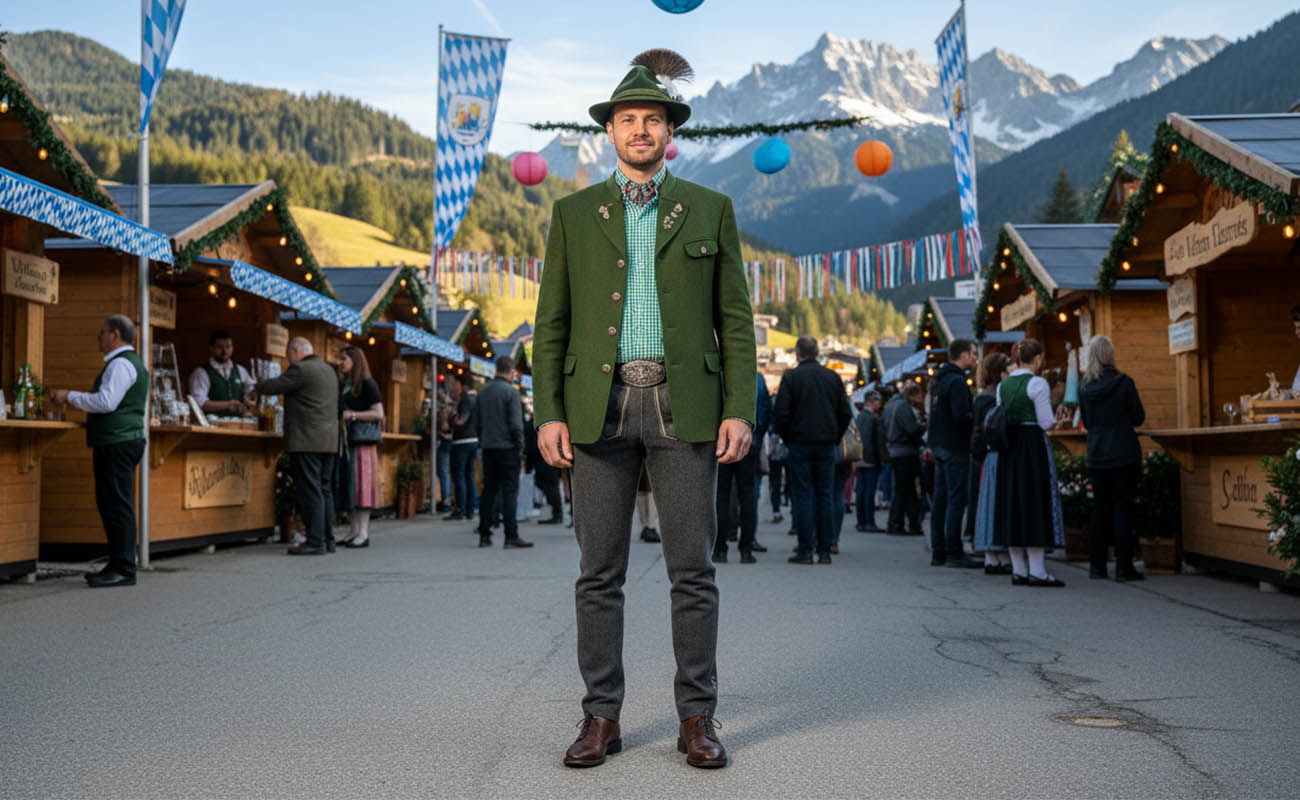
This is the most obvious occasion. During Oktoberfest in Munich or local Volksfests in villages, the Janker serves a practical purpose. September evenings in Bavaria can get chilly, and the Janker provides a warm, weatherproof layer over a checkered shirt and Lederhosen. It elevates the festive look from “party-goer” to “traditional enthusiast.”
Formal Tracht Events
In Bavaria and Austria, traditional clothing is held in high regard. A high-quality Janker, paired with the right trousers and vest, is widely considered equivalent to a tuxedo or a dark suit.
- Weddings: It is common for grooms and guests to wear Tracht to weddings.
- The Opera: You will frequently see elegant Loden jackets in the grand opera houses of Vienna and Munich.
- Church and State: Local politicians and churchgoers wear them as a sign of respect and cultural solidarity on Sundays and holidays.
Everyday Wear
The modern approach to Tracht is “Split-Tracht”—taking one traditional piece and mixing it with modern clothing. This allows the beautiful craftsmanship of the Janker to be enjoyed on a Tuesday at the office, not just at a festival.
Styling Your Bavarian Jacket

You don’t need a full set of leathers to pull off this look. Here is how to style a Janker for different contexts.
The Traditional Look
If you are aiming for the full, authentic Alpine aesthetic:
- The Base: Start with a checkered or plain white Trachten shirt (often made of linen or cotton).
- The Bottoms: Pair with authentic Lederhosen (leather breeches) or Kniebundhosen (knickers).
- The Footwear: Finish with Haferlschuh (traditional side-laced shoes) and thick wool socks (Loferl).
Modern Street Style
This is where the Janker truly shines as a fashion statement. Its structured, textured look pairs beautifully with contemporary staples.
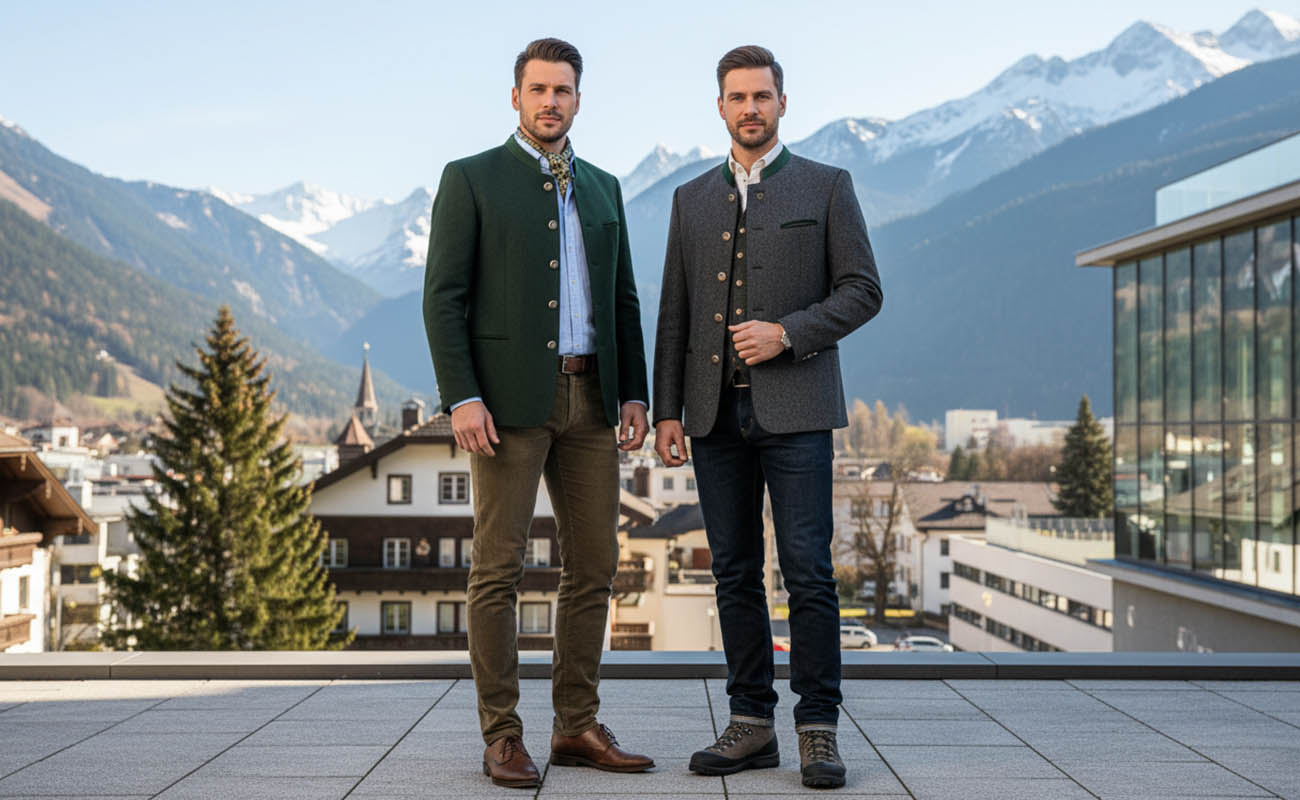
- Casual Cool: Pair a grey or charcoal Loden Janker with dark denim jeans and a crisp white t-shirt. Leave the jacket unbuttoned for a relaxed vibe.
- Winter Layering: The collarless or stand-up collar design makes it perfect for layering over a turtleneck sweater or a hoodie for a rugged, urban look.
- Office Appropriate: Wear a navy or anthracite Janker with beige chinos and an Oxford button-down shirt. It replaces the standard navy blazer with something far more interesting.
For Women
Women’s versions, often called a Walkjacke or fitted Janker, are cut to accentuate the waist.
- With Tracht: These are the standard outer layer over a Dirndl dress.
- Modern Twist: They look exceptionally chic paired with a high-waisted pencil skirt or tailored wool trousers.
Care and Maintenance: Preserving Your Investment
A genuine Bavarian jacket is an investment that can last for decades—even generations—if treated correctly. Loden is naturally dirt-repellent, so it requires less washing than cotton or synthetics.
Airing Out
Because wool is antimicrobial and odor-resistant, you rarely need to “wash” a Janker.
- The Shower Trick: After wearing it to a smoky beer hall or a restaurant, hang the jacket in the bathroom while you take a hot shower. The steam helps release odors and smooths out minor wrinkles.
- Fresh Air: Simply hanging it outside in fresh, humid night air is often enough to refresh the fibers.
Spot Cleaning
Spills happen. Here is how to handle them without ruining the felted wool:
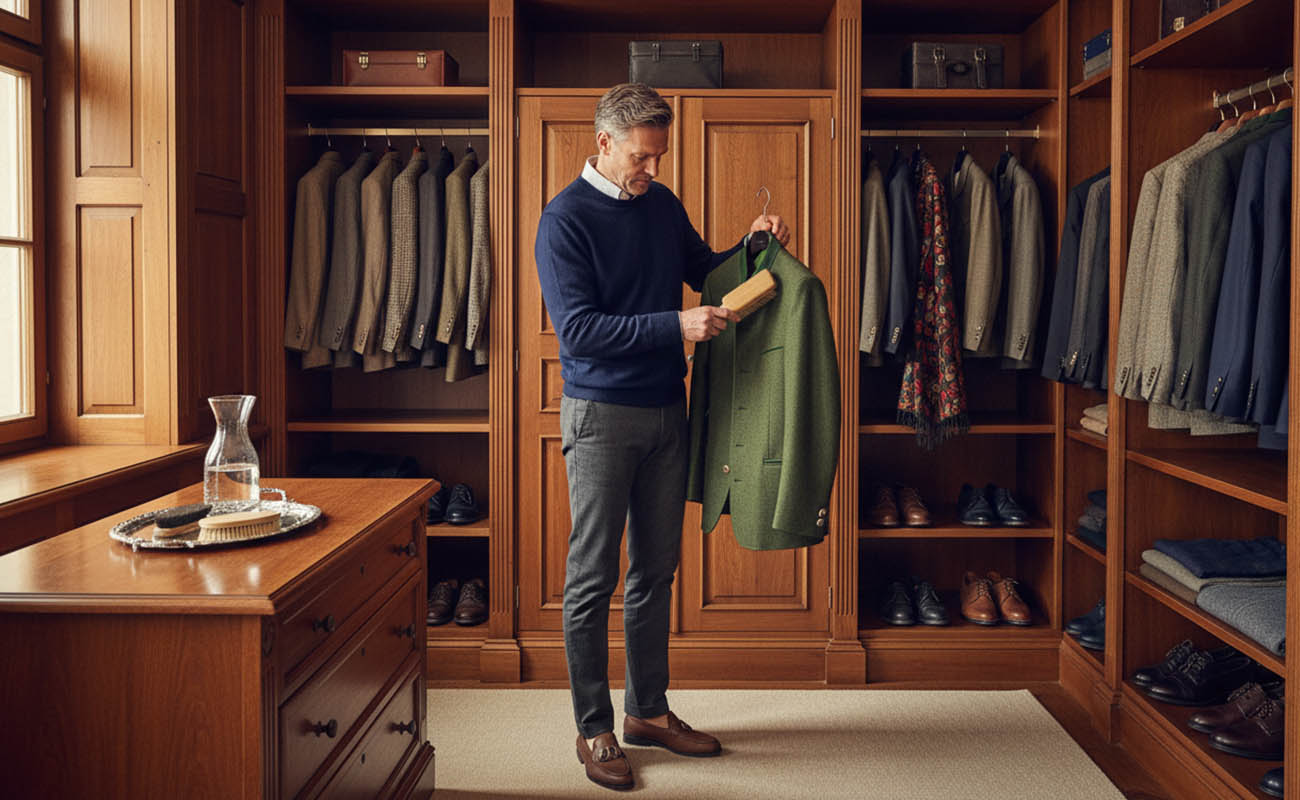
- Let it Dry: If you get mud on your Loden, do not rub it while wet. Let it dry completely, then simply brush it off with a stiff garment brush.
- Vinegar Solution: For tougher stains, use a solution of lukewarm water and a splash of vinegar. Dab (don’t rub) the stain gently.
- The Brush: Invest in a high-quality horsehair brush. Brushing your jacket occasionally keeps the nap of the wool looking fresh and removes surface dust.
Washing vs. Dry Cleaning
- No Machine Washing: Never put a structured Janker in the washing machine. The agitation and heat will shrink the wool further and ruin the internal structure (interfacing) of the jacket.
- Professional Care: If the jacket is truly dirty, take it to a dry cleaner who specializes in wool or traditional garments.
Storage
- Hangers: Always use a wide, shaped hanger (wooden is best) to support the shoulders. Thin wire hangers will leave permanent bumps in the heavy wool.
- Moth Prevention: Wool is a favorite snack for moths. Store your jacket with cedar blocks or lavender sachets to keep pests away naturally.
Conclusion

The Bavarian jacket is far more than a souvenir or a costume prop. It is a testament to the enduring appeal of functional design and natural materials. Whether you call it a Janker, a Trachten jacket, or simply a Loden coat, this garment offers a unique blend of ruggedness and refinement that is hard to find in modern fashion.
By choosing an authentic Bavarian jacket, you are choosing sustainability and heritage. You are investing in a piece that tells a story—of the Alps, of craftsmanship, and of a culture that values quality above all else. Whether paired with Lederhosen for the Wiesn or with jeans for a coffee date, the Janker proves that true style is timeless.
Ready to find your own piece of Alpine history? Browse our curated collection of authentic German Trachten jackets or sign up for our newsletter to receive more style guides and heritage fashion tips directly to your inbox.
