

What is a Dirndl? Unraveling the History of Alpine Tradition

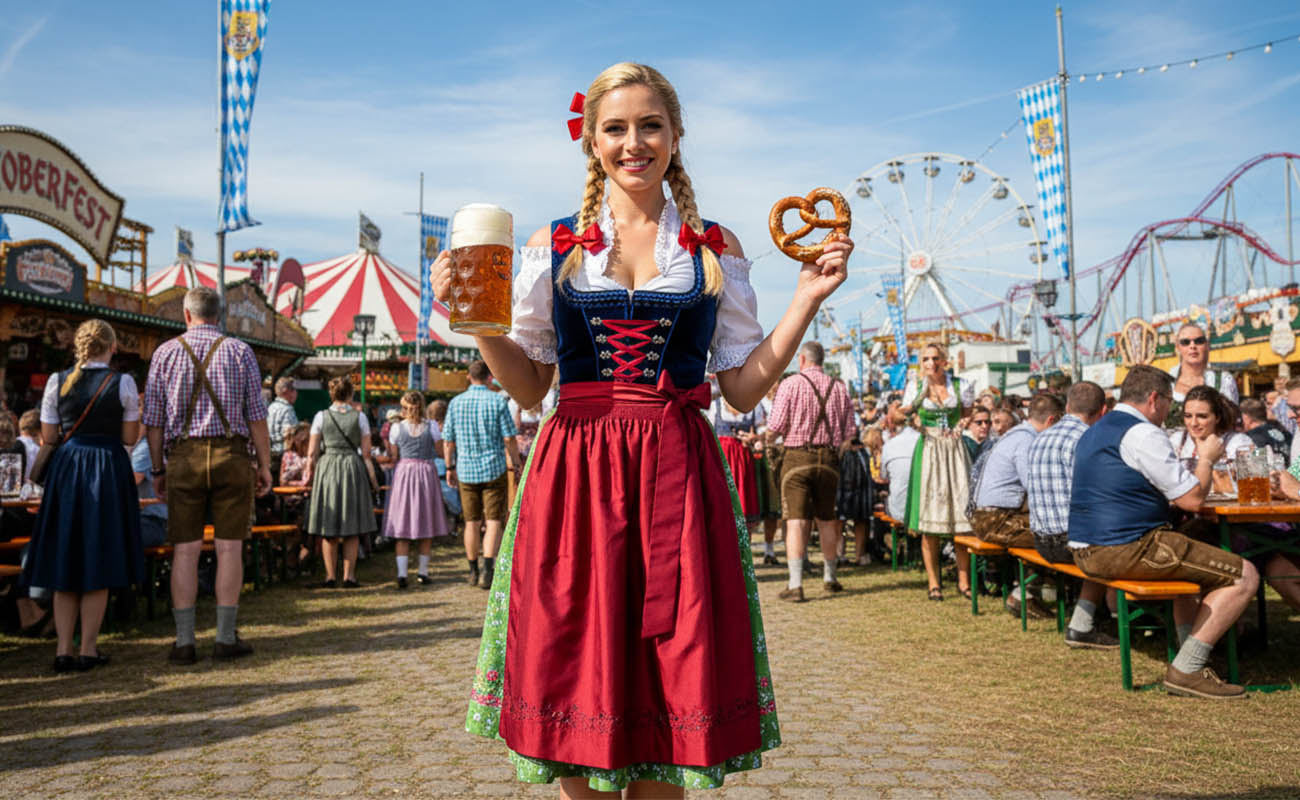
When you close your eyes and picture Munich, chances are you see giant steins of beer, pretzels the size of steering wheels, and women swirling in distinct, colorful dresses. That dress—the dirndl—is arguably one of the most recognizable garments in the world. It has become shorthand for German culture, synonymous with Oktoberfest celebrations from Bavaria to Brazil. But to view the dirndl simply as a party costume or a relic of a bygone era would be a mistake. It is a garment of fascinating contradictions: rustic yet regal, modest yet alluring, and deeply historical yet constantly reinvented.
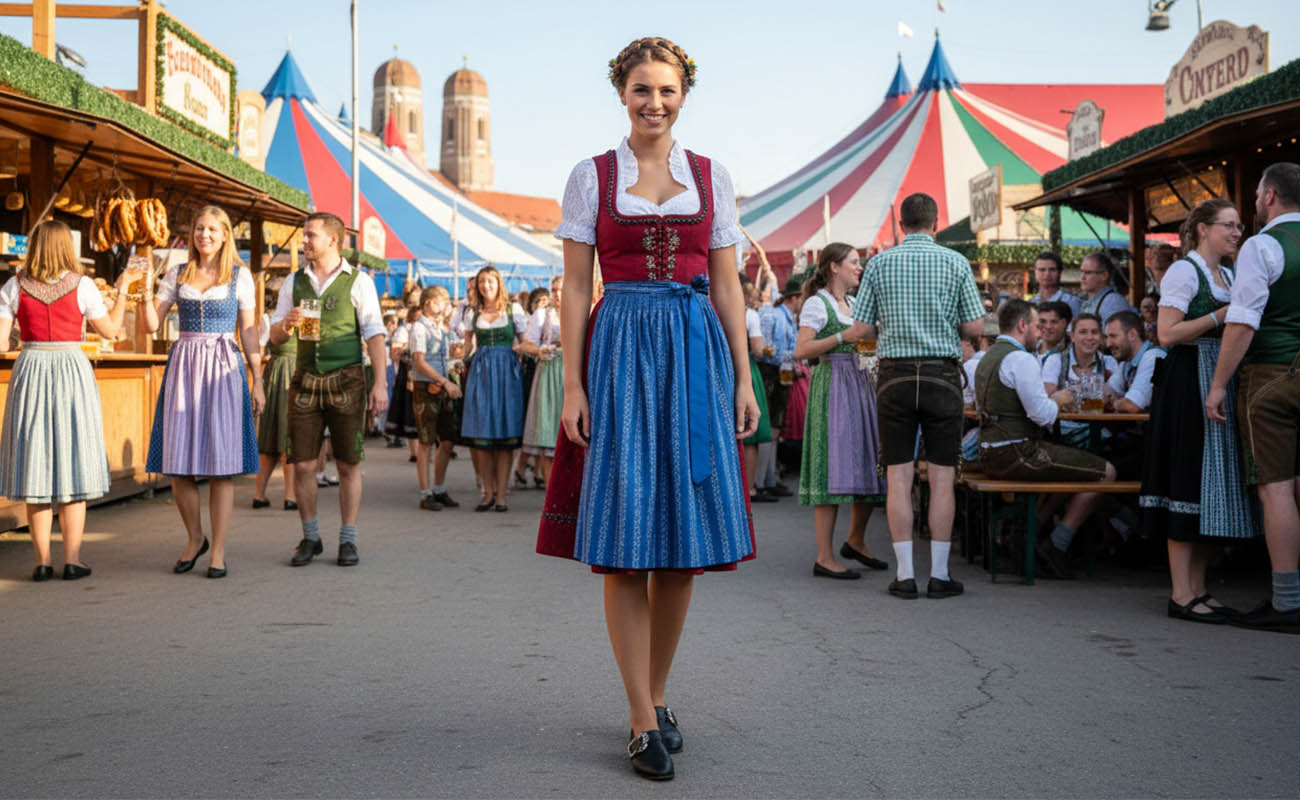
For many international observers, the dirndl appears once a year during the autumn festival season, only to disappear into the closet until the next “O’zapft is!” cry rings out. However, within Austria and Bavaria, the dirndl holds a far more permanent and significant place in society. It is worn at weddings, christenings, church services, and family gatherings. It signals regional identity, social status, and even relationship availability. The trajectory of this dress is a unique case study in fashion history, surviving political upheavals and shifting trends to remain a staple of the Alpine wardrobe.
Understanding the dirndl requires peeling back layers of history that are as complex as the garment’s multi-piece construction. What started as humble workwear for servants was appropriated by the aristocracy, instrumentalized by political regimes, and eventually reclaimed by a modern generation eager to connect with their roots. Whether you are planning a trip to the Wiesn (Oktoberfest) or are simply curious about textile history, diving into the story of the dirndl reveals that clothes are rarely just about covering the body—they are about telling a story of who we are.
From Farm Work to High Fashion: A Brief History
The story of the dirndl is a classic tale of upward mobility. While today it can cost thousands of euros and be made of fine silk, its origins are far grittier. The word itself provides the first clue to its past. In the Bavarian and Austrian dialects, “Dirne” historically referred to a young girl, and later specifically to a female farmhand or maidservant. The garment they wore—the “Leiblgwand”—was not designed for beauty, but for brutal practicality.
The Humble Beginnings
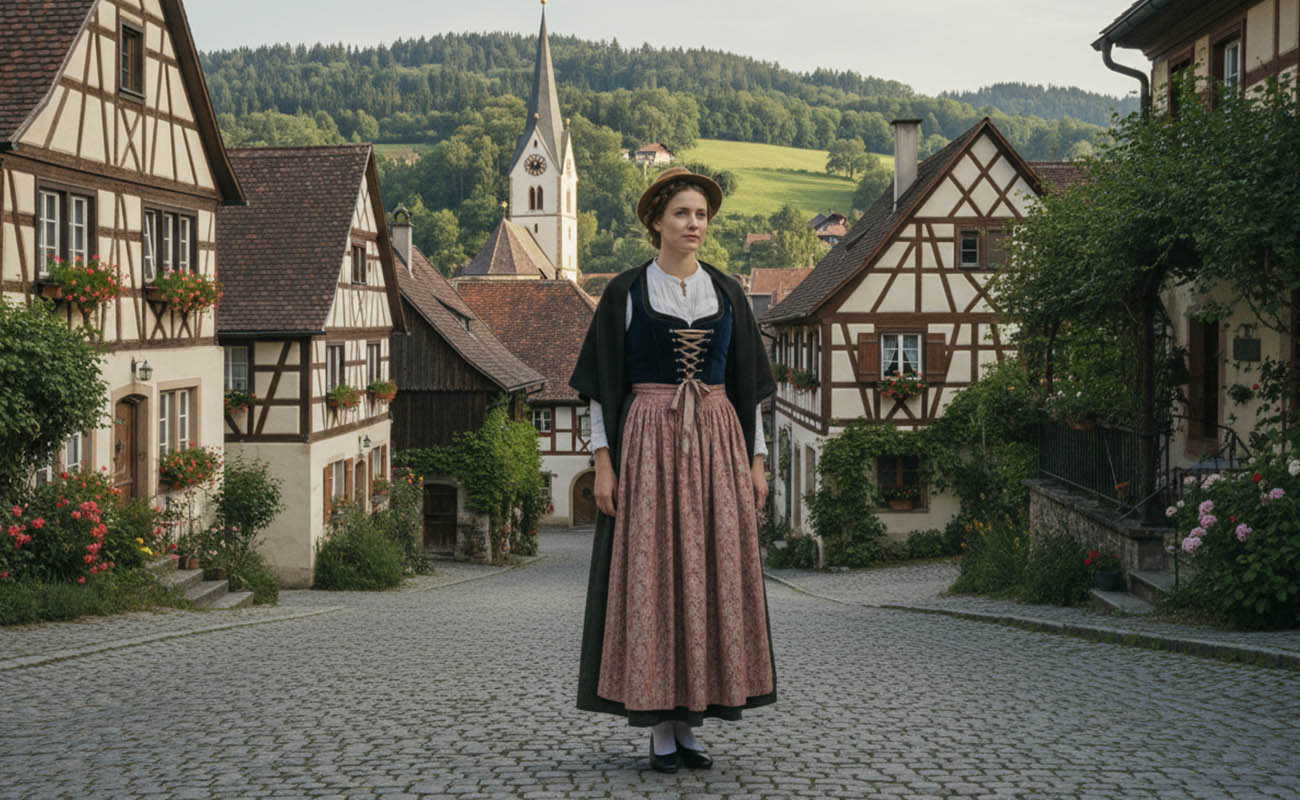
In the 18th and 19th centuries, rural life in the Alps was demanding. The women who worked the farms needed clothing that could withstand the rigors of milking cows, harvesting crops, and scrubbing floors. The original garment was made from durable, washable fabrics like linen or heavy cotton. It was high-necked to maintain modesty and functionality, with long sleeves and a heavy skirt that could withstand wear and tear.
Crucially, the outfit was layered. If a part of the dress got dirty or torn—usually the apron or the blouse—it could be washed or replaced without having to launder the entire outfit, which was a labor-intensive process before the advent of washing machines. The apron itself was often made from scrap fabric or old bed linens, serving as a literal shield against the muck of the farmyard. There was no glamour in this “Dirndlgewand” (maid’s dress); it was the uniform of the working class.
The Aristocratic Takeover
The transformation from workwear to fashion statement began in the late 19th century, driven by the phenomenon of “Sommerfrische” (summer retreat). During this period, wealthy urbanites from cities like Vienna and Munich began vacationing in the countryside to escape the industrial smog and heat. Emperors, including Franz Joseph I, and the intellectual elite became enamored with the “simple life” of the mountains.
In a wave of romanticism, these city dwellers began adopting the clothing of the locals. However, they didn’t want the rough, smelly work clothes of the actual peasantry. They wanted a sanitized, stylized version. Tailors began adapting the maid’s uniform for high-society ladies, swapping rough flax for silk, satin, and printed cotton. The cut became more flattering, the colors more vibrant. Suddenly, the “dirndl” was no longer a sign of servitude but a fashionable costume for the elite playing at country life. This was the birth of the dirndl as we recognize it today—not strictly traditional folk wear (Tracht), but a fashionable interpretation of it.
A Turbulent 20th Century
The 20th century brought darker times for the garment. During the National Socialist era, the dirndl and other forms of folk dress were instrumentalized for propaganda. The regime promoted the dirndl as the ideal attire for the “German woman,” stripping away the experimental and luxurious elements of the 1920s in favor of a modest, standardized “Gretchen” look that fit their ideology.
After World War II, the dirndl initially fell out of favor, tainted by its political association. Yet, it survived. By the late 20th century and into the 2000s, a revival occurred. A younger generation, less burdened by the past and seeking a sense of “Heimat” (homeland) and identity in a globalized world, reclaimed the dress. Today, it stands as a symbol of Bavarian and Austrian pride, worn with a mixture of irony, tradition, and genuine affection.
Deconstructing the Dress: The Four Essential Components
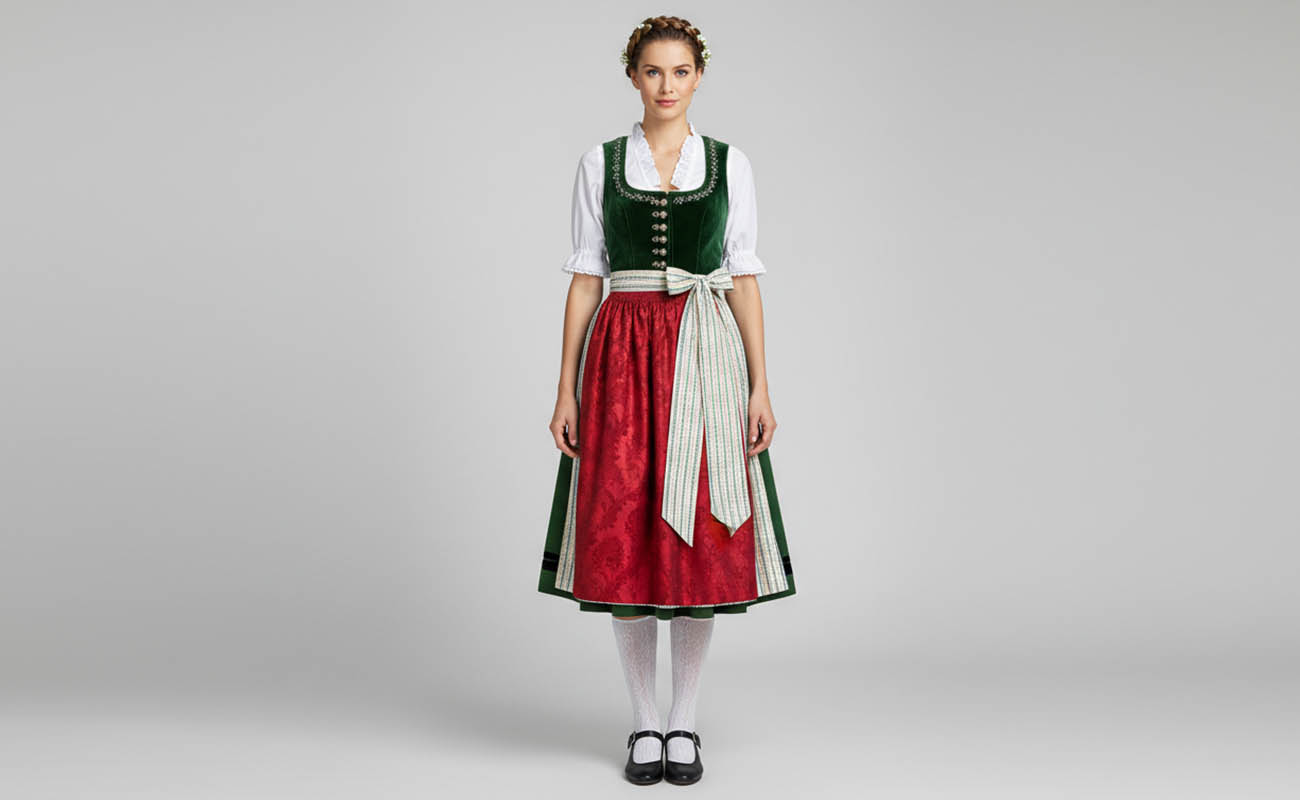
To the untrained eye, a dirndl might look like a single dress, but it is actually a composite garment. A true dirndl consists of four distinct pieces, each playing a specific role in the silhouette and function of the outfit. Modern interpretations sometimes sew the bodice and skirt together or omit the blouse, but the classic structure remains the standard for quality.
The Bodice (Das Mieder)
The bodice is the heart of the dirndl. Historically, it acted as a corset, supporting the bust and improving posture without the need for uncomfortable boning. It is tailored to fit very tightly—tradition dictates that a dirndl should fit “like a glove.” The bodice is often fastened with hooks and eyes, buttons, or a decorative chain lacing (Charivari) on the front. Necklines vary significantly, from the deep, rectangular “balconette” cut that frames the décolletage to high-necked, buttoned versions that are more traditional and modest. The fabric of the bodice is usually the heaviest part of the dress, providing structure and shape.
The Blouse (Die Bluse)
Worn underneath the bodice, the dirndl blouse is typically cropped, ending just below the bust line so as not to add bulk around the waist and stomach. White is the classic color, symbolizing cleanliness and purity, though black lace blouses have become increasingly popular in modern nightlife variations. The sleeves can range from short, puffed styles—often associated with festive occasions—to elegant long sleeves made of linen or cotton. The neckline of the blouse usually dictates the overall vibe of the outfit; a ruffled, heart-shaped neckline creates a romantic look, while a high collar with lace inserts suggests a more formal or traditional approach.
The Skirt (Der Rock)
The skirt of a dirndl is voluminous, gathered tightly at the waist to create a feminine hourglass shape when paired with the fitted bodice. Historically, the length of the skirt was a significant indicator of age and occasion. Traditional skirts are usually “midi” length, hitting somewhere between the knee and the ankle. Short, mini-skirt versions are a purely modern invention, often referred to derisively by traditionalists as “fasching” (carnival) costumes. A crucial, often overlooked feature of a quality dirndl skirt is the pocket—usually hidden on the right side under the folds, deep enough to hold a set of keys or a phone, proving that the garment has never lost its practical roots.
The Apron (Die Schürze)
The apron is the finishing touch that ties the look together. It is typically slightly shorter than the skirt, ending about an inch or two above the hemline to create a layered effect. While originally intended to protect the dress from dirt, the apron is now a purely decorative element, often made from contrasting fabric such as lace, silk, or elaborately patterned cotton. It breaks up the silhouette and adds a splash of color or texture. The apron strings are long enough to wrap around the waist and tie in a bow, and it is this bow that causes the most anxiety for first-time wearers.
Click Here: Your guide to dirndl bras
Decoding the Dirndl: What Your Apron Bow Says About You
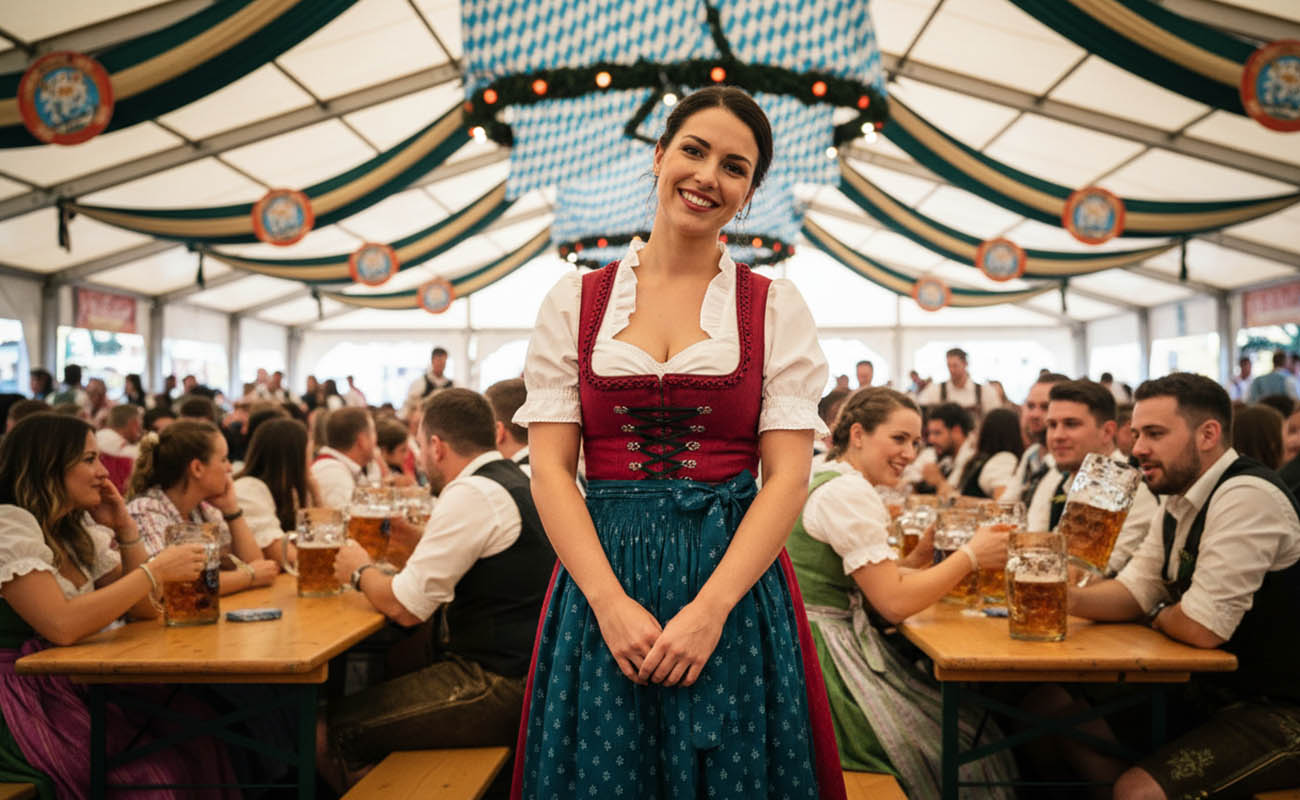
Perhaps the most famous—and frequently Googled—aspect of wearing a dirndl is the placement of the apron bow. According to modern folklore, where you tie your bow sends a silent signal to everyone in the room about your relationship status. While some historians argue this is a relatively new invention rather than an ancient custom, it is widely accepted and practiced at festivals today.
- Bow on the Left: This signals that the wearer is single. It is often interpreted as an invitation to flirt or be approached, signifying “I am available.”
- Bow on the Right: This indicates that the wearer is taken, married, or otherwise in a committed relationship. It essentially serves as a “do not disturb” sign for suitors.
- Bow in the Middle: Tying the bow in the center front has a more complex meaning. Historically, it signaled that the wearer was a virgin. In contemporary times, it is less common but can also indicate that the wearer is not interested in revealing their status.
- Bow in the Back: A bow tied at the center back typically has two meanings: the wearer is either a widow or a waitress. Waitresses tie their aprons in the back for practical reasons, to keep the bow from getting snagged on tables or beer steins.
Tracht vs. Landhausmode: Understanding the Difference
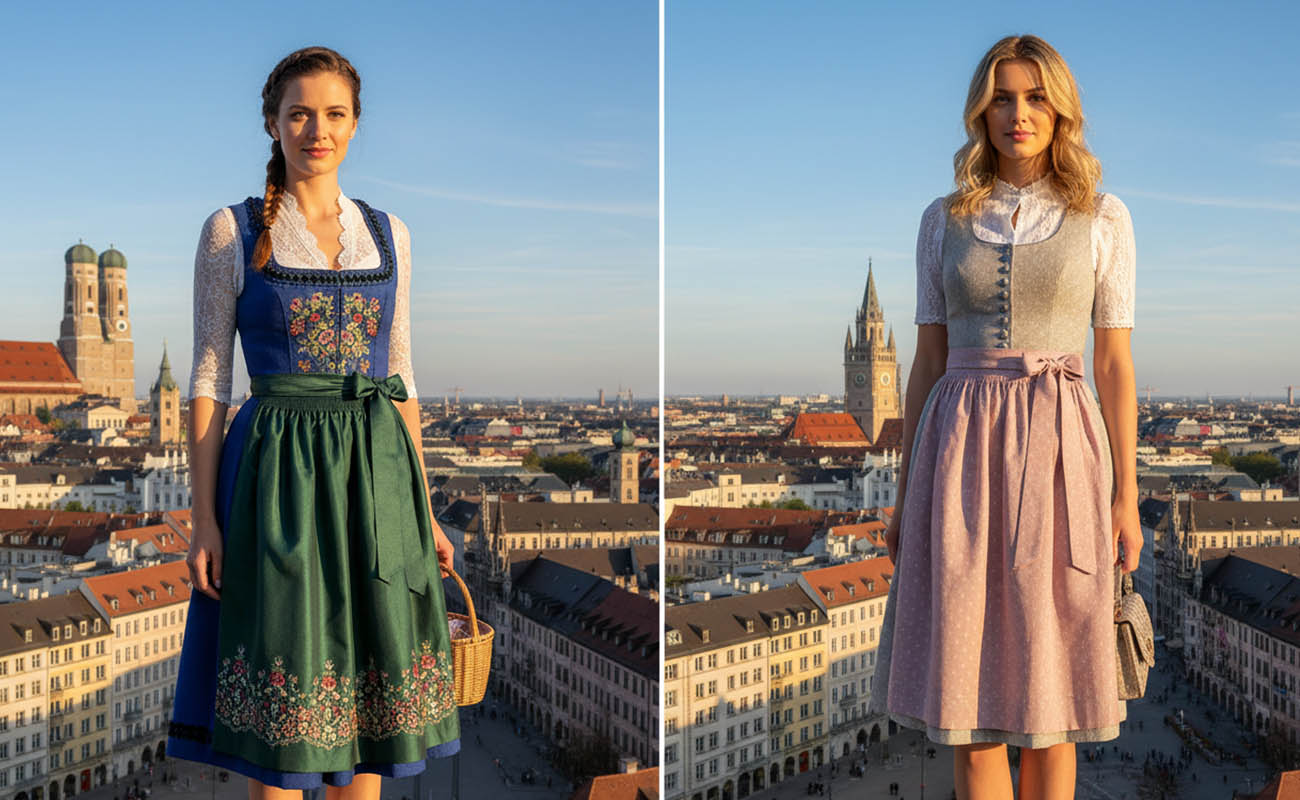
If you walk into a department store in Munich, you might be overwhelmed by the sheer variety of dresses labeled “dirndl.” However, locals distinguish between “Tracht” and “Landhausmode,” a distinction that speaks to the authenticity and purpose of the garment.
Tracht refers to the strictly traditional dress of a specific region. These garments are often like a uniform; the embroidery, colors, and cut can tell you exactly which village a woman comes from. They are governed by strict codes and are often handmade using techniques passed down through generations. A woman wearing a genuine Miesbacher Tracht, for example, is wearing a piece of living history, not just a pretty dress.
Landhausmode (country house style), on the other hand, is fashion inspired by Tracht. It takes the general silhouette of the dirndl but plays with fabrics, colors, and lengths. This is what you see most often at Oktoberfest. It allows for personal expression and follows seasonal fashion trends. A Landhausmode dirndl might feature pink silk, Swarovski crystals, or patterns that have no historical basis but look stunning. Both are acceptable, but knowing the difference is key to understanding the cultural landscape.
Embracing the Spirit of Gemütlichkeit
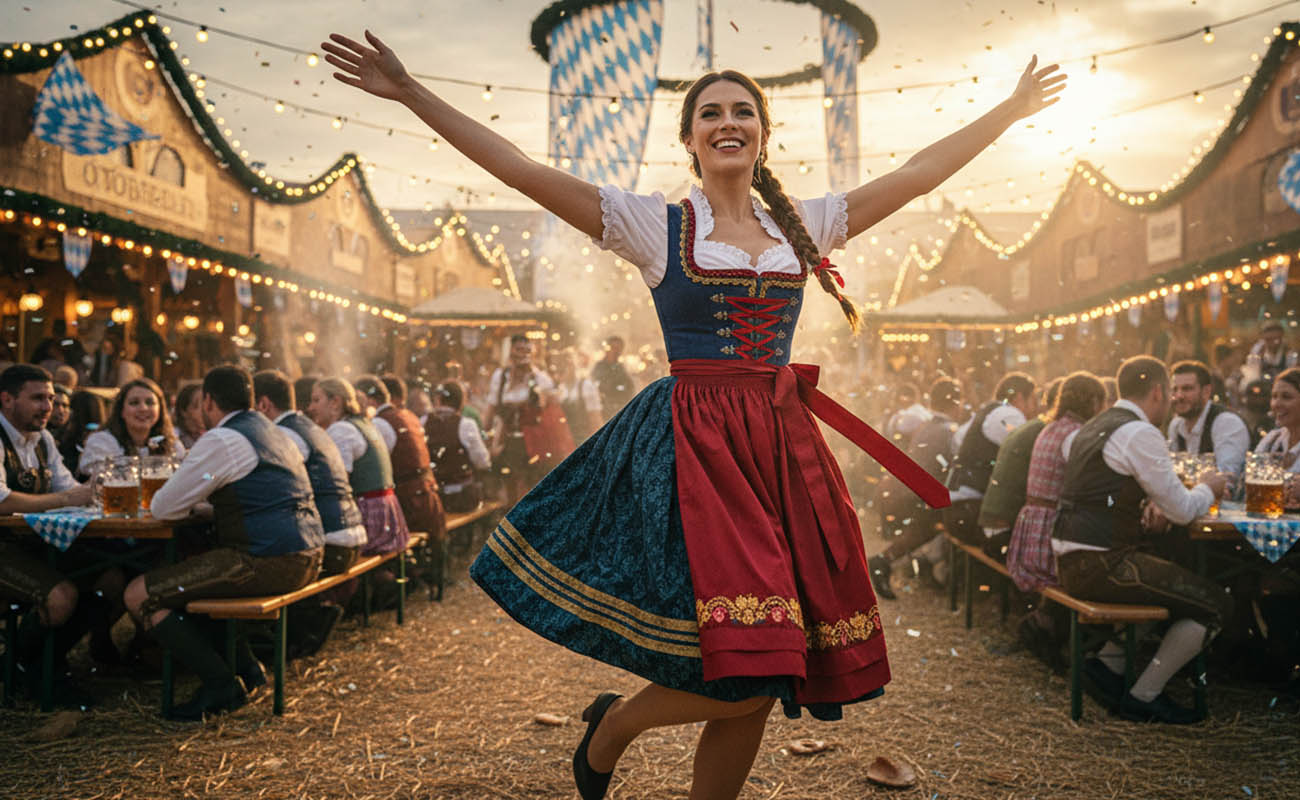
Ultimately, the dirndl is a celebration of “Gemütlichkeit”—that untranslatable German word describing a state of warmth, friendliness, and good cheer. Whether it is a simple cotton dress for a Sunday stroll or an elaborate silk ensemble for a gala, the dirndl transforms the wearer. It enforces a certain posture, encourages a sway in the walk, and connects the individual to a collective history that spans centuries.
So, the next time you see that distinctive bodice and full skirt, look beyond the stereotype. You are looking at a survivor of history, a masterpiece of tailoring, and a vibrant expression of Alpine life that refuses to fade away.
Read the Guide: The history of the dirndl
Dirndl & Oktoberfest FAQ: Everything You Need to Know
What is a Dirndl and why is it so iconic?
A dirndl is a traditional Bavarian and Austrian dress worn by women, recognized worldwide for Oktoberfest celebrations. It symbolizes Alpine culture, regional identity, and festive tradition.
How do I wear a Dirndl correctly?
A proper dirndl includes four components: bodice, blouse, skirt, and apron. The apron bow placement indicates relationship status — left means single, right means taken, center means virgin, and back can mean widow or waitress.
What’s the difference between Tracht and Landhausmode Dirndls?
Tracht refers to authentic traditional regional dresses, often handmade and historically accurate. Landhausmode is inspired by Tracht but follows modern fashion trends, allowing more personal expression.
How can I care for my Dirndl to keep it in perfect condition?
Most dirndls should be hand-washed or dry-cleaned, avoiding machine washing. Store them in a cool, dry place and iron carefully on low heat to preserve fabrics and embroidery.
