

What Shoes to Wear with Lederhosen? Complete Guide for Men & Women

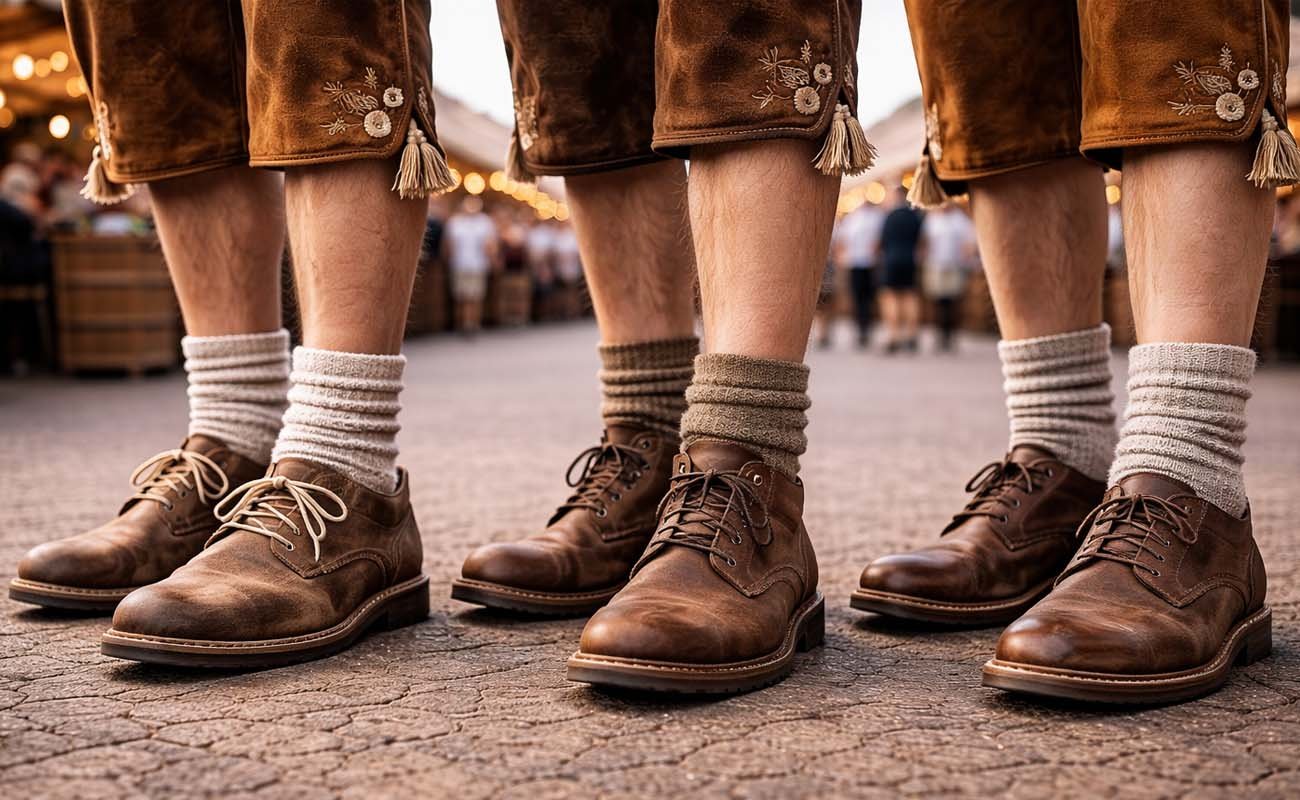
The best shoes to wear with lederhosen are Haferlschuhe — traditional Bavarian leather shoes with side lacing and a rugged sole. Other good choices include leather ankle boots, brogues, and loafers in brown or black. Always avoid flip-flops, open-toe sandals, and brightly colored sneakers.
What Makes the Right Lederhosen Shoe? Start Here
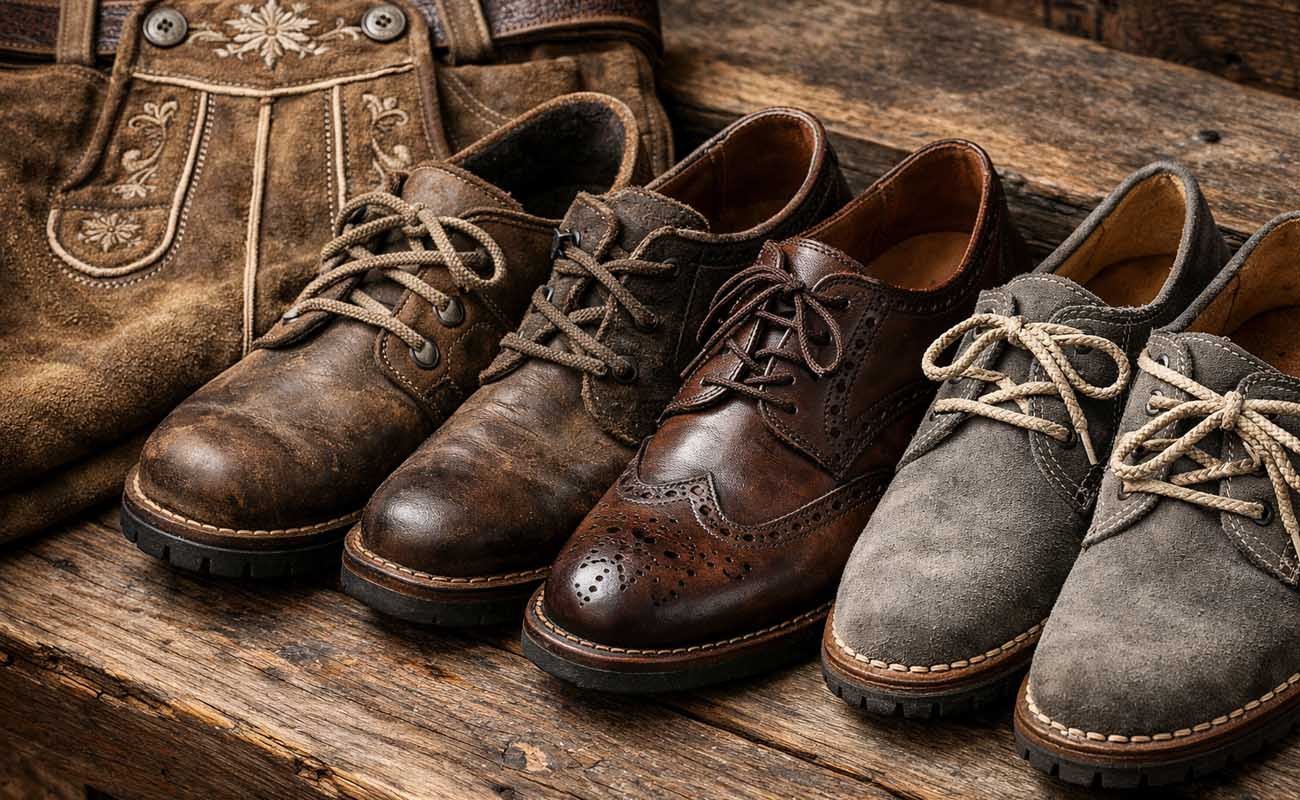
Lederhosen is not just a costume — it is a piece of Bavarian heritage worn across the Alpine region for centuries. When you put on leather breeches, nothing is more visible than your shoes. The right shoe completes the story your outfit tells. The wrong shoe turns an impressive traditional look into something careless and assembled without thought.
Before choosing any shoe style, one rule applies to every single option: your shoes must echo the material and tone of your lederhosen. Leather speaks to leather, and sturdy speaks to sturdy. That one principle alone will protect you from 90 percent of styling mistakes before you even open your wardrobe.
The occasion matters just as much as the shoe itself. An Oktoberfest tent with thousands of dancing, stomping people demands a very different shoe than a relaxed Bavarian garden party. Think about where you are going, how long you will stand and walk, and whether the ground is rough or smooth — these three questions should drive your decision as much as aesthetics do.
Haferlschuhe — The Gold Standard of Lederhosen Footwear
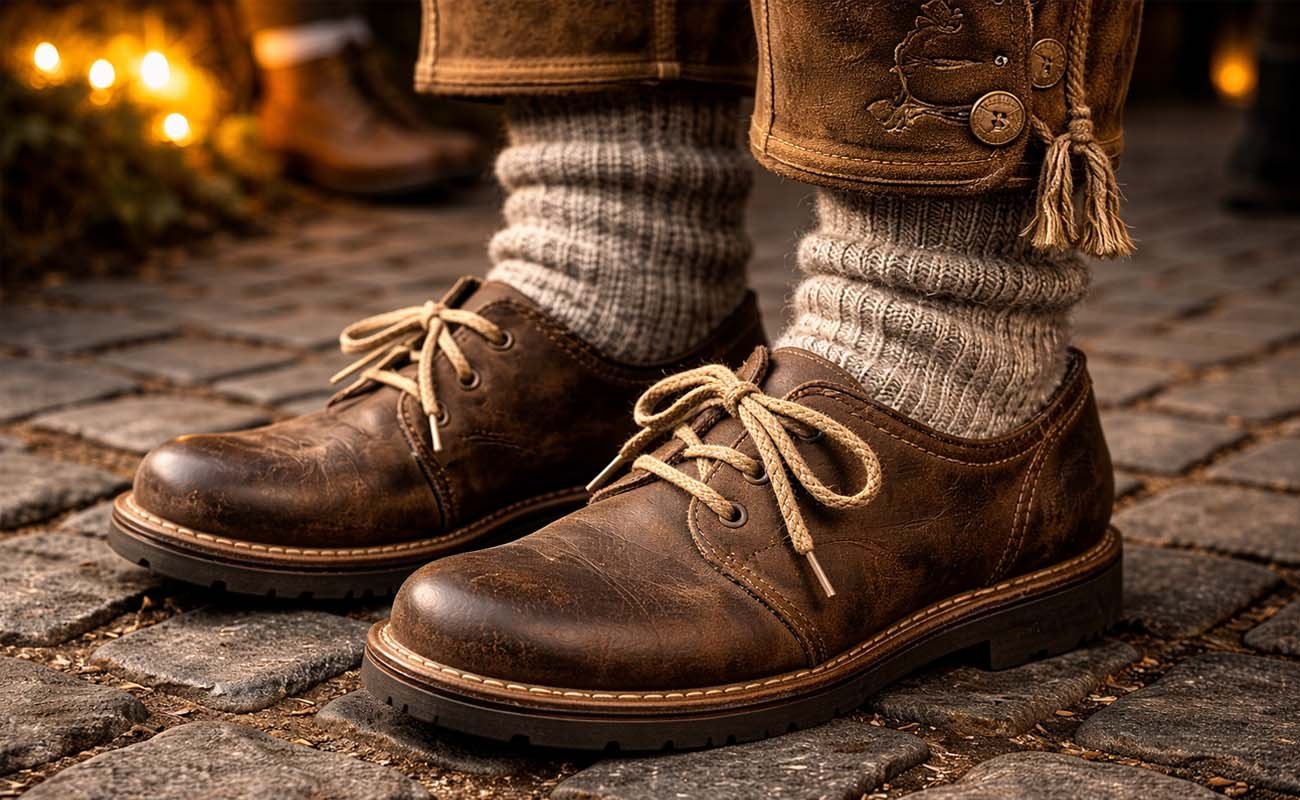
The best shoes to wear with lederhosen are Haferlschuhe — and this is not even a close competition. These traditional Bavarian shoes originated in the Alpine region as practical work boots for mountain terrain. Over time they became the defining footwear of Bavarian dress, and today roughly 70 percent of Oktoberfest attendees pair their lederhosen with this classic shoe. That number alone tells you everything about its staying power across generations.
What makes the Haferlschuh so ideal is its construction. Often described as “half a shoe,” it balances formal wear and work boot in one design. The sole uses a wood-and-rubber structure with cleats for grip on rough ground, while the exterior is smooth leather or suede with a distinctive side lacing system. This produces a shoe that looks elegant but performs like outdoor footwear — exactly what lederhosen demands.
The embroidery motifs on the side — typically oak leaves and edelweiss flowers — are hand-done using the same traditional techniques as the lederhosen themselves. This is precisely why the two pieces feel like they belong together. The shoe and the trouser were made from the same cultural tradition, and it shows in every detail.
- Choose brown or black — both work with almost every lederhosen color
- Side lacing gives a snugger fit, ideal for dancing and long festival hours
- Thick rubber sole handles uneven ground and crowded festival environments
- Low ankle cut means it works in semi-formal settings too
- Pair with woolen Loferl socks or knee-high Trachtensocken for the full authentic look
Leather Boots — Rugged, Adventurous, and Practical
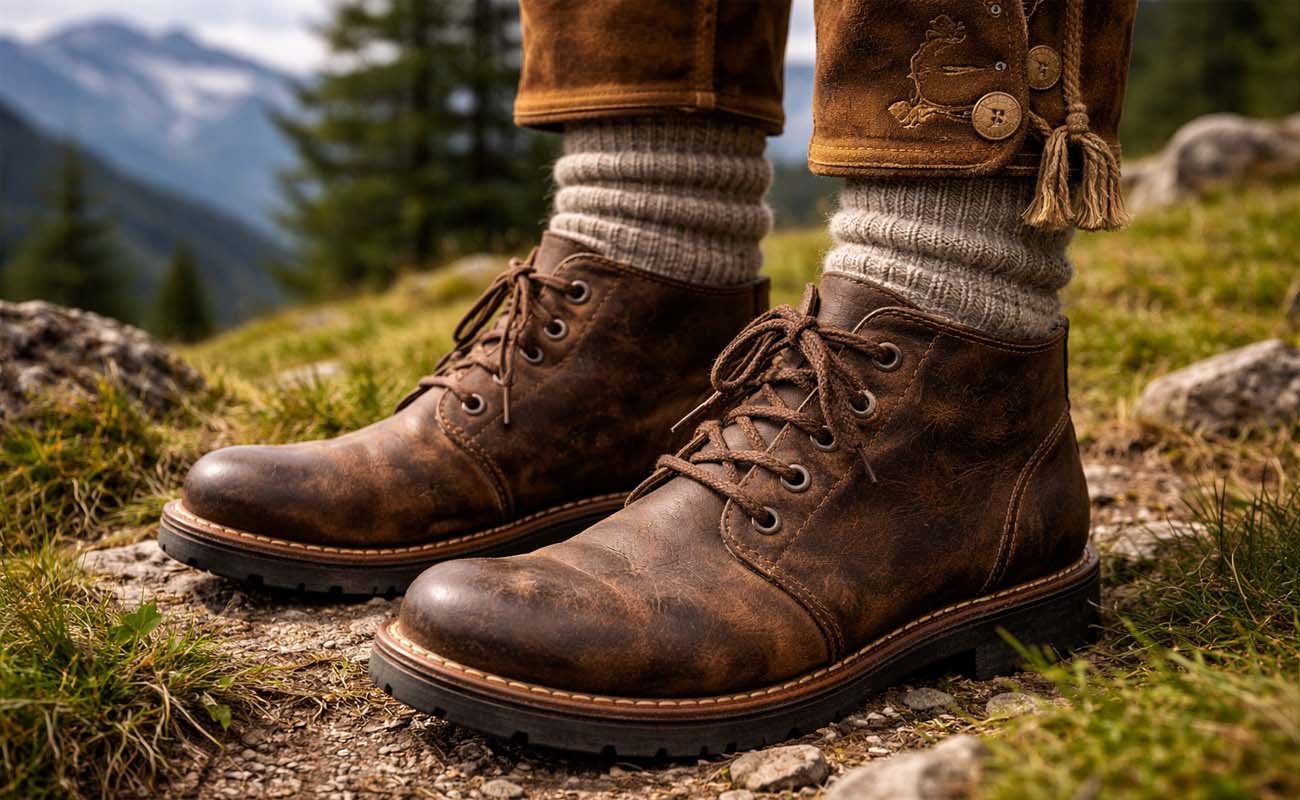
Leather boots are the second-best choice for lederhosen, and in cooler weather or outdoor settings they may actually be the smarter pick. Ankle boots and hiking-style boots lend a tough, adventurous character that directly reflects the practical Alpine origins of lederhosen as outdoor workwear — so the pairing makes cultural sense, not just visual sense.
Keep your boots low-profile and genuinely leather-based. A sleek ankle boot in chocolate brown or matte black does the job beautifully. Avoid any boot with heavy embellishment, large modern branding logos, or overly pointed toes — these break the visual harmony that lederhosen always demands. For outdoor festivals or cooler autumn events, a hiking-style boot in dark brown leather protects your feet from uneven ground while keeping the look intact.
Tuck knee-high Trachten socks over the boot cuff for a look that is both functional and unmistakably Alpine. This small detail transforms a good outfit into a great one and signals genuine familiarity with Bavarian dress tradition.
Brogues and Loafers — Modern Alternatives That Still Work
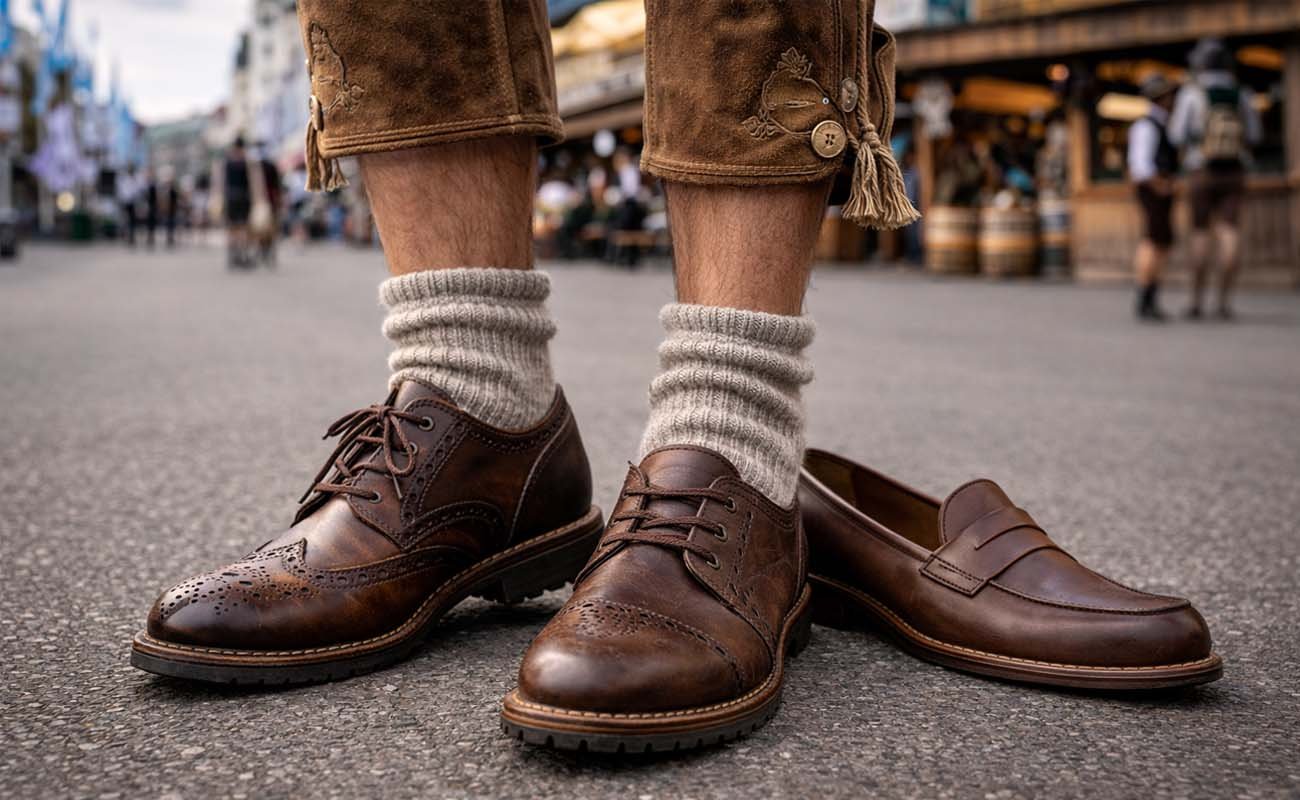
Not everyone attending an Oktoberfest event or Bavarian celebration needs to go fully traditional — and that is completely acceptable. Brogues and loafers are the two most popular modern alternatives that maintain enough visual compatibility with lederhosen to look intentional rather than careless.
Brogue shoes feature decorative perforations and wingtip detailing that add a polished yet casual character. They work particularly well at upscale Oktoberfest events or cultural dinners where a touch of sophistication is appropriate. Stick to brown or tan brogues, and always pair them with knee-length Trachten socks for a balanced, semi-formal finish that respects the outfit’s heritage.
Leather loafers offer ease and comfort, making them ideal for long days at festivals or casual garden gatherings. Brown or tan leather loafers blend naturally with the earthy tones of most lederhosen. Suede loafers add an interesting texture that actually enhances the rustic quality of the outfit rather than clashing with it. Save loafers for indoor or smooth-surface events — their slimmer soles are not built for hours of rough outdoor ground.
Sneakers with Lederhosen — When It Works and When It Does Not
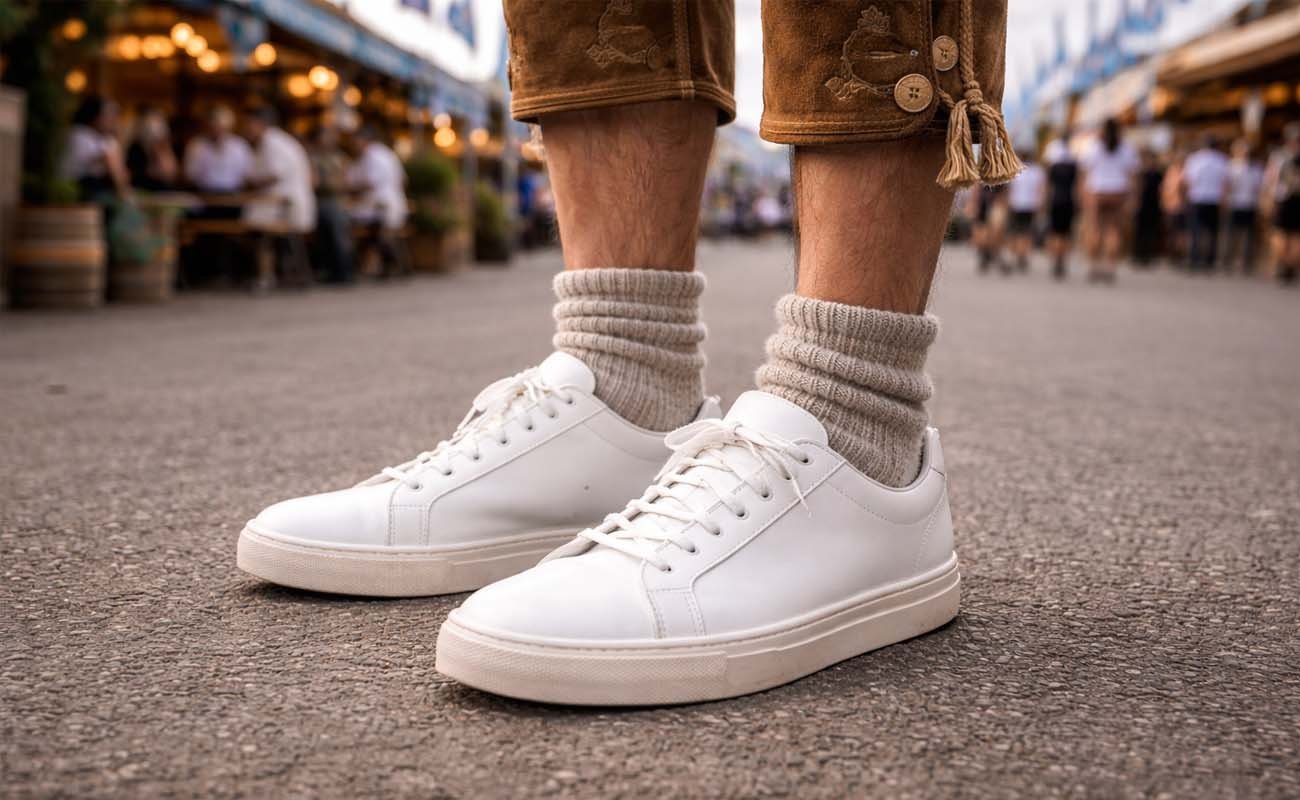
Sneakers can work with lederhosen, but only under very specific conditions. A growing number of younger wearers and fashion-forward Oktoberfest-goers pair leather breeches with clean, minimal sneakers for a modern casual look. Some traditional Bavarian retailers now even produce sneakers in classic Bavarian-inspired designs specifically for this purpose.
White leather sneakers or styles in earthy tan and brown tones are the only acceptable options. Avoid neon colors, heavily branded shoes, and chunky athletic silhouettes of any kind. This pairing works best for casual daytime events, informal celebrations, or younger crowds where modern twists on tradition are expected and appreciated.
Never wear sneakers to a formal Oktoberfest event or traditional Bavarian ceremony. The contrast is visually jarring and in traditional circles it communicates a complete disregard for Bavarian dress culture. If your sneakers look like they belong on a basketball court, they do not belong with lederhosen.
What Shoes Should Women Wear with Lederhosen?
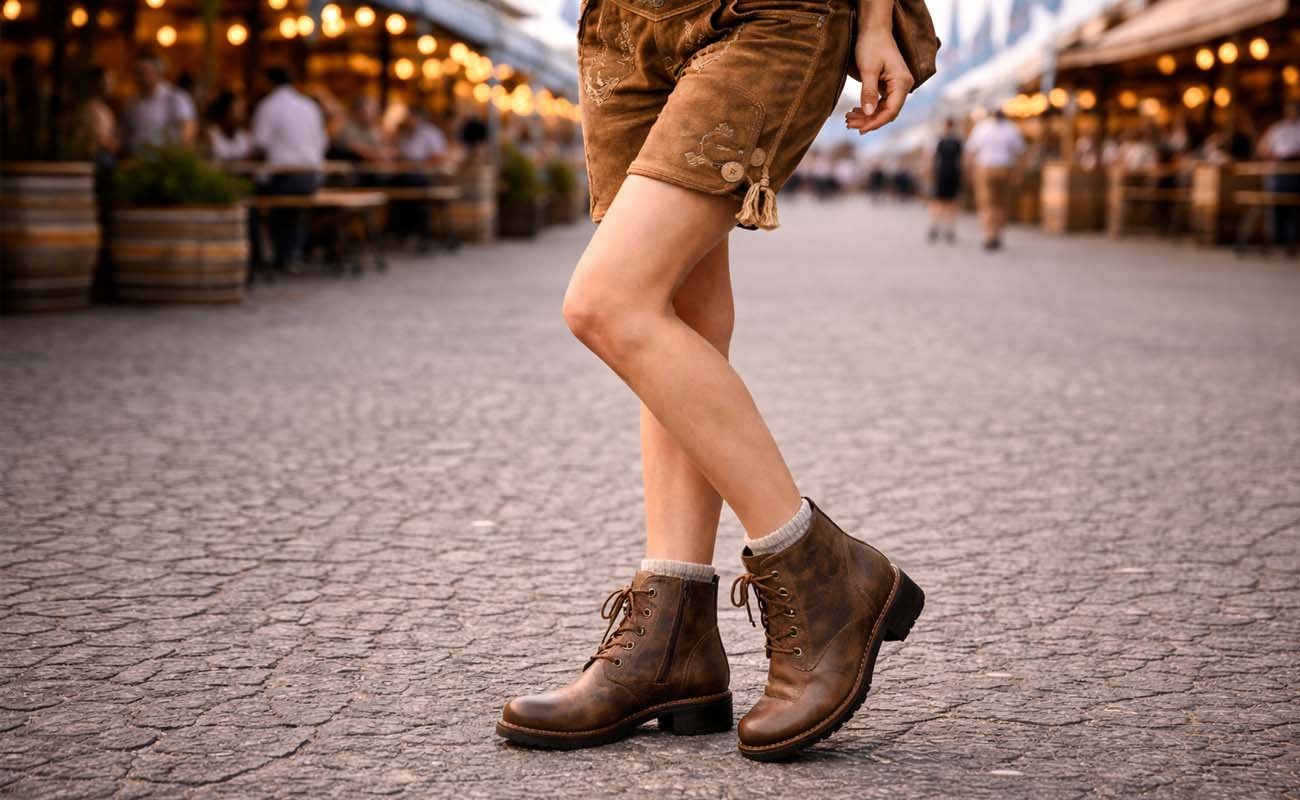
Women wearing lederhosen have more footwear freedom than men, and most guides barely acknowledge this. There is no rule reserving Haferlschuhe for men — women wear them too and they look just as culturally authentic. Beyond that, women have several genuinely stylish alternatives that create a lederhosen look that is both traditional and distinctly feminine.
Leather ankle boots are particularly popular among women for a modern yet traditional lederhosen look. The leather color should match or complement the lederhosen — brown boots with brown or tan lederhosen, black boots with darker leather. Mary Jane pumps with a Cuban heel are the historically accurate feminine Bavarian option, elegant and deeply rooted in traditional dress. Brogues and lace-up oxford flats in dark leather also work beautifully — polished, structured, and visually compatible with the outfit’s earthy character.
The one style to firmly avoid is anything open-toed, for women just as for men. At events like Oktoberfest, exposed toes face real hazards from broken glass, spilled drinks, and densely packed crowds. Closed-toe shoes are not just a style preference — they are a basic safety decision for festival environments.
- Haferlschuhe — most authentic, works for women too
- Leather ankle boots — match leather color to your lederhosen
- Mary Jane pumps with Cuban heel — traditional feminine Bavarian option
- Brogues and oxford flats — modern and polished
- Loafers in brown or tan leather — relaxed casual option
- Always closed-toe — never open sandals or flip-flops
The Color-Matching System Nobody Explains Properly
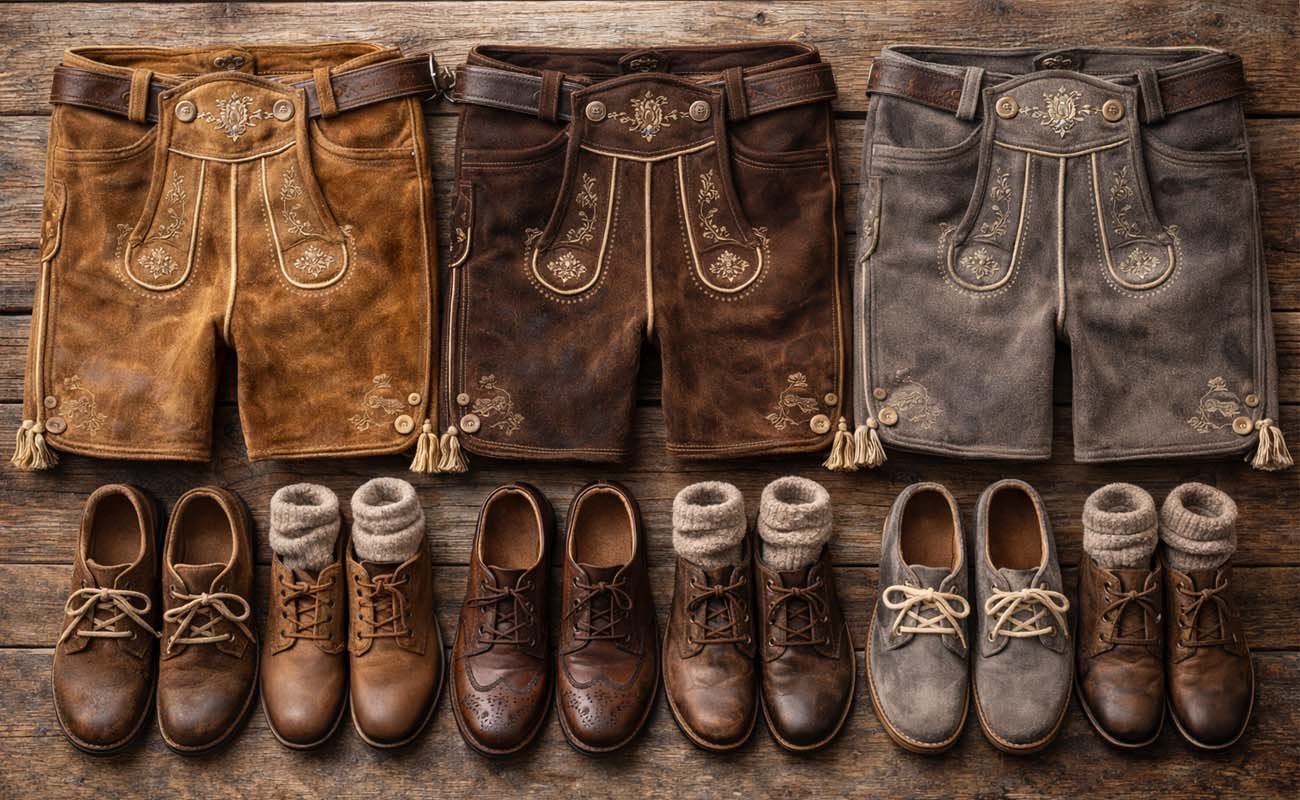
Most guides tell you “wear brown shoes with brown lederhosen” and stop there. That is the beginning of the answer, not the full answer. The complete color-matching system looks at three things together: your lederhosen leather color, your embroidery thread color, and your sock color. These three must form a tonal harmony — not a random collision of earthy shades thrown together from different parts of the wardrobe.
Start by examining the embroidery on your lederhosen. Green stitching pairs best with warm cognac brown shoes and hunter green or cream socks. Red or burgundy stitching works beautifully with chestnut brown shoes and cream or off-white socks. Silver or grey thread coordinates naturally with dark brown or black shoes and charcoal grey socks. Black lederhosen is the simplest — pair with black or very dark brown shoes and grey or black socks, and avoid cream or beige tones which fight against dark leather rather than complementing it.
One universal rule from this system: never wear bright white athletic socks with any lederhosen style. Off-white and natural cream shades blend seamlessly with traditional earthy tones, while pure white creates a harsh contrast that immediately signals an outfit assembled without care or knowledge of Bavarian dress.
Shoes to Absolutely Avoid with Lederhosen
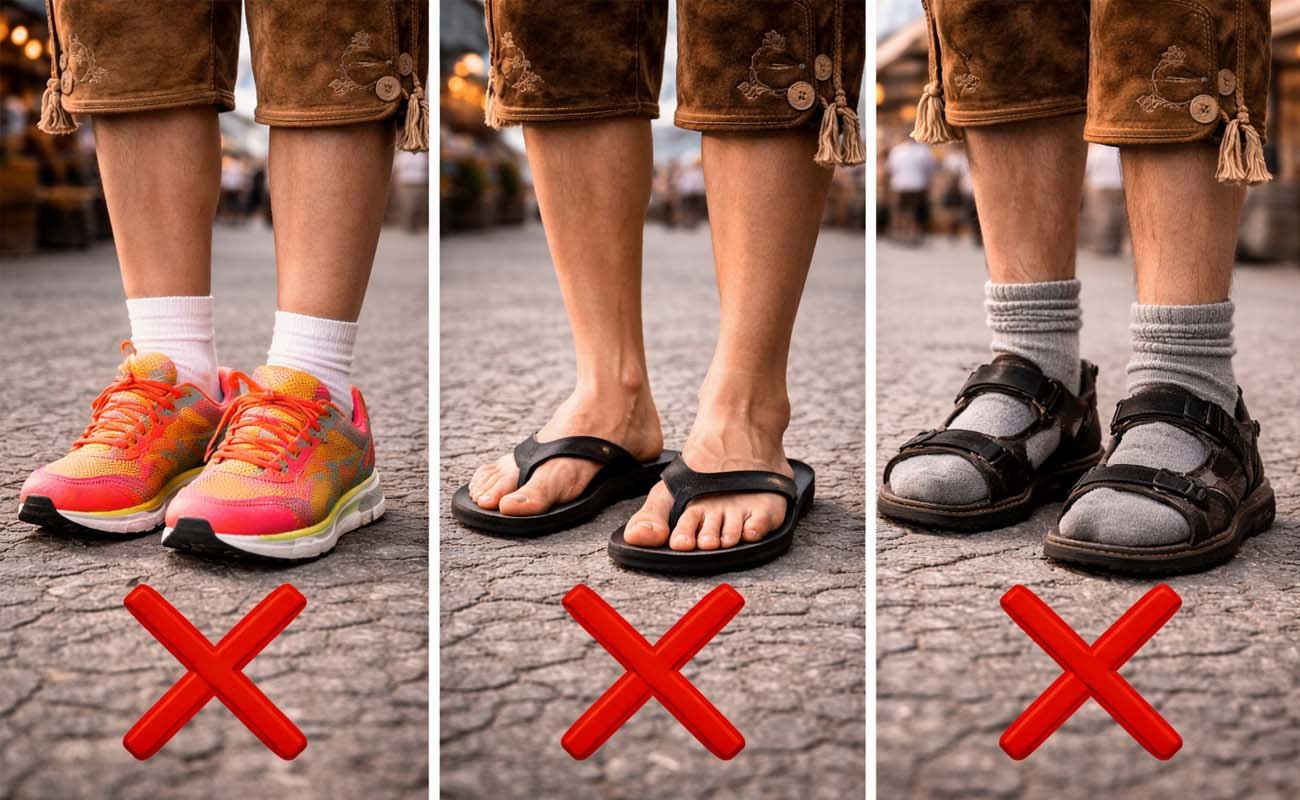
Some footwear choices are not just stylistically wrong — they communicate a disregard for Bavarian tradition that genuine locals immediately recognize. Knowing what to avoid is just as important as knowing what to wear, and this section can save an otherwise excellent outfit from one bad decision.
- Flip-flops and open-toe sandals — disrespectful to tradition and physically dangerous at festivals with broken glass and crowds
- Formal Oxford dress shoes — too corporate and sleek, they strip the rustic soul from lederhosen entirely
- Brightly colored or neon athletic shoes — break the visual language of the traditional outfit completely
- Chunky platform shoes — modern silhouettes clash with the low-profile Alpine aesthetic
- High heels above 3 inches for women — impractical for long events and visually mismatched
- Slip-on pool sliders — no context makes these acceptable with lederhosen
Socks — The Detail That Ties the Whole Look Together
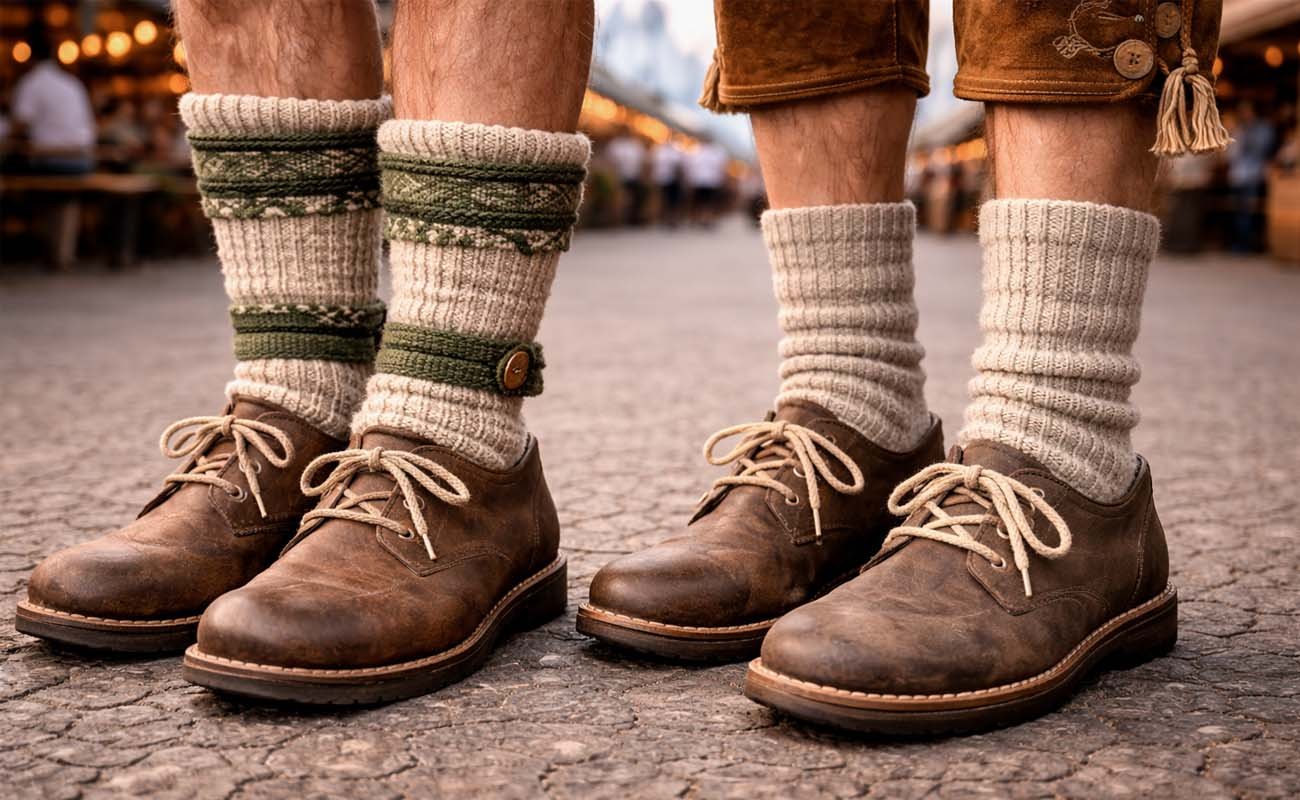
Your shoes are only as good as the socks you pair with them. This is exactly where otherwise well-dressed lederhosen wearers make avoidable mistakes. Traditional Bavarian lederhosen socks come in two main styles, and choosing correctly between them is part of the outfit’s authenticity and signals genuine familiarity with the tradition.
Loferl is the two-piece style — separate calf bands worn on the lower leg, paired with matching ankle socks. The deliberate gap of exposed skin between the pieces is an authentic Bavarian styling choice that locals immediately recognize. Position calf bands on the thickest part of your calf for a secure fit during dancing and walking. This style works exclusively with short lederhosen and creates the classic Alpine farmer silhouette.
Trachtensocken are continuous knee-high stockings pulled to just below the kneecap. This single-piece option provides full calf coverage, superior warmth for autumn events, and a cleaner overall silhouette. Wool-blend Trachtensocken handle Munich’s September evening temperature drops far better than cotton alternatives, making them the practical choice for multi-hour outdoor festivals.
Budget Guide — How Much Should You Spend?
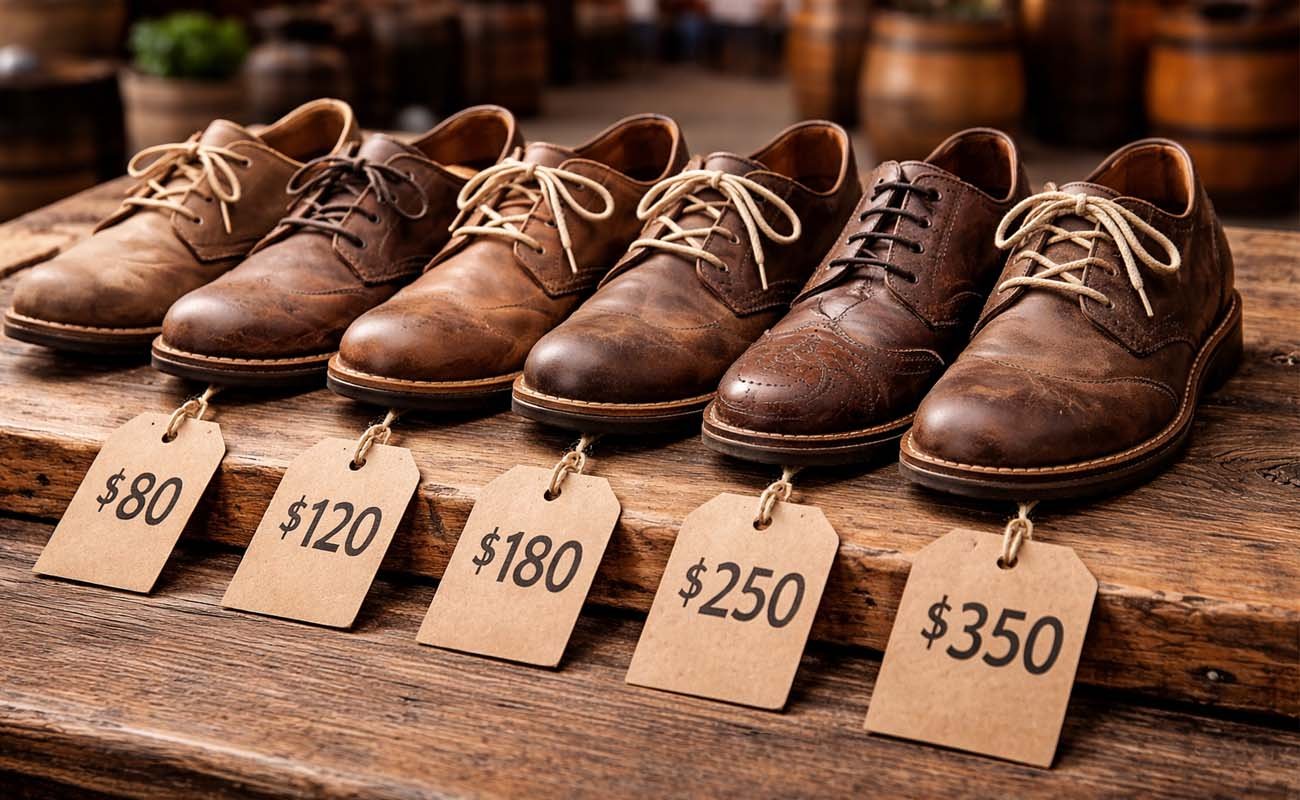
Quality Haferlschuhe in the $80 to $100 range offer the best value for most buyers — genuine leather construction, thick soles suitable for hours of dancing, and durability across multiple Oktoberfest seasons. Budget options under $50 tend to wear out quickly and often look flimsy at close range, which defeats the purpose of investing in a traditional outfit.
If you attend Bavarian events regularly, spending $100 to $150 on premium Haferlschuhe is a worthwhile long-term investment. Quality leather improves in character over time as it conforms to your foot and develops a natural patina. For a genuinely one-time occasion, a leather loafer in the $60 to $80 range is a practical and presentable alternative that will not let the outfit down.
Frequently Asked Questions
Q: What shoes to wear with lederhosen?
A: The best shoes to wear with lederhosen are Haferlschuhe — traditional Bavarian leather shoes with side lacing and a rugged sole. Other good options include leather ankle boots, brogues, and loafers in brown or black. Always avoid flip-flops, open-toe sandals, and brightly colored sneakers.
Q: What are Haferlschuhe?
A: Haferlschuhe are traditional Bavarian shoes made from leather, featuring side lacing, a thick rubber sole, and low-cut ankle design. Originally designed as Alpine work boots, they are now the most authentic footwear choice for lederhosen at Oktoberfest.
Q: Can I wear sneakers with lederhosen?
A: Yes, but only white leather sneakers or styles in earthy tan and brown tones. Avoid neon colors and heavily branded shoes. Sneakers work only for casual, informal settings — never for formal Oktoberfest events or traditional Bavarian ceremonies.
Q: What color shoes go with brown lederhosen?
A: Brown or tan shoes are the best match. Cognac brown, dark tan, and warm chestnut tones create a natural cohesive look. Black shoes also work well for a more formal or contrasting style.
Q: What socks do you wear with Haferlschuhe?
A: Wear traditional Loferl socks (two-piece calf bands with ankle socks) or knee-high Trachtensocken. Choose beige, cream, grey, or hunter green colors that match your lederhosen embroidery. Never wear bright white athletic socks.
Q: Can you wear boots with lederhosen?
A: Yes. Leather ankle boots or hiking boots in dark brown or black work excellently, especially for outdoor festivals or cooler weather. Choose genuine leather and avoid heavy branding or pointed toes.
Q: How much do lederhosen shoes cost
A: Quality Haferlschuhe cost between $80 and $150. Mid-range options at $80 to $100 offer the best value. Budget options under $50 wear out quickly. For one-time events, a leather loafer at $60 to $80 is a practical alternative.
Q: What is the difference between Haferlschuhe and Trachtenschuhe?
A: Haferlschuhe are the original traditional Bavarian shoe with side lacing and a rugged Alpine sole. Trachtenschuhe is the broader term for all traditional costume shoes, including more formal modern styles with buckles or decorative stitching.
Why Choose Bavarian Attire for Your Lederhosen Collection?
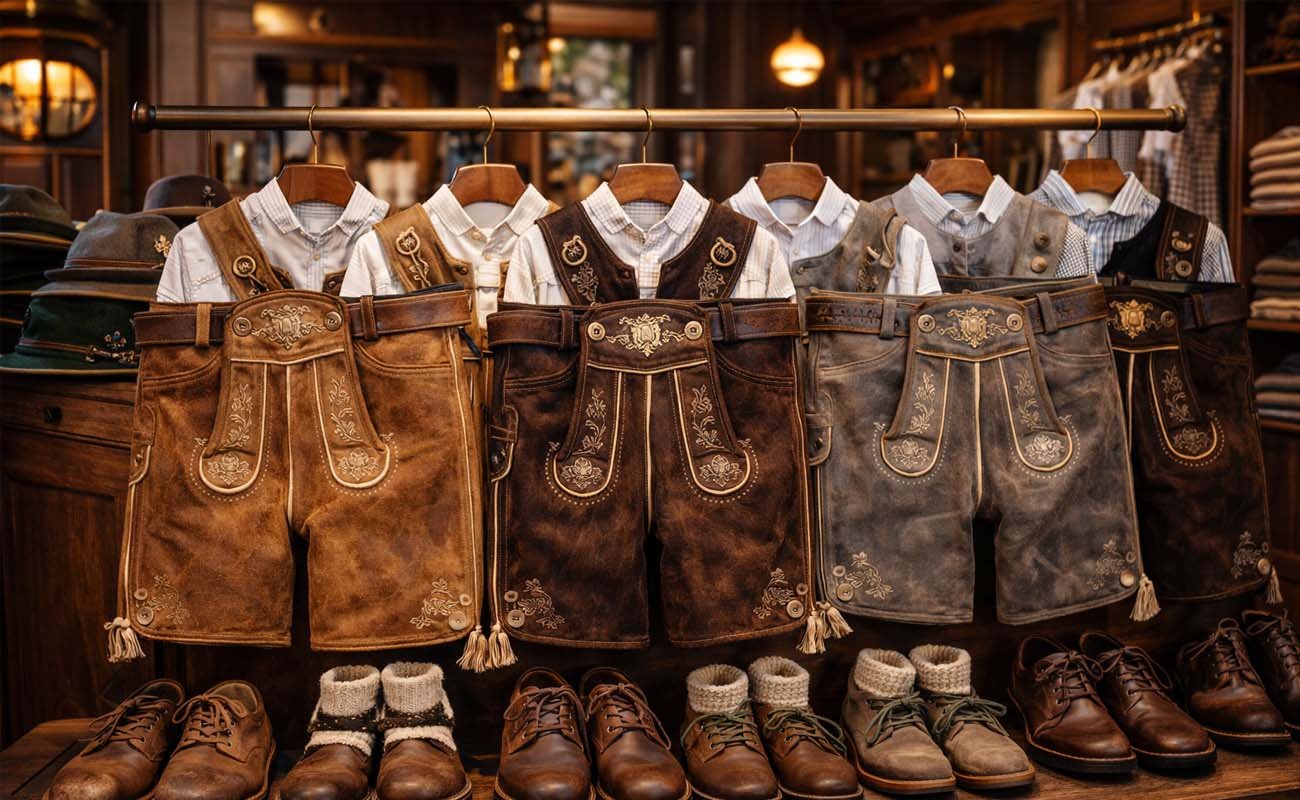
When it comes to finding authentic lederhosen and the right shoes to complete your Bavarian look, the source matters just as much as the style. At Bavarian Attire, we have built our entire collection around one principle — every piece we offer must meet the same standard of craftsmanship that Bavarian tradition has demanded for centuries. From genuine Haferlschuhe with hand-stitched embroidery to carefully selected Trachten accessories, our collection is designed for people who want to get the look right — not just close enough. Whether you are preparing for Oktoberfest, a cultural event, or simply want to own a piece of authentic Bavarian heritage, Bavarian Attire gives you everything you need in one trusted place. Explore our full collection at bavarianattire.com
The best shoe for lederhosen is the one that fits your occasion, matches your outfit’s color story, and lets you move through the day with genuine confidence. Traditional Haferlschuhe remain the gold standard because they were literally made for this outfit. But a well-chosen leather boot, a refined brogue, or even a deliberate minimal sneaker can all hold their own when styled thoughtfully. Start with your shoes, match your socks to your embroidery, coordinate your leather tones, and the rest of the outfit will fall naturally into place.
