


Blog
Do You Wear Socks With a Dirndl? The Ultimate Guide to Bavarian Hosiery

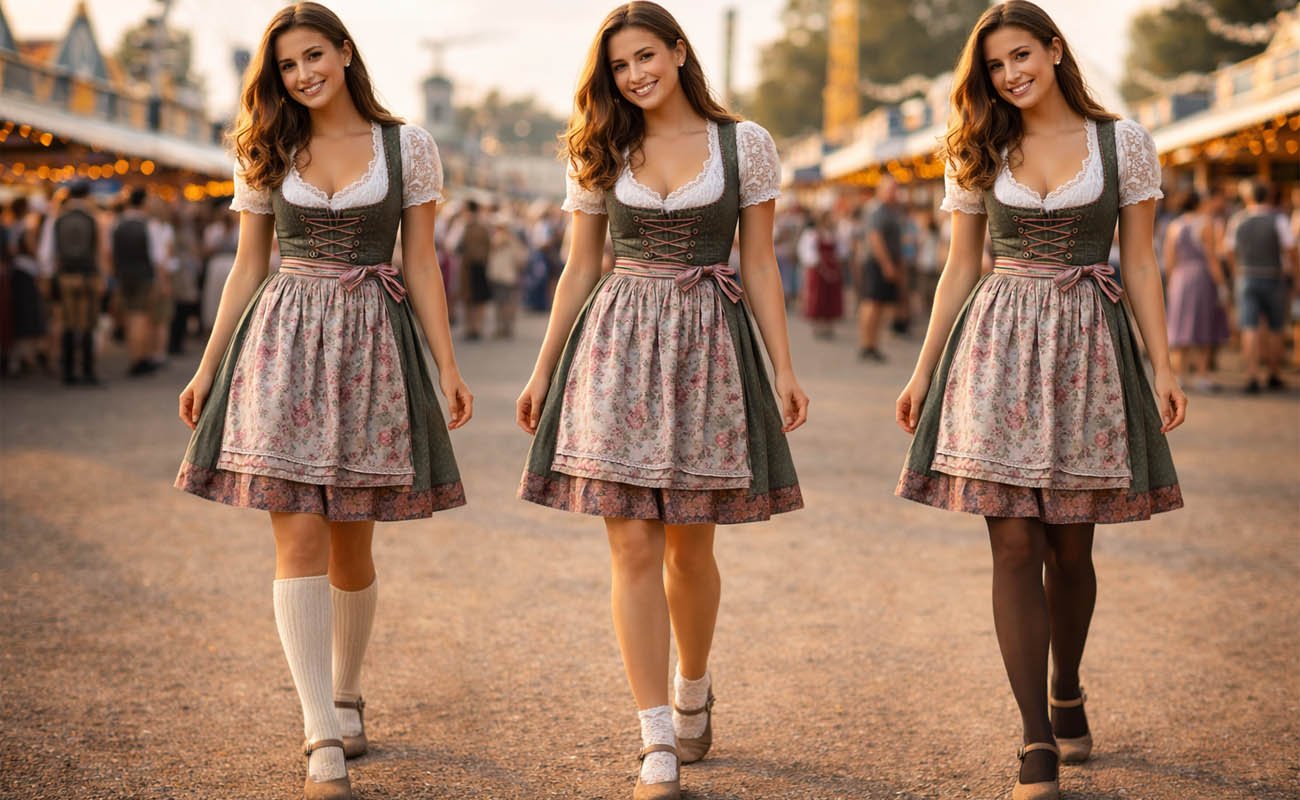
It’s the question that trips up almost every first-time Oktoberfest attendee. You’ve found the perfect bodice, your apron bow is tied on the correct side (right for taken, left for single!), and you’ve even picked out a charming Charivari chain. But as you look at your shoes, panic sets in. Do you wear socks with a dirndl?
The short answer is yes—but it’s complicated.
Bavarian fashion, or Tracht, is a world of unwritten rules, regional variations, and evolving trends. While a local from Munich might have a very specific opinion on tights versus knee-highs, modern festival fashion offers a bit more flexibility. Whether you are aiming for strict historical accuracy or just want to look cute in the beer tent, getting your hosiery right is the finishing touch that elevates your outfit from a costume to a statement.
In this guide, we’re diving deep into the etiquette of dirndl socks, the best styles to choose for different weather, and the biggest mistakes to avoid before you step onto the Wiesn.
Traditional Etiquette: What the Locals Do
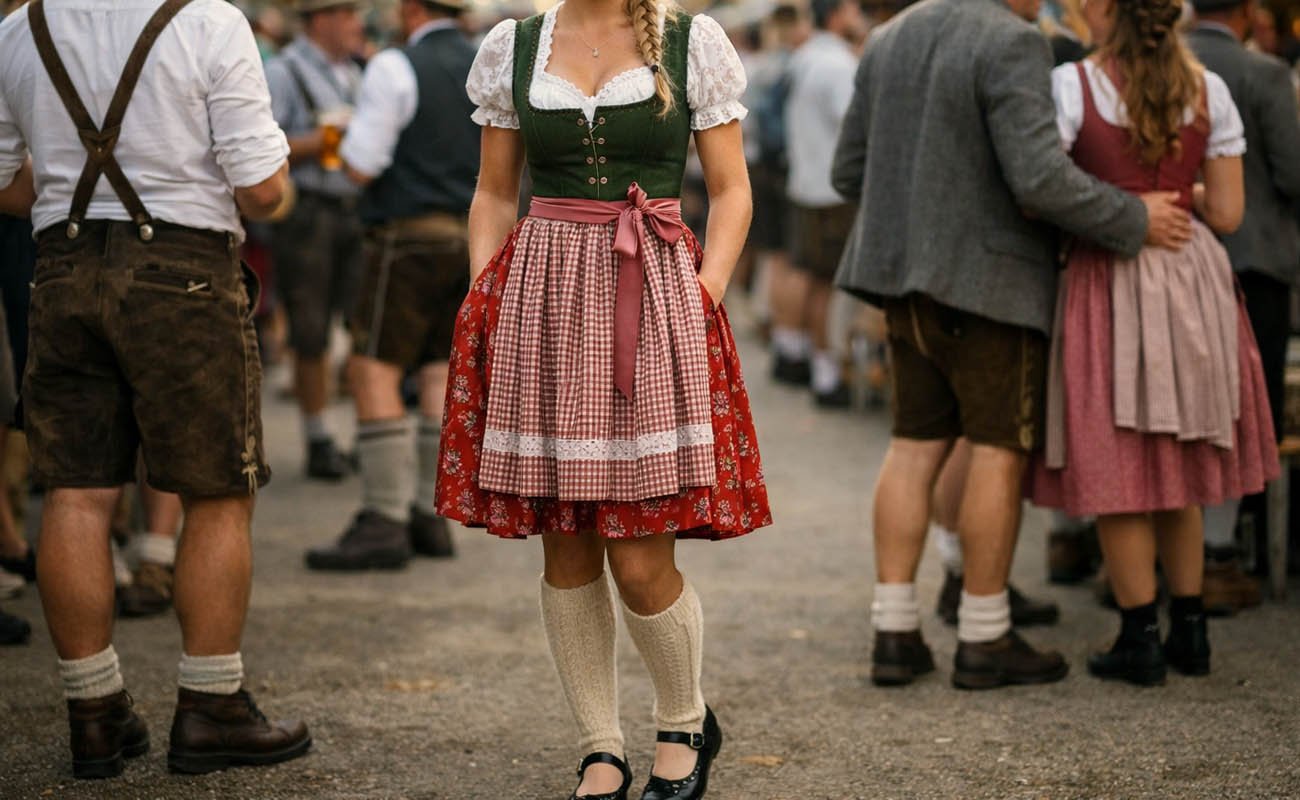
To understand the “rules” of dirndl socks, you first have to understand the difference between Tracht and Landhausmode.
Tracht refers to the historically accurate, traditional dress of specific regions in Bavaria and Austria. If you are marching in a parade with a Trachtenverein (a traditional costume club), the rules are strict. In these circles, women often wear specific woolen stockings or tights that correspond to their village’s history. These are rarely the sheer pantyhose you find at a department store; they are often thick, textured, and functional.
However, most visitors to Oktoberfest are wearing Landhausmode—fashion inspired by traditional cuts but designed for modern wear. Here, the etiquette is far more relaxed.
Traditionally, bare legs were not common in formal settings, but for a summer folk festival, they are perfectly acceptable. That said, wearing socks or tights is still seen as the more polished, “complete” look. The general rule of thumb for traditional etiquette is to match the hosiery to the shoe and the occasion. Closed-toe traditional pumps usually require tights or stockings, while ankle boots or heavier shoes look fantastic with knit socks.
Different Styles of Traditional German Socks and Stockings
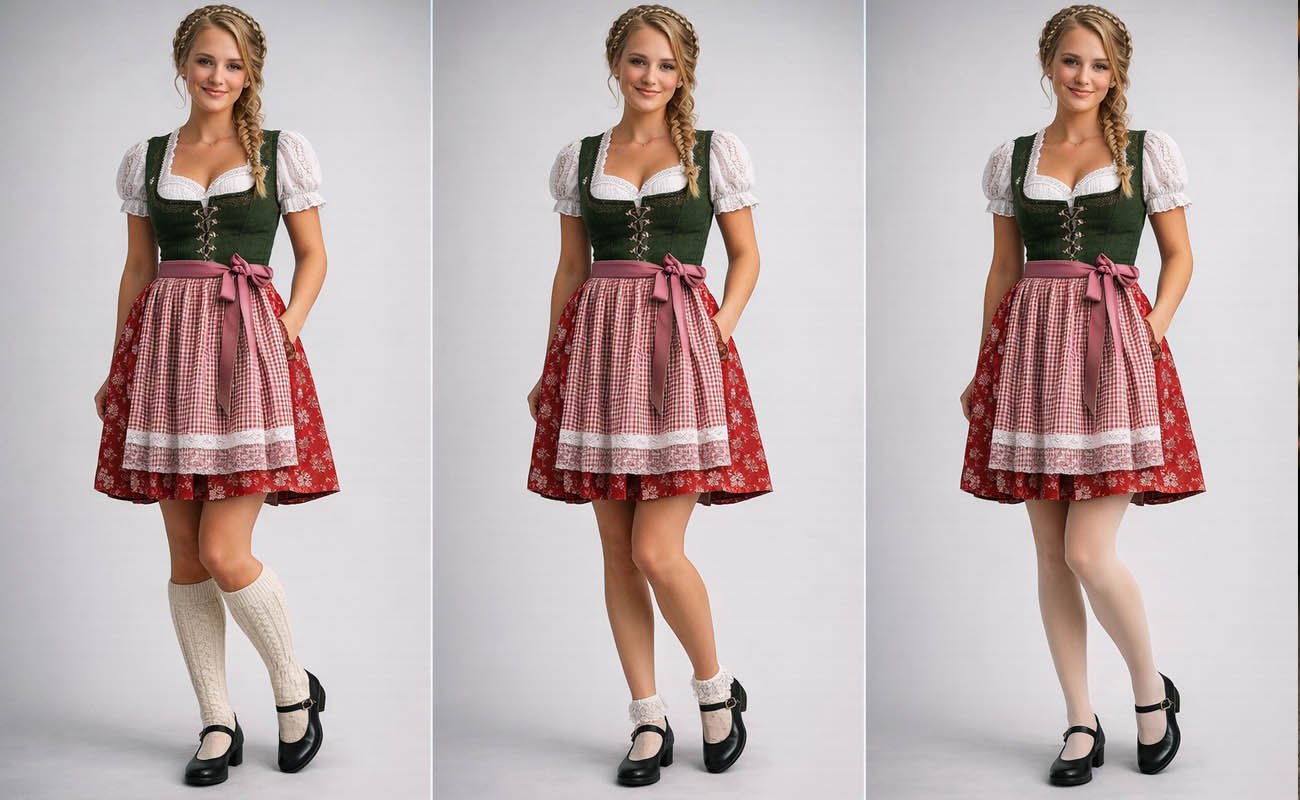
When browsing for authentic Bavarian accessories, you will encounter a few specific terms. Knowing the difference between Trachtenstrümpfe and standard socks will save you from a fashion faux pas.
Loferl (Not for Women!)
First, a quick warning. You might see two-part socks consisting of a calf warmer and a separate foot sock. These are called Loferl, and they are strictly for men wearing Lederhosen. While they look cozy, they are not part of the female traditional wardrobe.
Trachten Knee-Highs (Kniestrümpfe)
These are the gold standard for the modern dirndl wearer. Usually made of cotton or a fine wool blend, these socks hit right below the knee. They often feature elaborate cable-knit patterns, lace detailing, or cute bows at the hem. They are incredibly flattering because they draw the eye to the calf, balancing the volume of the skirt.
Tights (Strumpfhosen)
For cooler weather or evening events, opaque tights are a staple. In traditional colors like hunter green, grey, or white, they provide warmth and modesty. Many high-end dirndl wearers opt for silk or fine wool blends that offer a subtle sheen.
Lace Ankle Socks (Söckchen)
For a playful, flirty look—especially in the heat of late September—lace ankle socks are a popular choice. These often have a ruffled cuff that peeks out of the top of a low-heeled shoe. They add a vintage, feminine touch without the warmth of a full knee-high.
How to Choose the Right Hosiery for Oktoberfest
Selecting the right socks isn’t just about style; it’s about survival. Oktoberfest days are long. You might be walking kilometers across the Theresienwiese, standing on benches, and dancing for hours. Your choice of hosiery plays a massive role in your comfort.
Consider the Weather
Munich weather in late September and early October is notoriously unpredictable. It can be 70°F (21°C) and sunny one minute, and drizzling and 45°F (7°C) the next.
- Warm Days: Go for sheer nude tights (to prevent blisters) or cute cotton ankle socks. Bare legs are acceptable if it’s truly hot, but carry a pair of tights in your purse for the evening drop in temperature.
- Cold Days: Opaque tights are your best friend. You can even layer sheer pantyhose underneath knee-high knit socks for a look that is both warm and traditionally stylish.
Consider Your Skirt Length
The length of your dirndl dictates your sock choice.
- Mini Dirndl (Above the knee): This modern cut pairs well with knee-high socks, which cover more skin and balance the shorter hemline.
- Midi Dirndl (Knee-length): This is the classic length. Lace ankle socks or sheer tights look elegant here, as knee-highs might cut off your leg visually at the wrong spot.
- Maxi Dirndl (Ankle-length): Since your legs are mostly covered, focus on comfort. Simple ankle socks or knee-highs for warmth are practical choices here, as they won’t be the focal point.
Modern vs. Traditional Trends: What’s In Right Now?
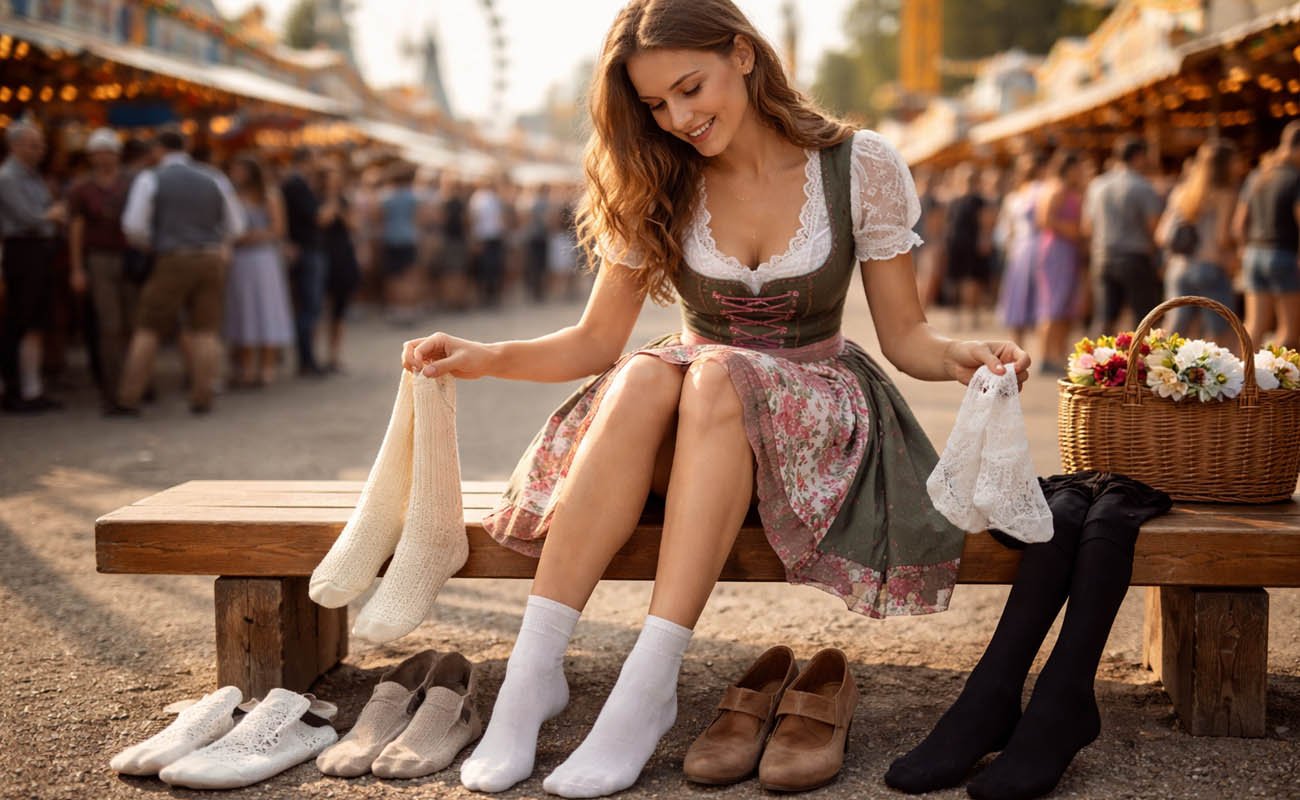
Fashion at the Wiesn is always evolving. While the core elements of the dirndl remain constant, accessories like socks and shoes are where people express their personal style.
Currently, there is a massive resurgence of “vintage” aesthetics. This means the sheer, shiny pantyhose of the 2000s are out, and textured, matte hosiery is in. We are seeing a lot of pointelle knit tights (featuring small, openwork patterns) and crochet-style knee-highs.
Another modern trend is the “monochromatic” look. Instead of white socks with everything, fashion-forward attendees are matching their socks to their apron. If you have a berry-colored apron, looking for socks in a matching burgundy hue creates a seamless, elongated silhouette.
Conversely, the “rugged” look is also gaining traction. As heavy, hiking-style boots become more popular with dirndls (a controversial but comfortable choice!), they are being paired with chunky, “scrunched” wool socks. This creates a cozy, alpine-chic vibe that is perfect for a chilly evening in the beer garden.
Common Footwear Mistakes to Avoid
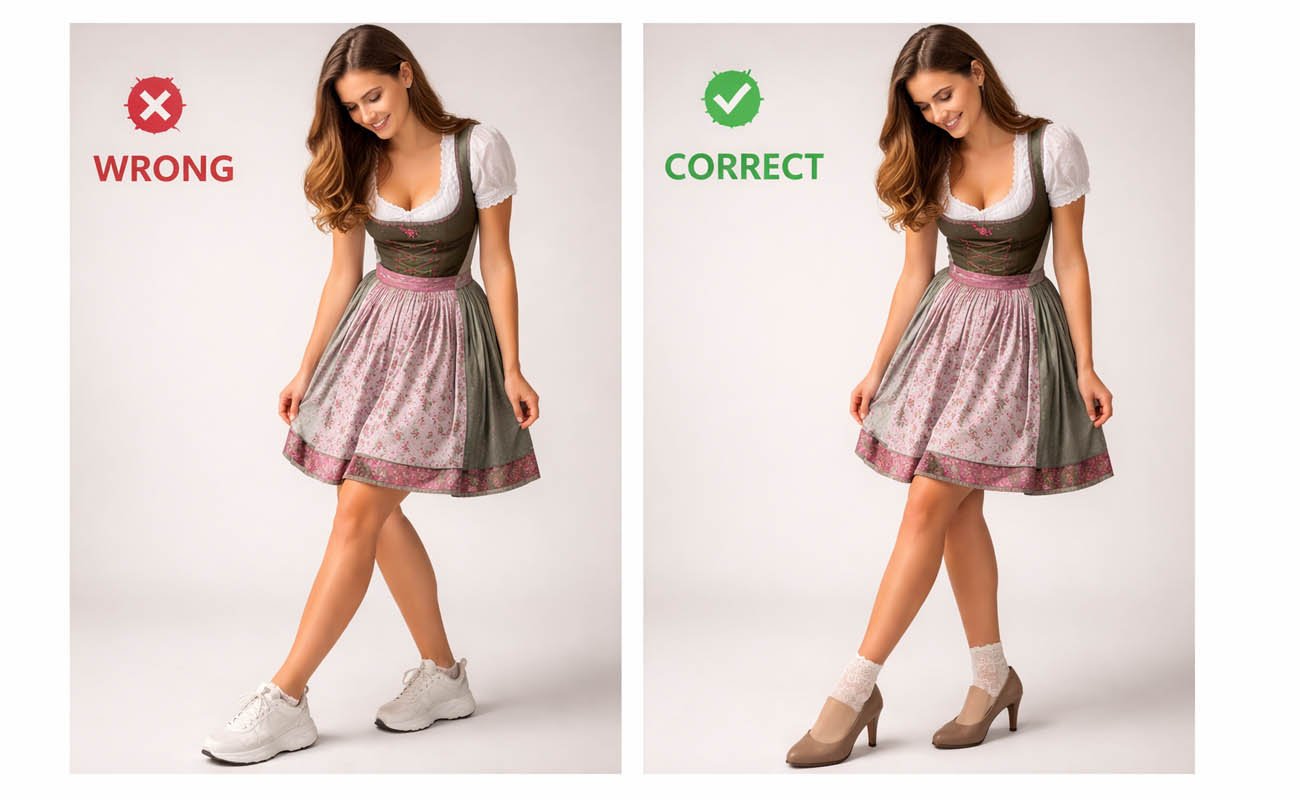
Even if you have the most beautiful silk dirndl, the wrong footwear and hosiery combination can throw off the entire look. The goal is to look effortless and polished, not mismatched.
Here are the most common pitfalls to avoid when styling your Bavarian feet:
- Avoid Athletic Socks: Never wear standard white gym socks or branded athletic socks with a dirndl. The stark white cotton and logos clash horribly with the romantic, folk aesthetic of the dress.
- Skip the Fishnets: While edgy fashion has its place, wide-net fishnet stockings generally look out of place at a traditional folk festival. If you want texture, opt for a patterned knit tight instead.
- Don’t Over-Layer: If you are wearing ankle boots, don’t wear knee-high socks and show bare skin above the boot and below the hem. It cuts the leg into too many segments.
- Mind the Open Toe: Generally, open-toed shoes are risky at Oktoberfest due to spilled beer and broken glass. If you do wear peep-toes, never wear reinforced-toe pantyhose where the seam is visible.
- The “Schoolgirl” Trap: Be careful with white knee-highs and short skirts. While traditional, it can easily veer into “costume” territory if the quality isn’t high. Look for high-quality wool or cotton blends rather than cheap nylon to keep the look elevated.
Stepping Out in Style
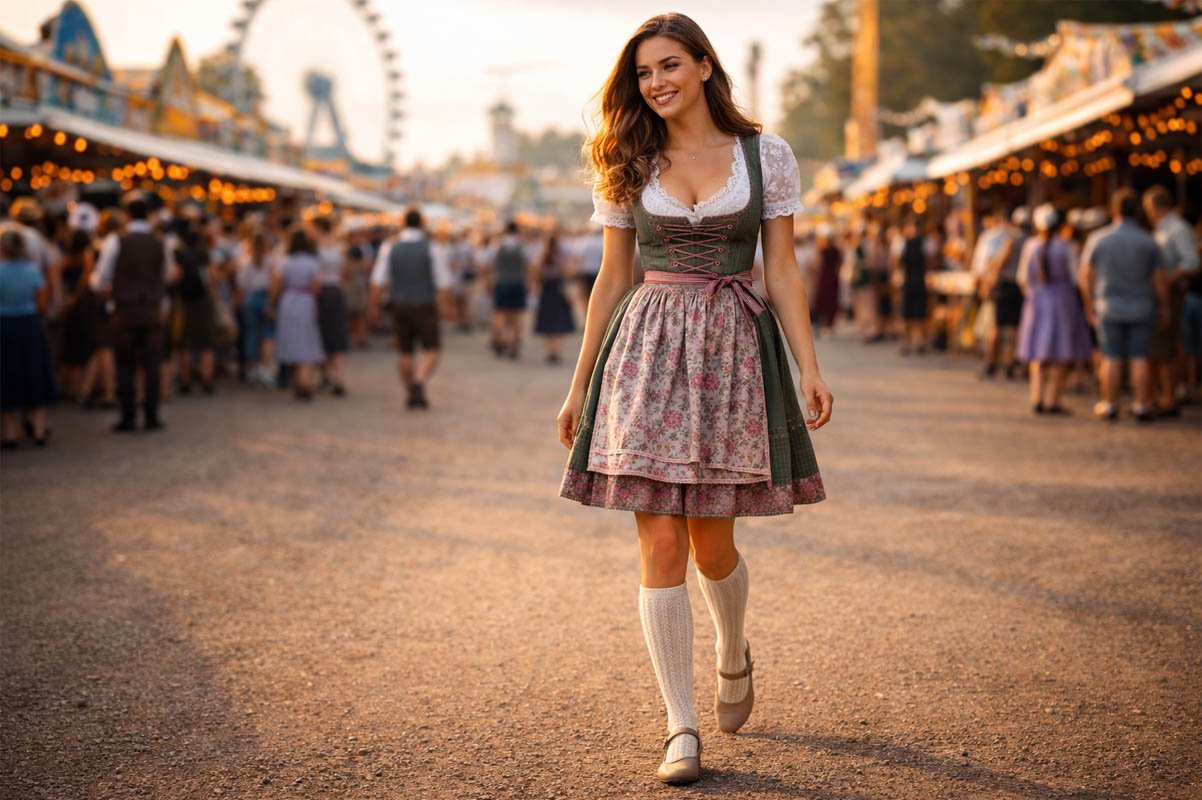
So, do you wear socks with a dirndl? Yes, if you want to. The beauty of modern Tracht is that it allows for individual expression within a framework of tradition. Whether you choose elegant sheer tights, cozy wool knee-highs, or playful lace ankle socks, the most important thing is that you feel comfortable and confident.
When you pack for Munich, toss a few different options in your suitcase. The weather, your shoes, and your mood will determine the right pair for the day. Just remember: leave the gym socks at home, watch out for the Loferl, and when in doubt, look at what the locals are wearing. Prost!
Got Dirndl Sock Questions? We’ve Got the Answers
Is It Okay to Go Bare-Legged at Oktoberfest?
Bare legs are perfectly acceptable on warm days, but wearing tights or socks is considered the more polished and complete look. Since Munich temperatures drop sharply in the evening, always keep a spare pair tucked in your purse — just in case!
What Are Loferl — And Can Women Wear Them?
Loferl are two-part socks made of a calf warmer and a separate foot sock. They look cozy and charming, but they are strictly part of the men’s Lederhosen outfit. Women should avoid them entirely, as they have no place in the traditional female Tracht wardrobe.
Which Socks Should I Wear Based on My Dirndl Length?
Your skirt length is your guide! Pair a mini dirndl with knee-high socks, a midi dirndl with lace ankle socks or sheer tights, and a maxi dirndl with simple ankle socks or warm knee-highs for comfort, since your legs will mostly be covered anyway.
Which Hosiery Mistakes Can Ruin Your Entire Dirndl Look?
The biggest offenders are athletic socks, wide fishnet stockings, and visible reinforced-toe seams on open-toed shoes. Always choose quality wool or cotton blends over cheap nylon — otherwise even the most beautiful dirndl can end up looking more like a Halloween costume than authentic Bavarian fashion.
