
Blog
What Does Lederhosen Look Like? A Complete Guide by People Who Make Them

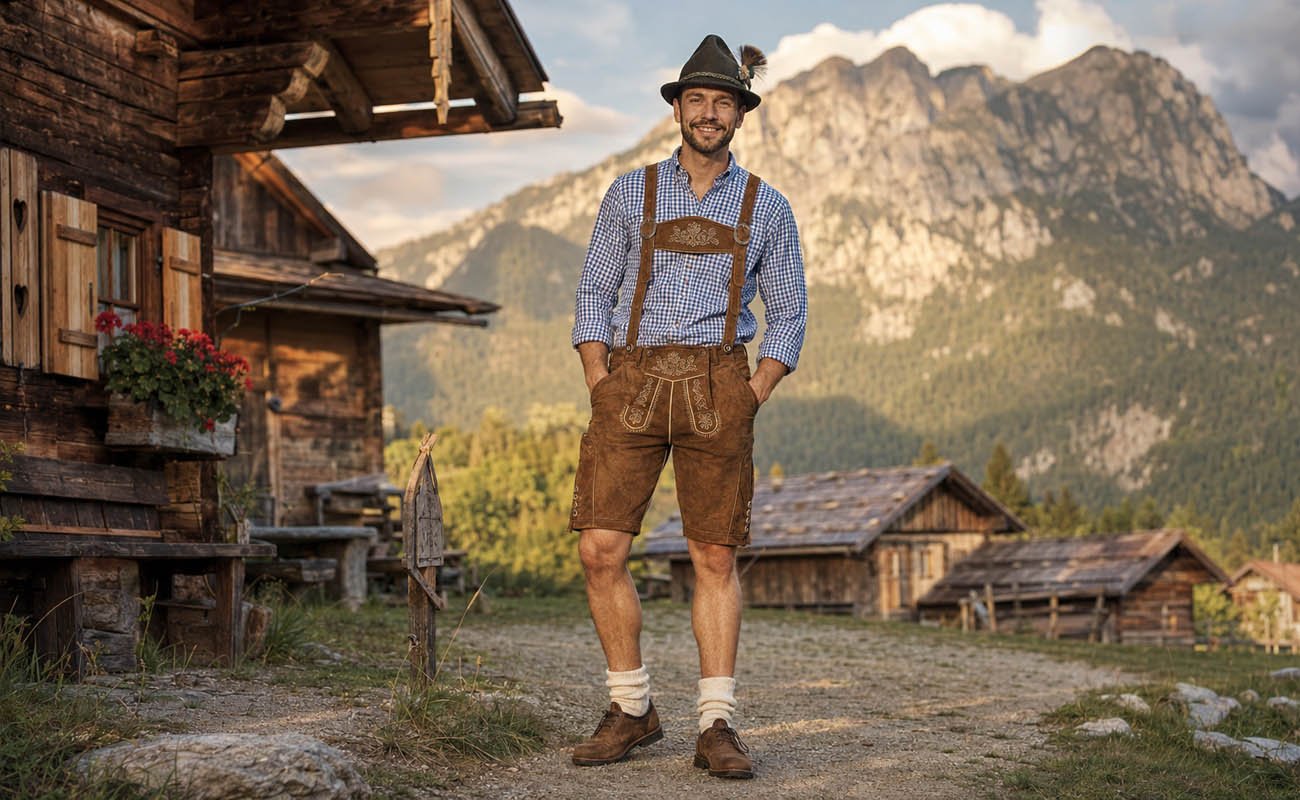
Lederhosen are structured leather breeches that sit high at the natural waist, taper toward the knee, and are worn with crossed suspenders and a decorative front bib panel called the Latz. That is the short answer. But if you are buying a pair — or trying to understand whether what you are looking at is genuine or not — the short answer is not enough. This guide covers every visual detail, written by people who actually craft these garments, so you get the full picture from material to finished outfit.
The Leather: The First Thing That Tells You Everything
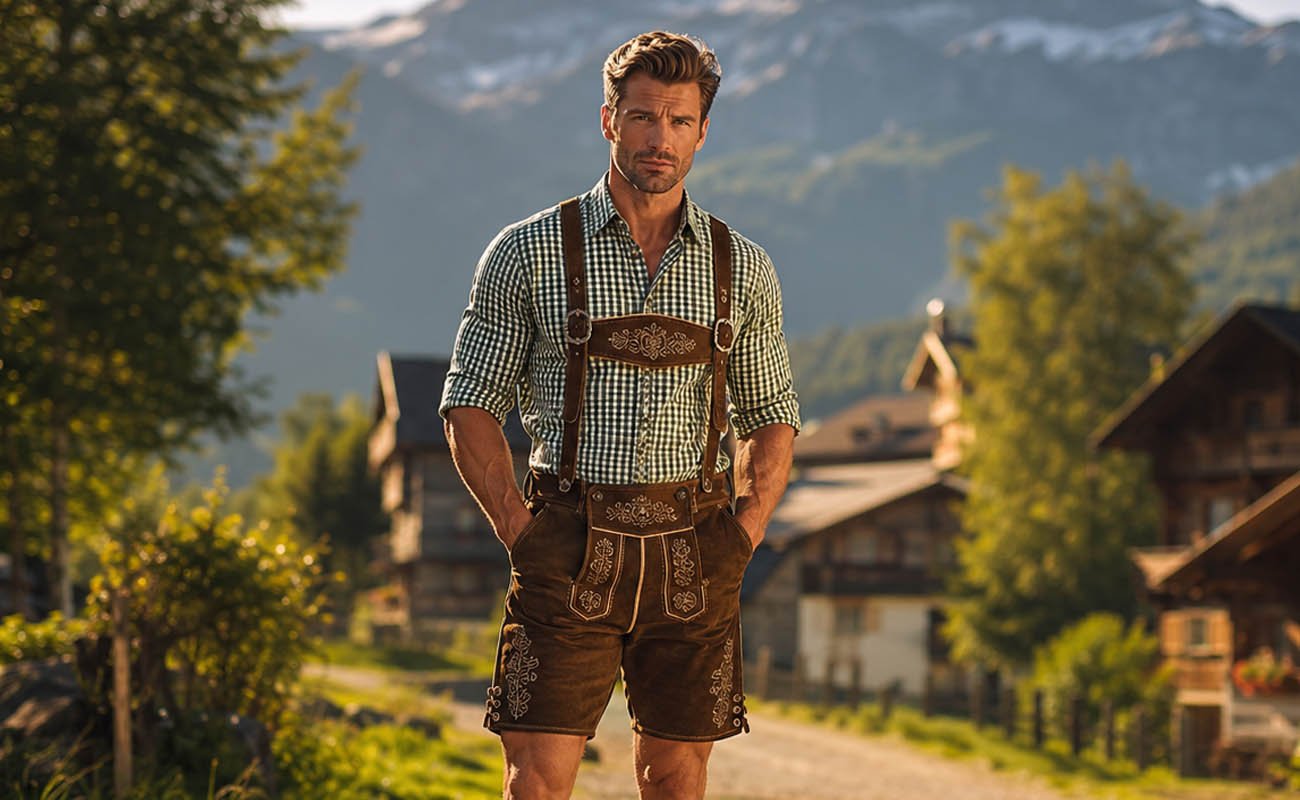
The leather surface is where authenticity either shows or falls apart immediately. Genuine Bavarian leather breeches are made from deerskin or goatskin — goat suede being the most widely used traditional material for good reason. Synthetic versions made from PVC, bonded leather, or polyester try to imitate the look, but the surface always gives them away.
Goat suede has a fine, naturally pebbled grain that varies slightly across the surface. No two sections look perfectly identical — and that variation is exactly what makes it look rich and authentic. The color sits deep in the material, absorbing light rather than reflecting it, which gives the garment a matte, grounded appearance. When you see lederhosen that look glossy or uniformly perfect from every angle, that is synthetic material. Real goat suede never looks like that.
We craft our lederhosen from goat suede because of how it behaves from the very first wear. It is soft immediately — no break-in period, no stiffness that needs weeks of use to work out. Over time it develops a natural patina, darkening at the knees and seat where the leather flexes most. That gradual change is a sign of quality, not wear. A well-maintained goat suede pair bought today can still look exceptional ten years from now. That is the difference between a garment and a costume.
What Authentic Embroidery Actually Looks Like
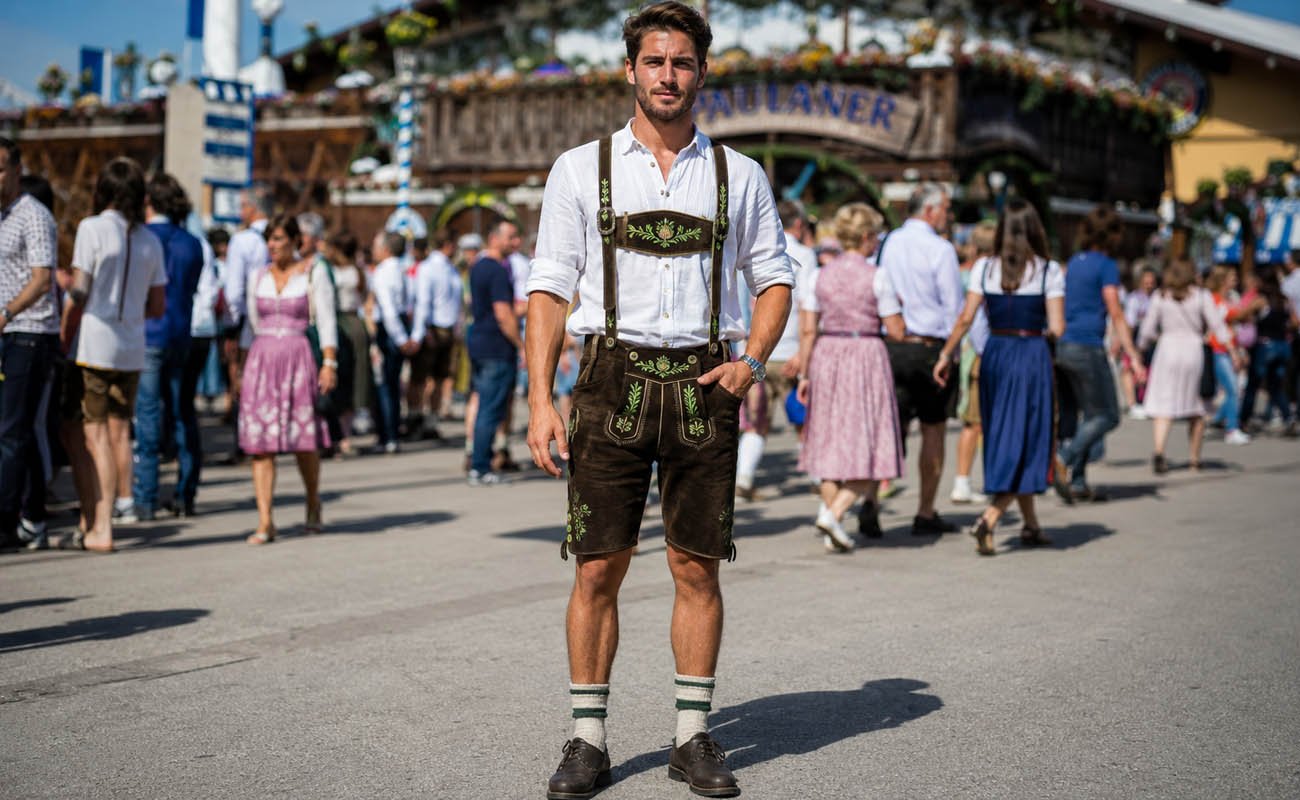
The embroidery on a genuine pair is raised above the leather surface, dense, and stitched with consistent tension throughout. It is not flat like a printed design, not loose, and not applied as a patch. When you look at it from an angle, the thread lines catch the light differently from the leather beneath — that contrast is what tells you the embroidery was actually stitched into the garment.
Here is what you will find on an authentic well-made pair:
- Latz panel embroidery — the central bib at the front carries the primary design, typically a floral or scroll pattern; green thread on brown leather is the most traditional Bavarian combination, white or cream on black leather for formal styles
- Suspender crossbar design — the horizontal strap across the chest has a geometric border pattern that frames the chest and ties the front of the outfit together
- Pocket and waistband trim — subtle contrasting stitching along the pocket edges and waistband that finishes the garment without competing with the main design
- Even tension throughout — no puckering of the leather beneath the stitching, no gaps between thread lines, no loose ends at the edges of the design
In our workshop, all embroidery is done in-house using precision machine embroidery. This matters because consistent tension settings and the same thread across every pair means the design lands the same way every time — sharp lines, clean edges, no variation in quality from one piece to the next. When embroidery is outsourced or produced carelessly, the inconsistency shows immediately in the finished surface.
What a Complete Lederhosen Outfit Looks Like
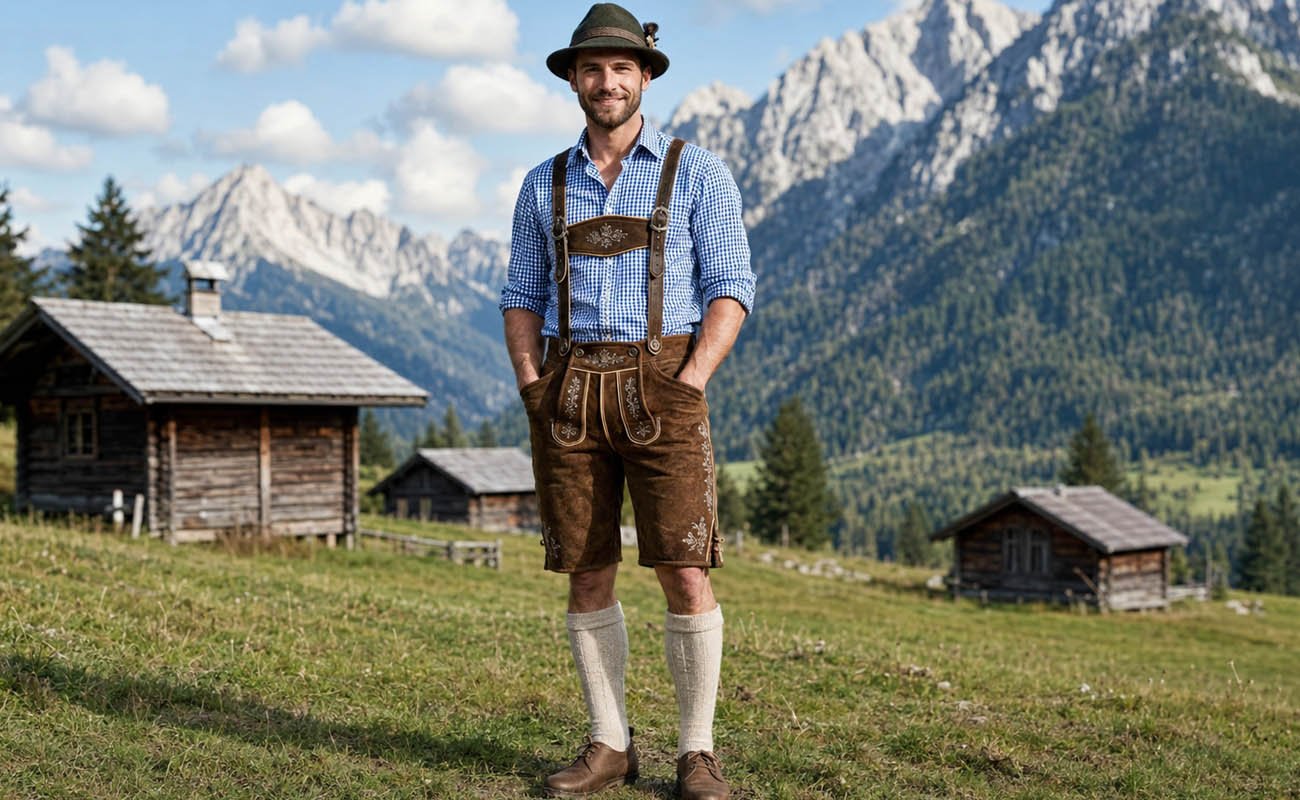
The leather breeches are the foundation, but the traditional Bavarian outfit is a complete system. Every component was developed alongside the others over generations, and when one piece is wrong, the entire outfit reads as a costume rather than traditional clothing. Here is what a properly assembled outfit includes:
- Trachtenhemd — a collared shirt in white or blue-white check with embroidered cuffs and chest panels; substituting a plain t-shirt is the most common mistake and the one that most undermines an otherwise good outfit
- Socks — short Loferl calf socks with a decorative fold for shorter styles, full knee-high wool socks for knee-length versions; always in grey-white or cream tones, never plain black
- Haferlschuhe — low-heeled traditional Bavarian shoes with a side lace running from the toe seam to the ankle; no other shoe gives the outfit the same grounded alpine finish
- Tirolerhut — a felt hat with a narrow brim and a simple cord, feather, or pewter pin on the band; optional but it completes the silhouette in a way nothing else does
- Suspenders (Hosenträger) — wide leather straps in an H-shape, with the front crossbar being the widest and most embroidered section
When these elements come together in earthy, coordinated tones — deep brown leather, checked shirt, grey-white socks, dark shoes — the outfit has a visual logic that is immediately recognizable as genuine traditional dress. When pieces are mismatched or substituted, that logic breaks down and the result looks assembled rather than intentional.
Real vs Fake: How to Tell in Under a Minute
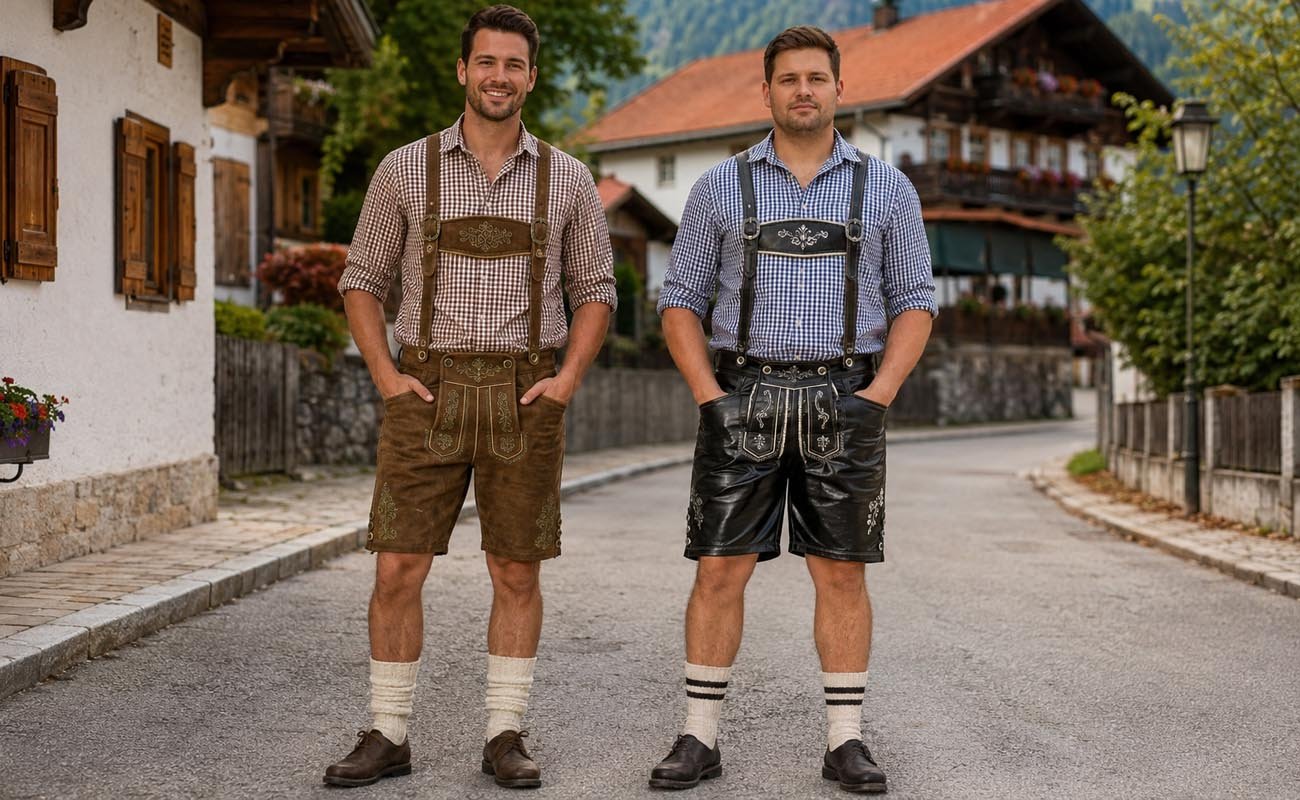
This is the question every first-time buyer in the US and every experienced Trachten wearer in Germany asks before spending real money. The answer is straightforward once you know what to look for.
Start with the leather surface. Genuine goat suede has natural grain variation — subtle differences in texture across the surface that come from the material itself. Synthetic leather looks too even, too smooth, and too consistent. There is no variation because it was manufactured to look uniform. That uniformity is exactly the problem.
Next, check the color depth. Real leather has tonal variation, especially at seams and high-contact areas. Synthetic material sits flat from edge to edge with no depth or shift in tone. After that, look at the embroidery. On a genuine pair the stitching is raised and the lines are sharp. On a costume piece the design is usually printed, ironed on, or stitched with such loose tension that gaps are visible between thread lines.
Finally, check the hardware. Buttons, buckles, and clasps on an authentic pair are solid metal with actual weight. Lightweight painted plastic hardware is one of the most reliable signals that the garment was built for one season, not for years of use.
A genuine goat suede pair with quality in-house embroidery sits in the $199 to $230 range for standard styles, and above $250 for more detailed tonal embroidery work. That price reflects real material, real stitching, and construction built to last. If you find something claiming to be authentic leather at $40 to $80, the leather surface test will tell you everything you need to know within seconds.
Frequently Asked Questions
What does lederhosen look like in simple terms?
Lederhosen are short leather pants that sit at the natural waist, with a rectangular bib panel at the front and crossed suspenders over the shoulders. The leather is typically brown or black, the embroidery is stitched directly into the material, and the full outfit includes a checked shirt, traditional socks, and Bavarian shoes.
What material are authentic lederhosen made from?
Genuine lederhosen are made from either deerskin or goatskin leather. Goat suede is the most common authentic choice — it is soft from the first wear, naturally textured, and durable enough to last for years with proper care. Synthetic materials are used in costume versions but are visually and physically distinct from the real thing.
How do I know if lederhosen are genuine leather?
Check the surface grain — real goat suede has a fine, naturally pebbled texture that varies slightly across the material. Synthetic leather looks uniform and often slightly glossy. Real leather also develops a patina over time, while synthetic material remains unchanged in appearance regardless of how much it is worn.
What does lederhosen embroidery look like?
Authentic embroidery is raised above the leather surface, dense, and stitched with even tension throughout. The primary design sits on the front bib panel, with secondary patterns on the suspender crossbar and pocket edges. Green thread on brown leather is the most traditional Bavarian style.
Can lederhosen be worn outside of Oktoberfest?
Yes — traditional Bavarian leather breeches are worn at weddings, regional festivals, hunting events, and formal celebrations throughout Germany and Austria. The knee-length style in particular is considered appropriate for a wide range of occasions beyond the festival setting.
Final Thought
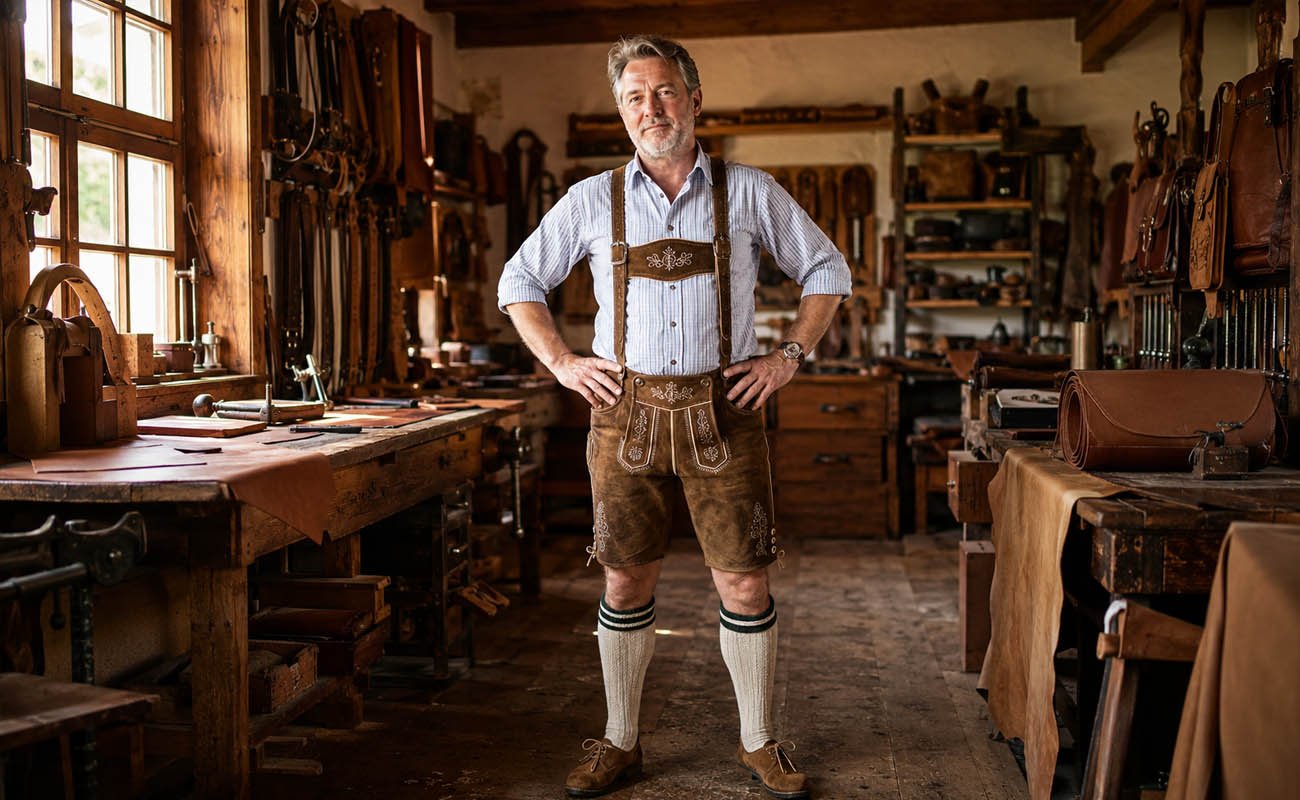
Genuine lederhosen look structured, grounded, and built with intention. The goat suede surface carries natural grain and depth. The embroidery is raised, clean, and precise. The silhouette is high-waisted and tapered, shaped the same way it has been for generations because the form works. When the full outfit comes together correctly, it does not look like something assembled for one night — it looks like clothing with a history behind it.
If you want to see these details in a real pair before making a decision, Bavarian Attire carries authentic goat suede lederhosen with in-house machine embroidery across standard and detailed tonal styles. Every detail covered in this guide is visible in the product — start with the leather surface, and everything else will follow. Browse the full collection at Bavarian Attire.
