

Blog
Can You Wear a Dirndl While Pregnant? Your Complete Guide


Planning to attend Oktoberfest or a German cultural festival while expecting? Wondering if traditional Bavarian dress is compatible with your baby bump? The good news is that pregnant women can absolutely wear dirndls comfortably and stylishly throughout their pregnancy journey. Whether you’re attending Munich’s famous Oktoberfest, a local German-American festival, or a cultural celebration, there are plenty of options designed specifically for your changing body.
Quick Answer: Yes, You Can!
Pregnant women can wear dirndls during all trimesters of pregnancy. With the right style choices and modifications, expectant mothers can look authentic and feel comfortable while celebrating German traditions. The traditional dirndl design actually offers several pregnancy-friendly features that make it surprisingly suitable for expecting mothers.
Understanding the Traditional Dirndl
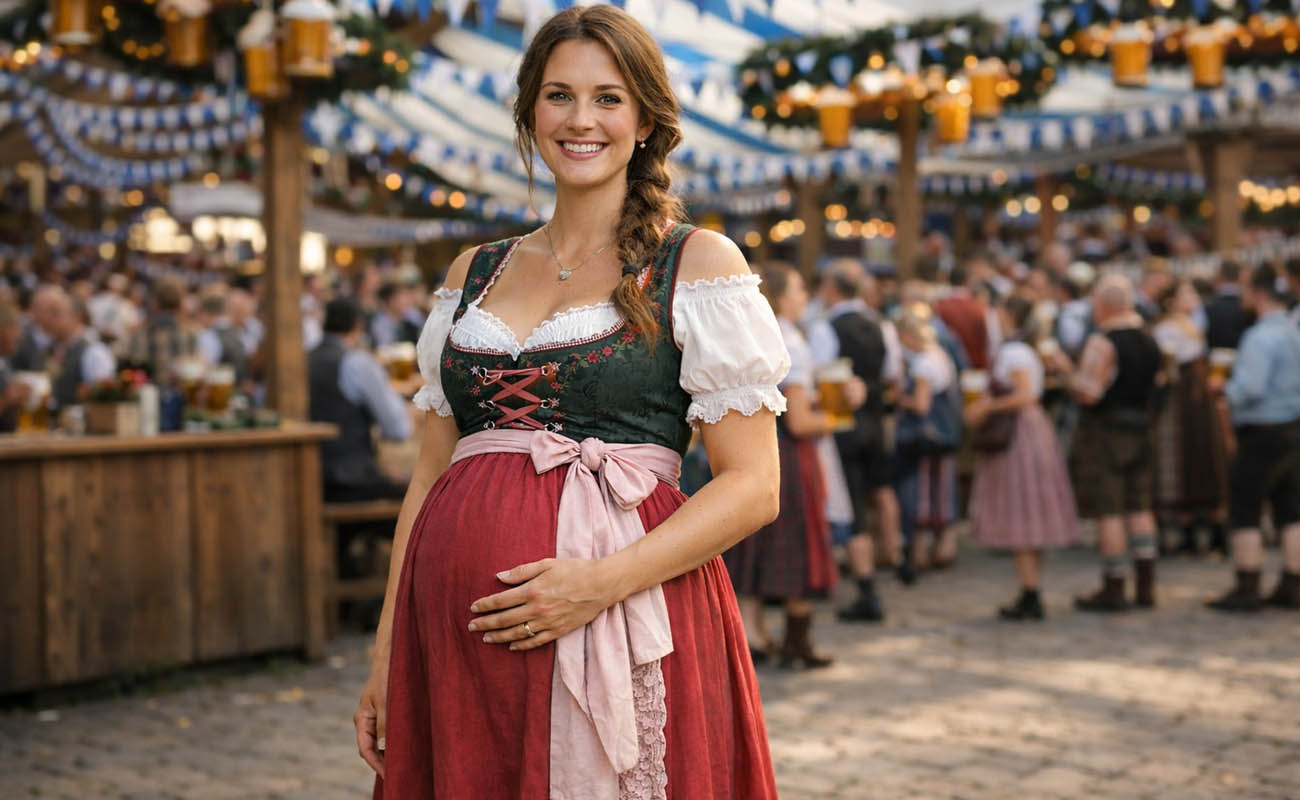
A dirndl is traditional German and Austrian dress consisting of several key components. The bodice (Mieder) is a fitted top portion with decorative buttons and lace-up design. The skirt (Rock) is usually knee-to-ankle length in full or A-line style. The blouse (Bluse) is a white or cream-colored puffy-sleeved shirt worn underneath. Finally, the apron (Schürze) is a decorative apron tied over the skirt with intricate patterns.
Originally worn as folk clothing in Alpine regions, dirndls have become synonymous with Oktoberfest celebrations worldwide. Today’s dirndls range from authentic traditional styles to modern interpretations perfect for festivals. Understanding these components helps pregnant women make informed choices about which elements to prioritize for comfort while maintaining authenticity.
Why Dirndls Actually Work Well for Pregnancy
Traditional dirndl designs offer several pregnancy-friendly features. The high empire waist sits above the growing belly, providing comfort without restriction on your abdomen. Adjustable lacing can be loosened progressively as you grow throughout pregnancy, offering customizable fit that adapts to your changing body.
The full skirt provides plenty of room for movement and accommodates your bump beautifully without any restriction. Quality dirndls are made from natural materials like cotton or linen that help regulate body temperature, especially important during pregnancy when you may feel warmer than usual. The bodice provides gentle support similar to a maternity band when properly fitted.
Types of Maternity Dirndl Options
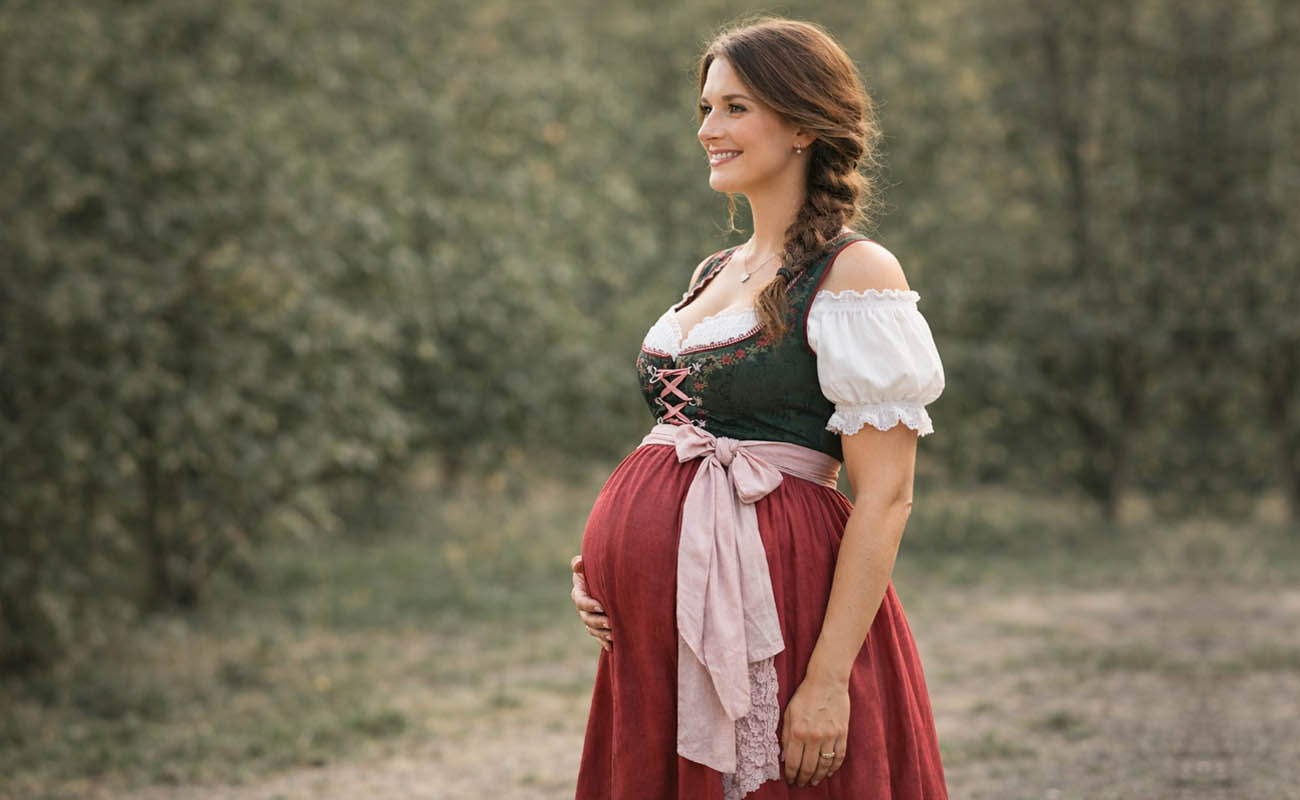
Authentic maternity dirndls are specifically designed for pregnant women, featuring adjustable bodices with extra room in the bust and torso, empire waistlines positioned above the bump, and longer bodice sections for better coverage. These pieces maintain traditional patterns and authentic colors while accommodating your changing shape. The extra-long lacing systems provide maximum adjustability throughout all three trimesters.
Many regular dirndls can work during pregnancy with smart choices. Choose sizes one to two sizes larger than your pre-pregnancy size to allow room for growth. Look for styles with at least six inches of lacing adjustability to accommodate your expanding body. Select fuller skirt styles rather than fitted designs, and pair with comfortable maternity undergarments for additional support and comfort.
For budget-conscious celebrations, creative alternatives work wonderfully. A maternity dress paired with a traditional vest and apron creates an authentic look without the full investment. The separates approach using maternity skirts with dirndl blouses allows for customized fit and comfort. Costume versions provide affordable options for casual one-time events, while rental options give you access to authentic pieces without the long-term investment.
Choosing the Right Dirndl for Each Trimester
First Trimester (Weeks 1-12):
- Regular dirndls usually still fit comfortably
- Focus on breathable fabrics for comfort
- Choose adjustable waistlines for flexibility
- Prioritize comfort over style during morning sickness
During the first trimester, regular dirndls often still fit comfortably. Focus on adjustable waistlines and breathable fabrics for comfort. Since morning sickness may be an issue during this stage, comfort is key even when your bump isn’t showing yet. Choose pieces that won’t feel restrictive if you’re experiencing any nausea or bloating.
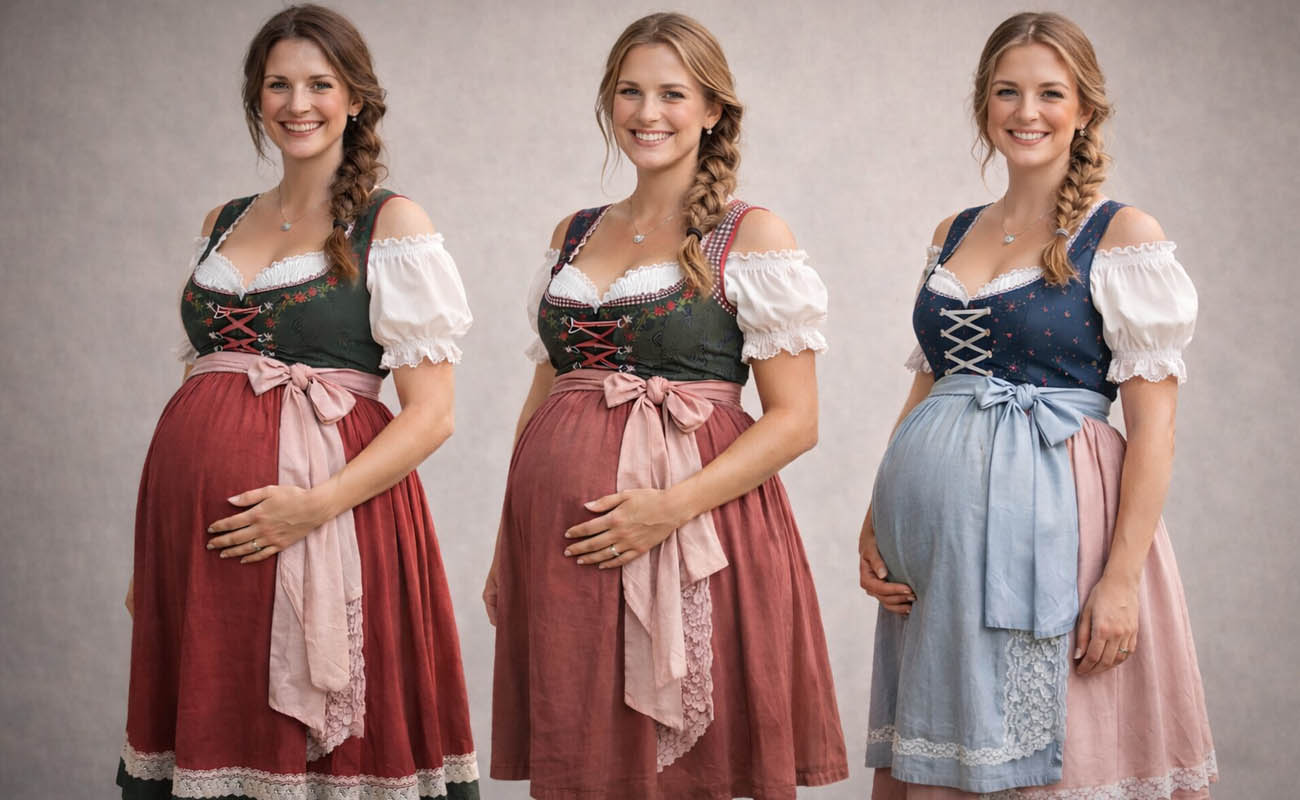
In the second trimester (weeks 13-26), empire waist styles work best as your bump becomes prominent. Look for expandable bodices that accommodate both breast changes and growing belly. This is often the most comfortable time to wear traditional clothing as energy levels are typically higher and you’re past the early pregnancy discomforts but not yet dealing with late pregnancy challenges.
The third trimester (weeks 27-40) requires prioritizing comfort over strict authenticity. Choose loose-fitting options with plenty of room for movement and breathing. Focus on supportive undergarments and avoid anything that restricts breathing or circulation. Consider shorter wearing periods and have comfortable backup clothing available in case you need to change.
Size and Fit Guidelines
When choosing a bodice, measure your under-bust rather than your waist for the most accurate sizing. Choose one size larger than your pre-pregnancy size to accommodate breast changes and growing torso. Ensure the lacing allows at least six inches of adjustment to adapt as your body changes throughout pregnancy. Look for deeper necklines to accommodate breast changes comfortably, and avoid overly tight boning that restricts movement or breathing.
For skirt style and length, A-line or full skirts provide the most comfort and room for your growing belly. Knee-length or midi styles work best for mobility, especially when navigating festival grounds. Avoid tight pencil skirt styles that will become uncomfortable as pregnancy progresses. Consider high-low hemlines for easier walking, and ensure the skirt waistband sits comfortably above your bump without any pressure.
Where to Find Maternity Dirndls
Online retailers offer the widest selection and convenience. Amazon provides a wide selection with customer reviews and easy returns, making it simple to try different sizes and styles. Etsy features custom and handmade options from independent sellers who can accommodate specific sizing requests and style preferences. Specialty German clothing websites carry authentic traditional pieces with proper construction and cultural accuracy.
Costume websites provide budget-friendly alternatives perfect for occasional wear without significant investment. Local options include German cultural centers that can provide retailer recommendations and may host seasonal shopping events. Costume rental shops are perfect for one-time events and typically include cleaning and basic alterations. Oktoberfest festival vendors often sell on-site with immediate availability, and bridal or formal wear shops may carry or special-order dirndls.
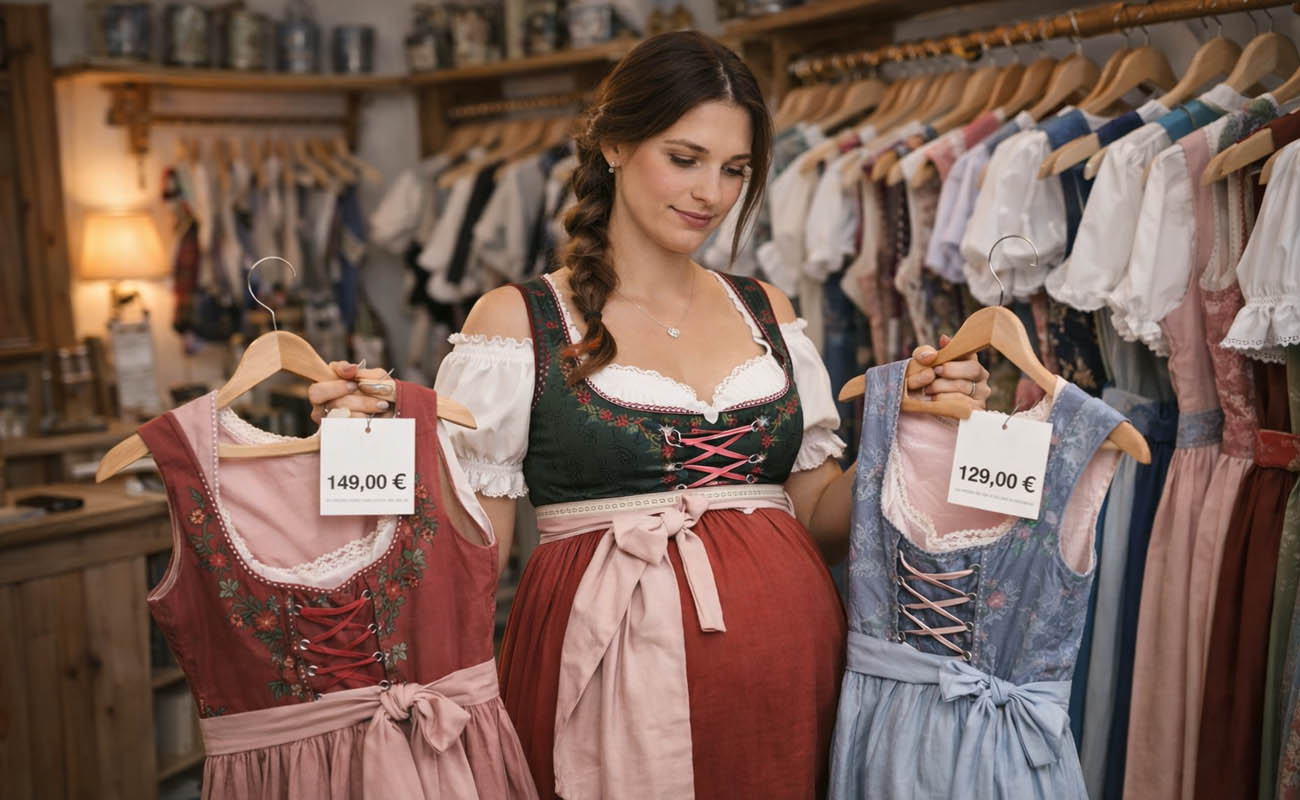
Budget considerations help guide your purchasing decision. Budget-friendly options ranging from fifty to one hundred fifty dollars include costume versions suitable for casual events. Mid-range choices costing one hundred fifty to four hundred dollars offer quality reproductions balancing authenticity and affordability. Premium authentic pieces range from four hundred to eight hundred dollars or more for traditional handmade dirndls. Rental options typically cost seventy-five to two hundred dollars for weekend rentals.
Styling Your Pregnancy Dirndl
Essential accessories complete the traditional dirndl look while accommodating pregnancy needs. Edelweiss jewelry such as necklaces, earrings, or brooches honor German cultural symbolism. Traditional hair accessories or German-style hats add authenticity to your outfit. Comfortable flat shoes or low heels prevent fatigue during extended festival participation. A shawl or cardigan provides temperature regulation, particularly important during pregnancy when body temperature fluctuates.
For hair and makeup, traditional braids with ribbons create authentic German styling that’s both beautiful and practical. Natural makeup emphasizing rosy cheeks and natural beauty complements the traditional aesthetic perfectly. Fresh or artificial flowers in hair add seasonal charm and cultural authenticity. Keep styling simple to conserve energy and reduce preparation stress, especially important when dealing with pregnancy fatigue.
Color coordination creates cohesive traditional looks while expressing personal style. Classic combinations include navy and white for traditional elegance, green and cream for natural beauty, and red and black for bold contrast. Choose lighter colors for summer events to reflect heat and stay cooler. Select richer tones for fall celebrations that complement the autumn atmosphere. Most importantly, choose colors that make you feel confident and beautiful.
Comfort and Safety Tips
Temperature Regulation:
- Choose breathable natural fabrics like cotton or linen
- Layer appropriately for changing weather
- Stay hydrated throughout the event
- Take regular breaks in shade or air conditioning
Temperature regulation becomes crucial during pregnancy. Choose breathable natural fabrics like cotton or linen that allow air circulation and prevent overheating. Layer appropriately for weather conditions, particularly important for outdoor festivals with changing temperatures throughout the day. Stay hydrated by drinking water regularly throughout the event, as dehydration risk increases during pregnancy.
Movement and mobility considerations prevent discomfort during extended wear. Ensure skirt length allows easy walking across festival grounds and uneven terrain without tripping hazards. Wear comfortable, supportive footwear that prevents foot pain and provides stability on various surfaces. Avoid overly tight bodices that restrict breathing or blood circulation, which can be dangerous during pregnancy. Practice walking and sitting in your dirndl before the event to identify potential comfort issues.
Health and safety priorities protect both mother and baby during cultural celebrations. Consult your doctor before attending large events, especially in late pregnancy or if you have any pregnancy complications. Know your limits and don’t overexert yourself at events where excitement might lead to overdoing activities. Carry water and take frequent breaks to prevent exhaustion and dehydration. Attend with a support person who can assist if needed and help monitor your comfort levels throughout the day.
Attending Oktoberfest While Pregnant
Many expecting mothers successfully enjoy Oktoberfest and similar festivals with proper planning. Focus on food and culture rather than beer tents, enjoying traditional German foods while following pregnancy dietary guidelines. Participate in music and dancing within your comfort limits to engage with the culture without overexertion. Take plenty of photos to document this special time and create lasting memories of cultural participation during pregnancy.
Choose non-alcoholic traditional drinks to participate in toasts and celebrations safely. Plan shorter visit durations rather than all-day attendance to prevent exhaustion. Identify quiet rest areas in advance where you can take breaks away from crowds and noise. Visit during less crowded times if possible to reduce stress and make navigation easier.
Other German cultural events perfect for maternity dirndl wear include Christmas markets with festive seasonal settings and comfortable pacing. Local German-American festivals offer community engagement with less intensity than major international festivals. Traditional German or Austrian weddings provide elegant occasions for formal dirndl wear in comfortable indoor settings. Cultural performances such as opera, theater, or folk shows create opportunities for dressy cultural participation without physical exertion.
DIY Modifications and Alterations
Simple bodice adjustments can make regular dirndls pregnancy-friendly. Add elastic panels to the sides for expandability that grows with you throughout pregnancy. Extend lacing systems by adding extra eyelets or longer ribbons for more adjustability. Add modesty panels for coverage as your body proportions change and gaps appear in the bodice. Replace rigid boning with flexible alternatives or remove boning entirely for improved comfort and breathing.
Skirt modifications enhance comfort for your growing body. Raise the waistline to empire style to sit comfortably above your bump without pressure. Add belly panels to provide extra room for bump growth throughout pregnancy. Extend hemlines to improve proportions as your body shape changes and your center of gravity shifts. Add comfortable elastic waistband alternatives to prevent restriction and pressure on your growing abdomen.
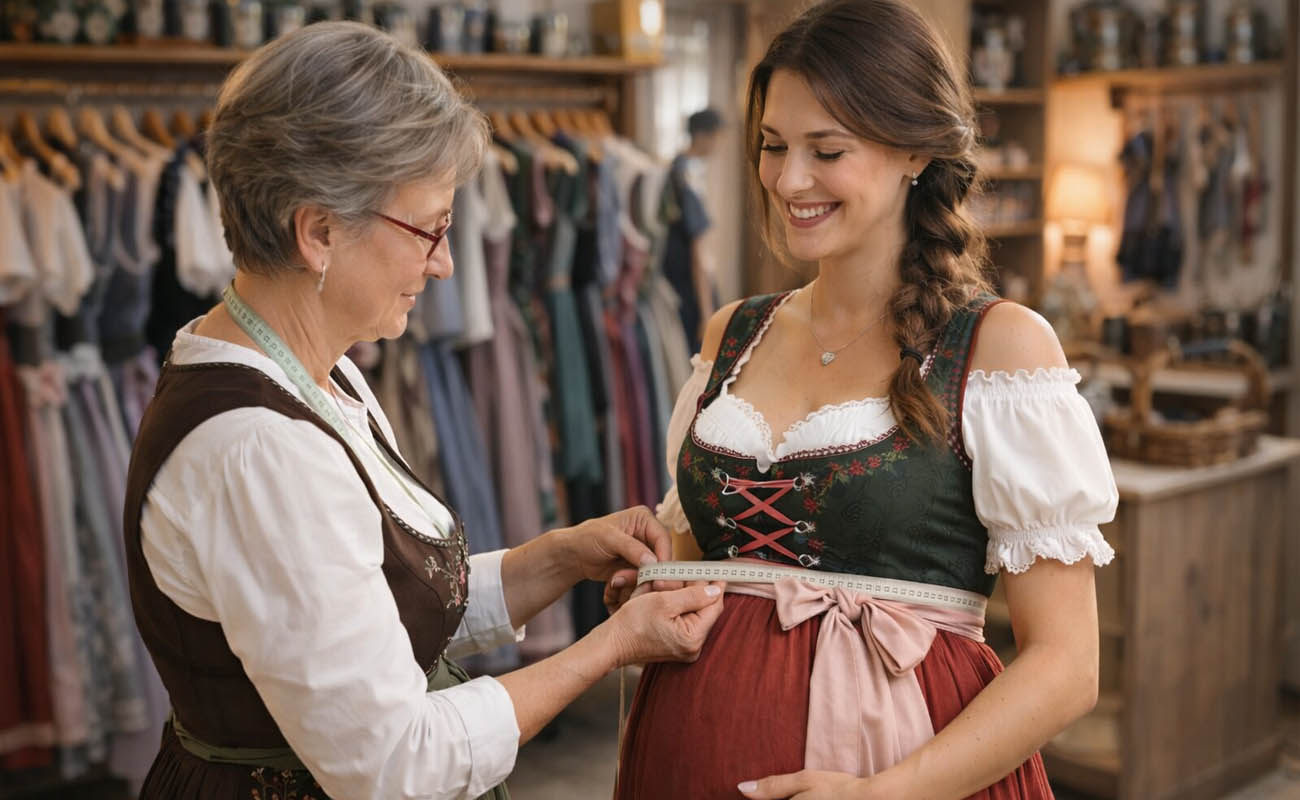
Professional alterations may be worth the investment for quality pieces. Consider hiring a seamstress experienced with traditional German clothing construction who understands authentic details and proportions. Look for expertise in maternity wear modifications that maintain garment integrity while improving comfort. Seek professionals familiar with authentic detailing and finishing to preserve cultural accuracy. Ensure they understand proper fit for pregnant body changes that differ significantly from standard alterations.
Postpartum Planning and Long-Term Use
If you plan to wear your dirndl after birth, look for nursing-friendly designs that extend the usefulness of your investment. Button-front bodices provide easy access for breastfeeding without having to remove the entire garment. Wrap-style or tie-front blouses accommodate nursing needs discreetly and conveniently. Easy-access designs allow for breastfeeding in cultural settings without drawing unwanted attention. Plan for postpartum body changes that may affect fit differently than pregnancy changes affected it.
Quality maternity dirndls represent long-term investments that serve multiple purposes. They can be altered back to regular fit postpartum with professional help, allowing you to wear them for years after pregnancy. Save pieces for future pregnancies if your family planning includes additional children, making the investment even more worthwhile. Pass down traditional clothing to family members to maintain cultural traditions across generations and create meaningful family heirlooms. Resell or donate to other expecting mothers to help build community, reduce waste, and help other women experience cultural celebrations during pregnancy.
Frequently Asked Questions
Can I wear a regular dirndl during early pregnancy?
Yes, especially if it has adjustable lacing that you can loosen as needed. You may need to size up as pregnancy progresses into the second and third trimesters. The key is ensuring the bodice doesn’t restrict your breathing or circulation at any point during wear.
Is it safe to wear a dirndl bodice while pregnant?
Yes, as long as it’s not too tight and doesn’t restrict your breathing or movement. Never wear anything that constricts breathing, leaves marks on your skin, or causes any discomfort. The lacing should always be loose enough to allow comfortable movement and proper blood circulation for both you and your baby.
What’s the best dirndl length for pregnancy?
Mid-length dirndls just below the knee work best for most pregnant women, providing adequate coverage without bulk or tripping hazards. Avoid floor-length styles during late pregnancy as they can be difficult to manage safely and may pose tripping risks with your changed center of gravity.
Can I attend Oktoberfest in my third trimester?
Absolutely, many women successfully attend in their third trimester. Choose maximum adjustability in your dirndl, wear comfortable flat shoes, stay well hydrated throughout the event, take frequent breaks in shaded or air-conditioned areas, and always attend with a support person who can assist if needed.
Why Buy Your Maternity Dirndl from Bavarian Attire
When it comes to purchasing a maternity dirndl, choosing the right retailer makes all the difference in your pregnancy comfort and style. Bavarian Attire specializes in authentic German traditional clothing with a deep understanding of maternity needs. Unlike generic costume shops, authentic Bavarian retailers offer dirndls made with traditional craftsmanship that prioritizes both cultural authenticity and modern comfort requirements for pregnant women.
Bavarian Attire provides genuine dirndls crafted using time-honored techniques and high-quality materials. These aren’t mass-produced costumes but authentic traditional garments designed to last through your pregnancy and beyond. The superior construction means better adjustability, more durable lacing systems, and fabrics that breathe and move with your changing body. When you invest in an authentic dirndl from a specialized Bavarian retailer, you’re choosing a garment that will serve you well throughout all three trimesters.
Why Choose Bavarian Attire:
- Authentic quality with traditional craftsmanship
- Pregnancy-specific expertise and sizing guidance
- Extensive size range with adjustable features
- Long-term value and versatility for future use
- Expert customer service for maternity needs
Specialized Bavarian clothing retailers understand the unique challenges pregnant women face when selecting traditional attire. They offer expert sizing guidance specifically for expectant mothers and can recommend which styles work best for different stages of pregnancy. Their customer service teams are trained to help you find the perfect fit that accommodates your growing belly while maintaining the elegant silhouette that makes dirndls so beloved.
Authentic Bavarian Attire stores typically carry a wider range of sizes and styles compared to general retailers. They understand that pregnant women need flexible options and stock dirndls with extra-long lacing, adjustable panels, and generous skirt volumes. Many also offer customization options to ensure your dirndl fits perfectly throughout your entire pregnancy journey. This commitment to proper sizing means you won’t have to compromise between authenticity and comfort.
When you purchase a quality maternity dirndl from Bavarian Attire, you’re making an investment that extends beyond pregnancy. These authentic garments are designed to be adjusted back to your pre-pregnancy size, making them wearable for years of future Oktoberfests and German celebrations. The timeless designs and durable construction mean your dirndl becomes a cherished part of your cultural wardrobe rather than a temporary maternity purchase.
Final Thoughts
Wearing a dirndl while pregnant is a wonderful way to celebrate German culture during this special time in your life. Whether you choose an authentic traditional piece, a modern maternity adaptation, or a creative DIY solution, the most important factors are your comfort, safety, and enjoyment of the cultural experience.
With proper planning, the right style choices, and attention to your body’s needs, you can confidently wear a dirndl throughout your pregnancy and create beautiful memories at German cultural celebrations. Remember to consult your healthcare provider before attending large events, listen to your body’s signals throughout the day, and don’t hesitate to modify traditions to suit your comfort level and pregnancy needs.
Embrace this unique opportunity to honor cultural traditions while celebrating the new life you’re bringing into the world. Your pregnancy is a special time that deserves to be celebrated in ways that are meaningful to you, and participating in cultural traditions like wearing a dirndl at German festivals can be a beautiful part of that celebration.
